Liu Michelle, Vnencak-Jones Cindy L, Roland Bartholomew P, Gatto Cheryl L, Mathe Janos L, Just Shari L, Peterson Josh F, Van Driest Sara L, Weitkamp Asli O
Department of Pharmacy, Vanderbilt University Medical Center, Nashville, Tennessee, USA.
Department of Pathology, Microbiology, and Immunology, Vanderbilt University Medical Center, Nashville, Tennessee, USA.
Clin Pharmacol Ther. 2021 Jan;109(1):101-115. doi: 10.1002/cpt.2079. Epub 2020 Nov 15.
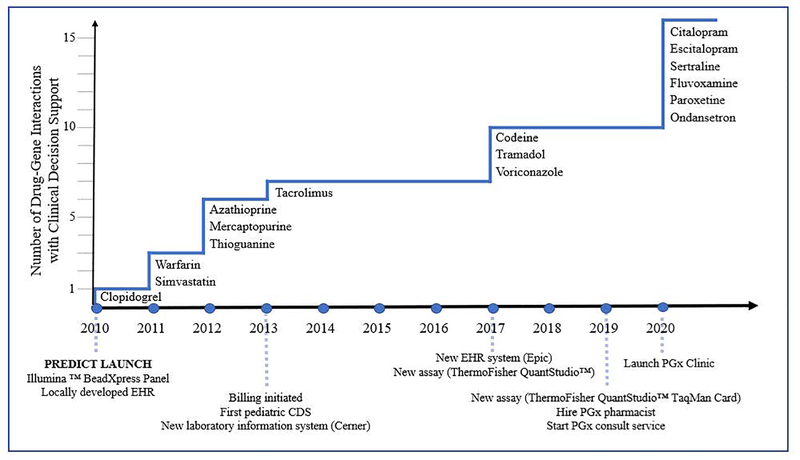
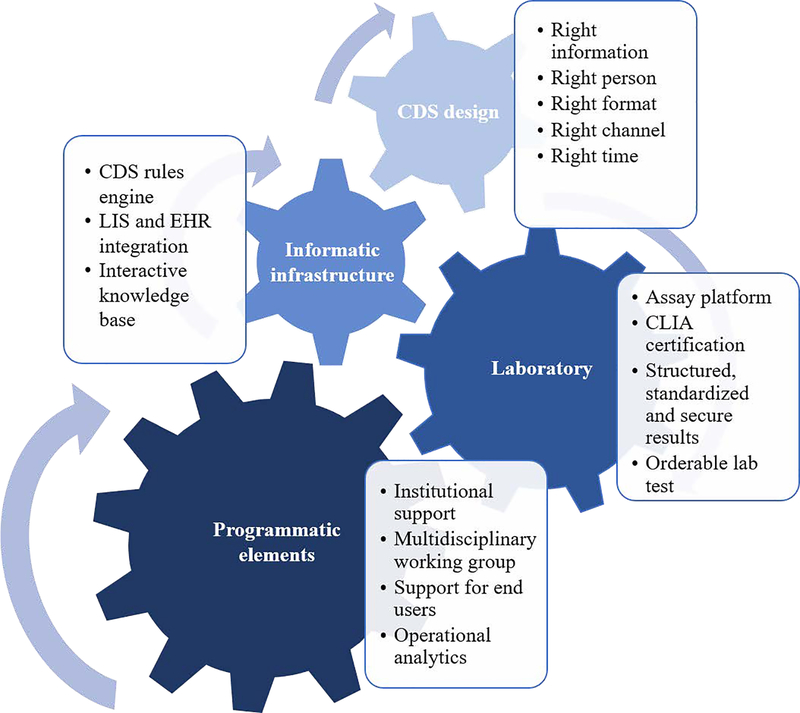
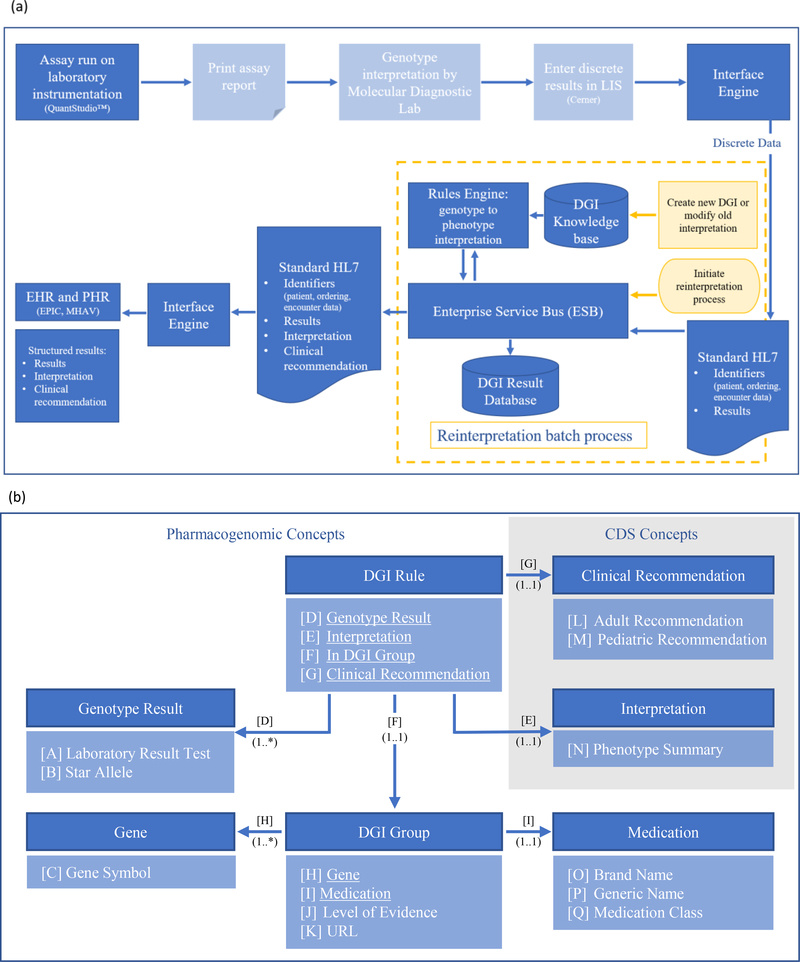
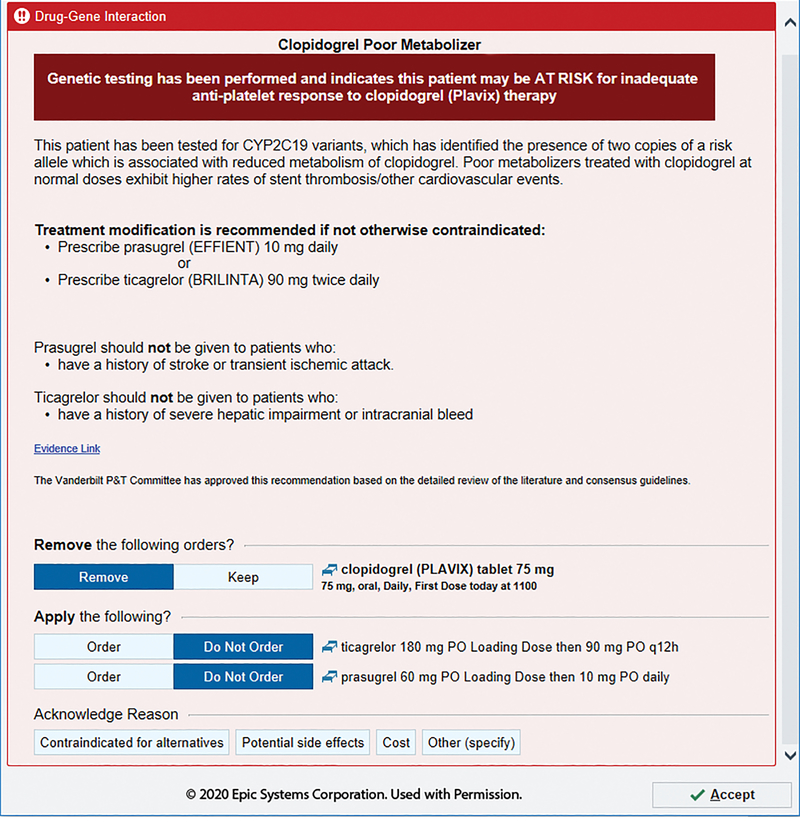
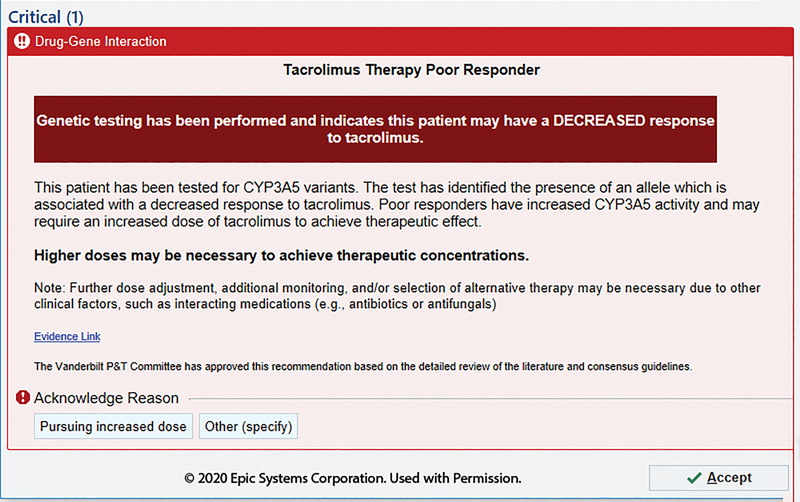
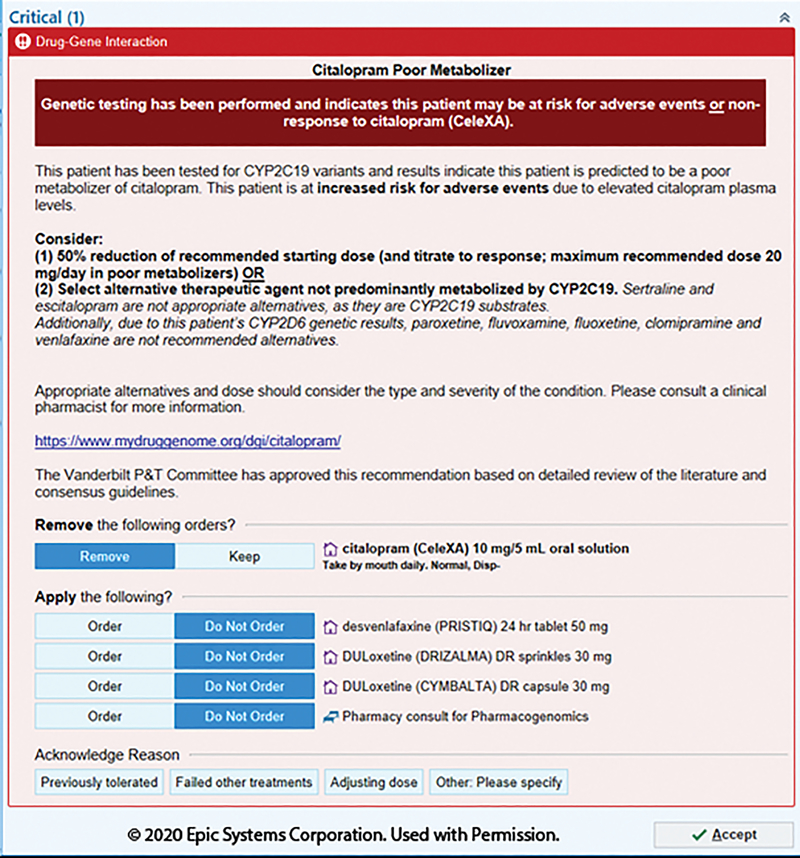
Vanderbilt University Medical Center implemented pharmacogenomics (PGx) testing with the Pharmacogenomic Resource for Enhanced Decisions in Care and Treatment (PREDICT) initiative in 2010. This tutorial reviews the laboratory considerations, technical infrastructure, and programmatic support required to deliver panel-based PGx testing across a large health system with examples and experiences from the first decade of the PREDICT initiative. From the time of inception, automated clinical decision support (CDS) has been a critical capability for delivering PGx results to the point-of-care. Key features of the CDS include human-readable interpretations and clinical guidance that is anticipatory, actionable, and adaptable to changes in the scientific literature. Implementing CDS requires that structured results from the laboratory be encoded in standards-based messages that are securely ingested by electronic health records. Translating results to guidance also requires an informatics infrastructure with multiple components: (1) to manage the interpretation of raw genomic data to "star allele" results to expected phenotype, (2) to define the rules that associate a phenotype with recommended changes to clinical care, and (3) to manage and update the knowledge base. Knowledge base management is key to processing new results with the latest guidelines, and to ensure that historical genomic results can be reinterpreted with revised CDS. We recommend that these components be deployed with institutional authorization, programmatic support, and clinician education to govern the CDS content and policies around delivery.
范德比尔特大学医学中心于2010年通过“精准医疗增强护理与治疗决策药物基因组学资源”(PREDICT)计划实施了药物基因组学(PGx)检测。本教程回顾了在大型医疗系统中开展基于检测板的PGx检测所需的实验室考量、技术基础设施和项目支持,并列举了PREDICT计划头十年的实例和经验。从一开始,自动化临床决策支持(CDS)就是将PGx结果提供到护理点的一项关键能力。CDS的关键特性包括易于理解的解读以及具有前瞻性、可操作且能适应科学文献变化的临床指导。实施CDS要求实验室的结构化结果编码为基于标准的信息,并由电子健康记录安全接收。将结果转化为指导还需要一个具有多个组件的信息学基础设施:(1)管理从原始基因组数据到“星号等位基因”结果再到预期表型的解读;(2)定义将表型与临床护理推荐更改相关联的规则;(3)管理和更新知识库。知识库管理是使用最新指南处理新结果以及确保历史基因组结果能够根据修订后的CDS重新解读的关键。我们建议通过机构授权、项目支持和临床医生教育来部署这些组件,以管理CDS内容和围绕其交付的政策。