School of Informatics, University of Edinburgh, Edinburgh, United Kingdom.
The Wellcome Centre for Cell Biology, University of Edinburgh, Edinburgh, United Kingdom.
PLoS Genet. 2020 Oct 13;16(10):e1009087. doi: 10.1371/journal.pgen.1009087. eCollection 2020 Oct.
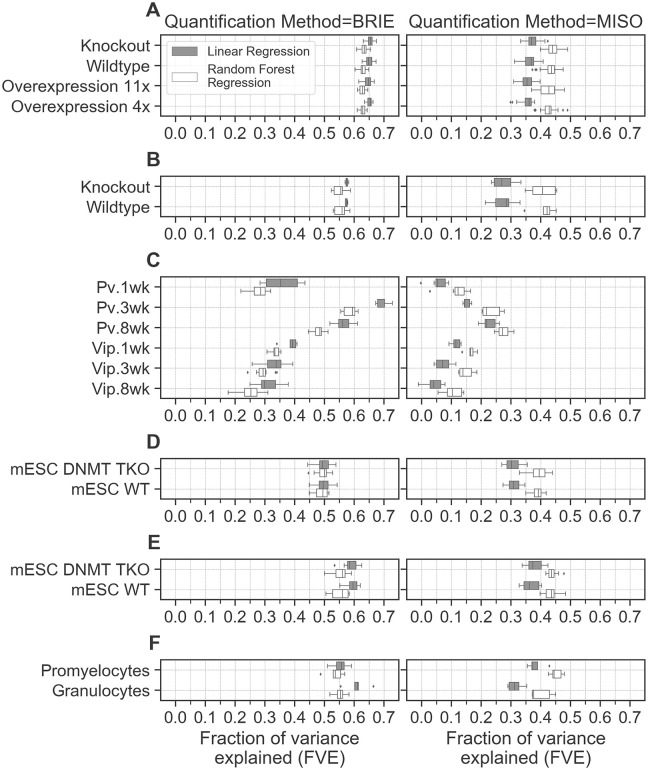
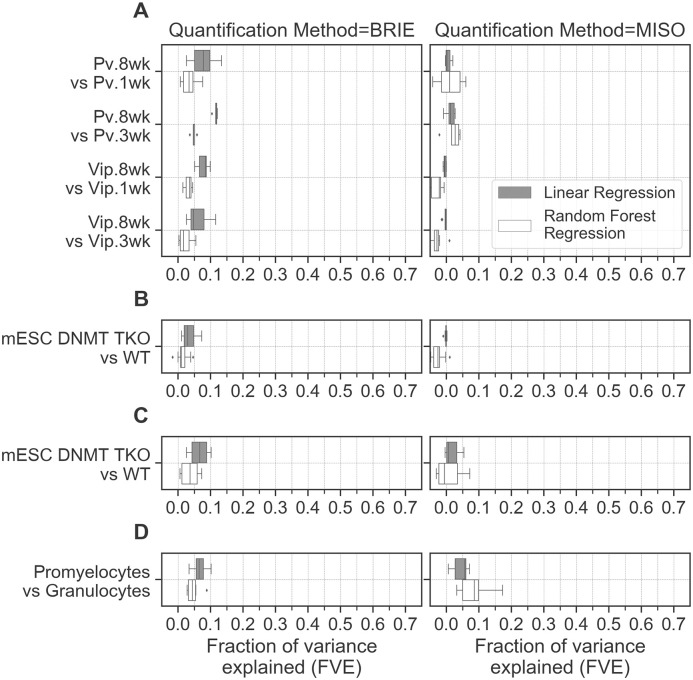
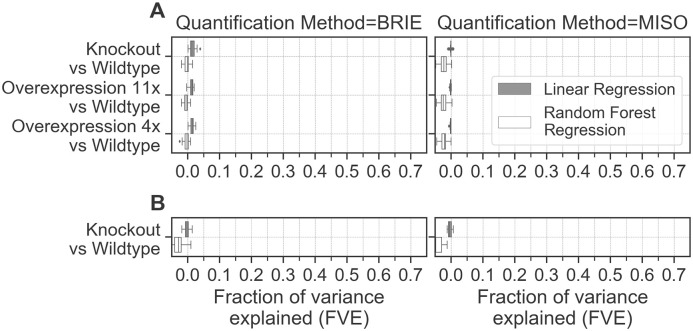
MeCP2 is an abundant protein in mature nerve cells, where it binds to DNA sequences containing methylated cytosine. Mutations in the MECP2 gene cause the severe neurological disorder Rett syndrome (RTT), provoking intensive study of the underlying molecular mechanisms. Multiple functions have been proposed, one of which involves a regulatory role in splicing. Here we leverage the recent availability of high-quality transcriptomic data sets to probe quantitatively the potential influence of MeCP2 on alternative splicing. Using a variety of machine learning approaches that can capture both linear and non-linear associations, we show that widely different levels of MeCP2 have a minimal effect on alternative splicing in three different systems. Alternative splicing was also apparently indifferent to developmental changes in DNA methylation levels. Our results suggest that regulation of splicing is not a major function of MeCP2. They also highlight the importance of multi-variate quantitative analyses in the formulation of biological hypotheses.
MECP2 是成熟神经细胞中丰富的蛋白质,它与含有甲基化胞嘧啶的 DNA 序列结合。MECP2 基因突变会导致严重的神经发育障碍——雷特综合征(RTT),这引发了对其潜在分子机制的深入研究。该蛋白具有多种功能,其中之一涉及剪接的调控作用。在这里,我们利用最近获得的高质量转录组数据集,定量研究 MeCP2 对可变剪接的潜在影响。我们使用多种机器学习方法,这些方法可以捕捉线性和非线性关联,结果表明,在三个不同的系统中,差异极大的 MeCP2 水平对可变剪接的影响极小。可变剪接也明显不受 DNA 甲基化水平发育变化的影响。我们的研究结果表明,剪接调控不是 MeCP2 的主要功能。它们还突出了多变量定量分析在提出生物学假设中的重要性。