Song Hun-Suk, Choi Tae-Rim, Bhatia Shashi Kant, Lee Sun Mi, Park Sol Lee, Lee Hye Soo, Kim Yun-Gon, Kim Jae-Seok, Kim Wooseong, Yang Yung-Hun
Department of Biological Engineering, College of Engineering, Konkuk University, Hwayang-dong, Gwangjin-gu, Seoul 05029, Korea.
Institute for Ubiquitous Information Technology and Applications (CBRU), Konkuk University, Seoul 05029, Korea.
Antibiotics (Basel). 2020 Oct 8;9(10):682. doi: 10.3390/antibiotics9100682.
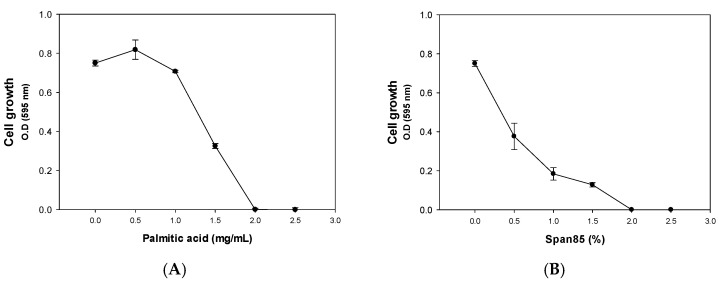
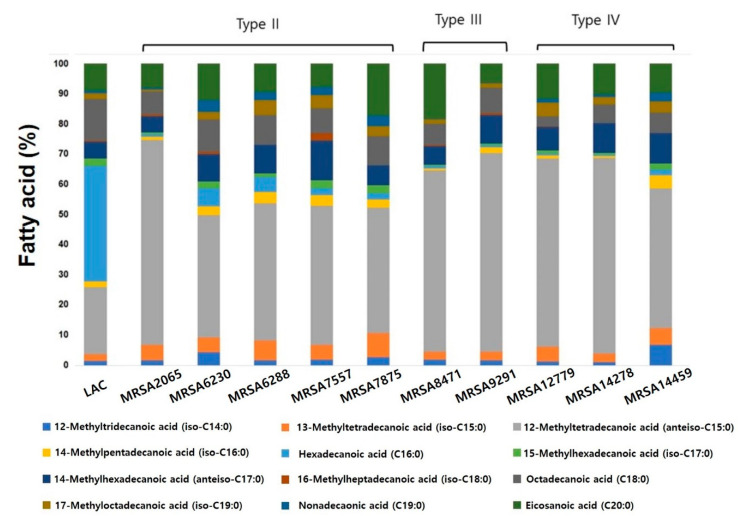
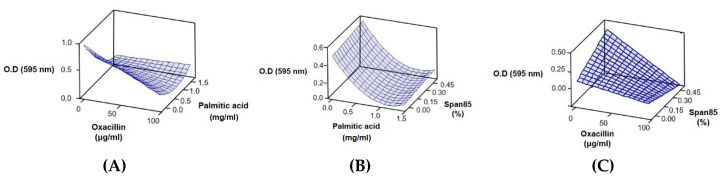
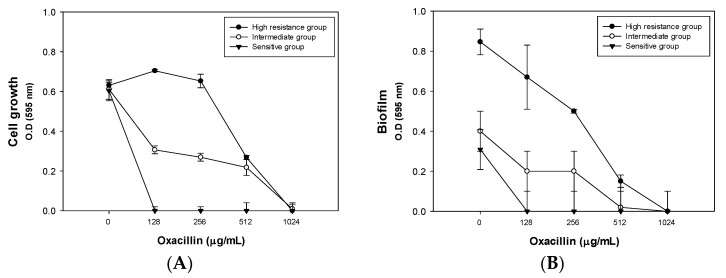
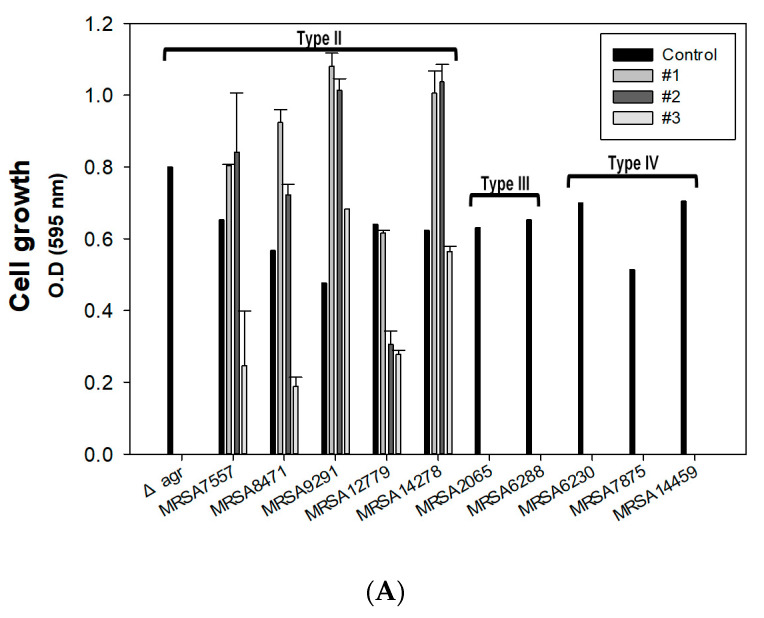
The overuse of antibiotics has led to the emergence of multidrug-resistant bacteria, such as methicillin-resistant (MRSA). MRSA is difficult to kill with a single antibiotic because it has evolved to be resistant to various antibiotics by increasing the PBP2a () expression level, building up biofilm, introducing SCCmec for multidrug resistance, and changing its membrane properties. Therefore, to overcome antibiotic resistance and decrease possible genetic mutations that can lead to the acquisition of higher antibiotic resistance, drug combination therapy was applied based on previous results indicating that MRSA shows increased susceptibility to free fatty acids and surfactants. The optimal ratio of three components and the synergistic effects of possible combinations were investigated. The combinations were directly applied to clinically isolated strains, and the combination containing 15 μg/mL of oxacillin was able to control SCCmec type III and IV isolates having an oxacillin minimum inhibitory concentration (MIC) up to 1024 μg/mL; moreover, the combination with a slightly increased oxacillin concentration was able to kill SCCmec type II. Phospholipid analysis revealed that clinical strains with higher resistance contained a high portion of 12-methyltetradecanoic acid (anteiso-C15:0) and 14-methylhexadecanoic acid (anteiso-C17:0), although individual strains showed different patterns. In summary, we showed that combinatorial therapy with a low concentration of oxacillin controlled different laboratory and highly diversified clinical MRSA strains.
抗生素的过度使用导致了多重耐药菌的出现,如耐甲氧西林金黄色葡萄球菌(MRSA)。MRSA难以用单一抗生素杀灭,因为它通过提高PBP2a()表达水平、形成生物膜、引入多药耐药性的SCCmec以及改变其膜特性,已进化出对多种抗生素的耐药性。因此,为了克服抗生素耐药性并减少可能导致获得更高抗生素耐药性的基因突变,基于先前的结果应用了联合药物治疗,这些结果表明MRSA对游离脂肪酸和表面活性剂的敏感性增加。研究了三种成分的最佳比例以及可能组合的协同效应。将这些组合直接应用于临床分离菌株,含有15μg/mL苯唑西林的组合能够控制苯唑西林最低抑菌浓度(MIC)高达1024μg/mL的III型和IV型SCCmec分离株;此外,苯唑西林浓度略有增加的组合能够杀灭II型SCCmec。磷脂分析表明,耐药性较高的临床菌株含有较高比例的12-甲基十四烷酸(异十五烷酸)和14-甲基十六烷酸(异十七烷酸),尽管个别菌株表现出不同的模式。总之,我们表明低浓度苯唑西林的联合治疗能够控制不同的实验室和高度多样化的临床MRSA菌株。