Tóth Andrea, Balogh Enikő, Jeney Viktória
MTA-DE Lendület Vascular Pathophysiology Research Group, Research Centre for Molecular Medicine, Faculty of Medicine, University of Debrecen, 4032 Debrecen, Hungary.
Doctoral School of Molecular Cell and Immune Biology, Faculty of Medicine, University of Debrecen, 4032 Debrecen, Hungary.
Antioxidants (Basel). 2020 Oct 8;9(10):963. doi: 10.3390/antiox9100963.
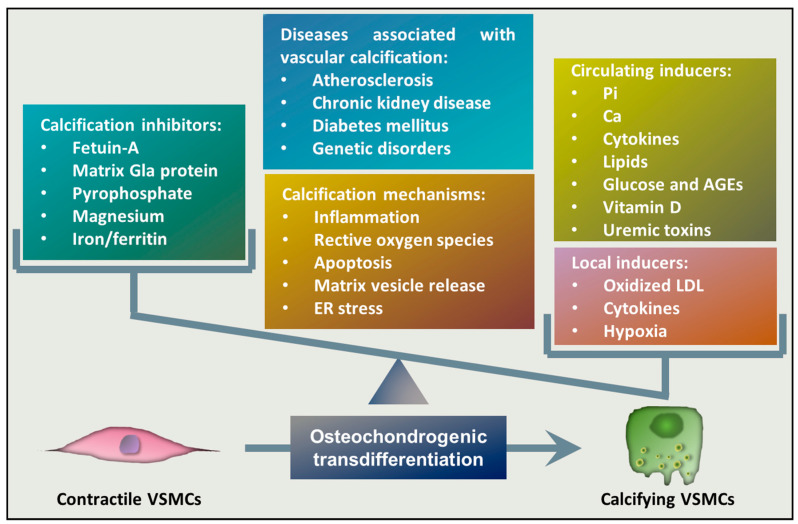
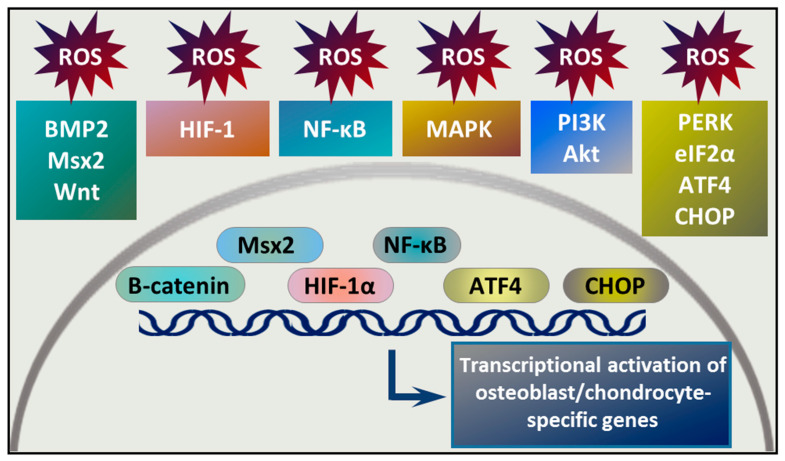
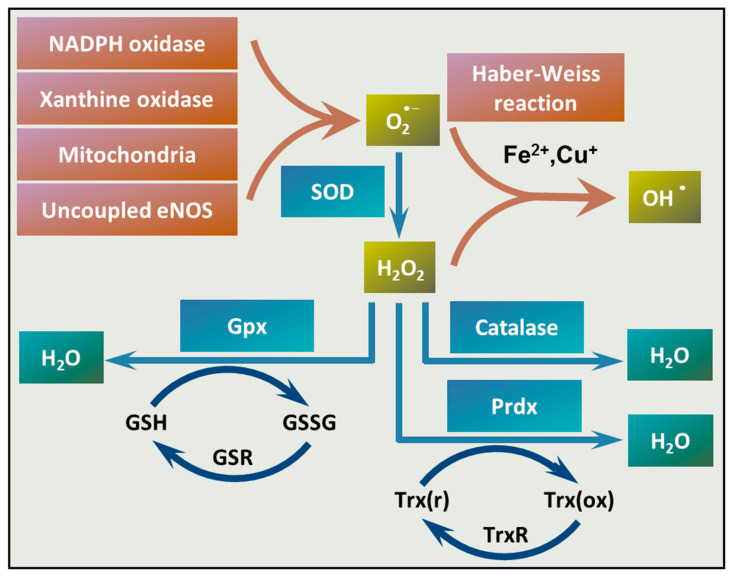
Vascular calcification is the deposition of hydroxyapatite crystals in the medial or intimal layers of arteries that is usually associated with other pathological conditions including but not limited to chronic kidney disease, atherosclerosis and diabetes. Calcification is an active, cell-regulated process involving the phenotype transition of vascular smooth muscle cells (VSMCs) from contractile to osteoblast/chondrocyte-like cells. Diverse triggers and signal transduction pathways have been identified behind vascular calcification. In this review, we focus on the role of reactive oxygen species (ROS) in the osteochondrogenic phenotype switch of VSMCs and subsequent calcification. Vascular calcification is associated with elevated ROS production. Excessive ROS contribute to the activation of certain osteochondrogenic signal transduction pathways, thereby accelerating osteochondrogenic transdifferentiation of VSMCs. Inhibition of ROS production and ROS scavengers and activation of endogenous protective mechanisms are promising therapeutic approaches in the prevention of osteochondrogenic transdifferentiation of VSMCs and subsequent vascular calcification. The present review discusses the formation and actions of excess ROS in different experimental models of calcification, and the potential of ROS-lowering strategies in the prevention of this deleterious condition.
血管钙化是指羟基磷灰石晶体沉积在动脉中层或内膜层,通常与包括但不限于慢性肾病、动脉粥样硬化和糖尿病等其他病理状况相关。钙化是一个活跃的、细胞调节的过程,涉及血管平滑肌细胞(VSMC)从收缩型向成骨细胞/软骨细胞样细胞的表型转变。在血管钙化背后已发现多种触发因素和信号转导途径。在本综述中,我们聚焦于活性氧(ROS)在VSMC的成骨软骨生成表型转换及随后钙化过程中的作用。血管钙化与ROS生成增加有关。过量的ROS有助于某些成骨软骨生成信号转导途径的激活,从而加速VSMC的成骨软骨生成转分化。抑制ROS生成、使用ROS清除剂以及激活内源性保护机制是预防VSMC成骨软骨生成转分化及随后血管钙化的有前景的治疗方法。本综述讨论了在不同钙化实验模型中过量ROS的形成和作用,以及降低ROS策略在预防这种有害状况方面的潜力。