Department of Microbiology and Immunology, Weill Cornell Medicine, New York, NY, 10065 USA.
Department of Microbiology and Immunology, Weill Cornell Medicine, New York, NY, 10065 USA.
Curr Opin Microbiol. 2020 Dec;58:93-98. doi: 10.1016/j.mib.2020.09.004. Epub 2020 Oct 11.
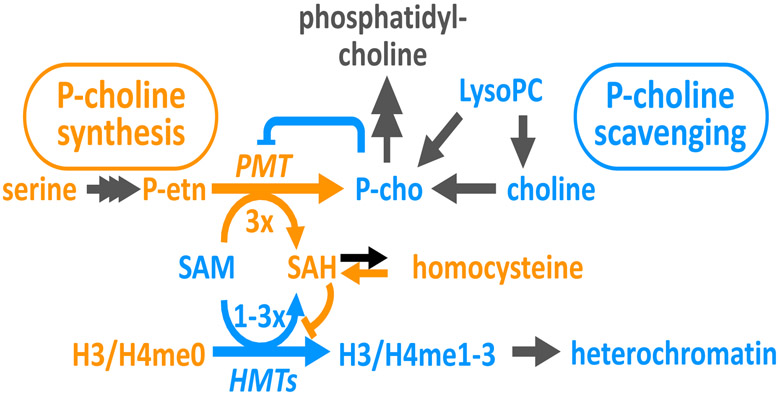
For malaria parasites regulating sexual commitment, the frequency with which asexual bloodstream forms differentiate into non-replicative male and female gametocytes, is critical because asexual replication is required to maintain a persistent infection of the human host while gametocytes are essential for infection of the mosquito vector and transmission. Here, we describe recent advances in understanding of the regulatory mechanisms controlling this key developmental decision. These include new insights into the mechanistic roles of the transcriptional master switch AP2-G and the epigenetic modulator GDV1, as well as the identification of defined metabolic signals that modulate their activity. Many of these metabolites are linked to parasite phospholipid biogenesis and we propose a model linking this pathway to the epigenetic regulation underlying sexual commitment in P. falciparum.
对于调节有性状态决定的疟原虫来说,无性血腔期向非复制性的雄性和雌性配子体分化的频率至关重要,因为无性繁殖是维持人体宿主持续感染所必需的,而配子体则是感染蚊子媒介和传播所必需的。在这里,我们描述了对控制这一关键发育决策的调节机制的最新理解进展。这些包括对转录主开关 AP2-G 和表观遗传调节剂 GDV1 的作用机制的新见解,以及确定调节其活性的特定代谢信号。其中许多代谢物与寄生虫磷脂生物发生有关,我们提出了一个模型,将该途径与疟原虫有性状态决定的表观遗传调控联系起来。