Signalling in Apicomplexan Parasites Laboratory, The Francis Crick Institute, London, United Kingdom.
Department of Medical Parasitology and Infection Biology, Swiss Tropical and Public Health Institute, Basel, Switzerland.
mSphere. 2021 May 19;6(3):e01093-20. doi: 10.1128/mSphere.01093-20.
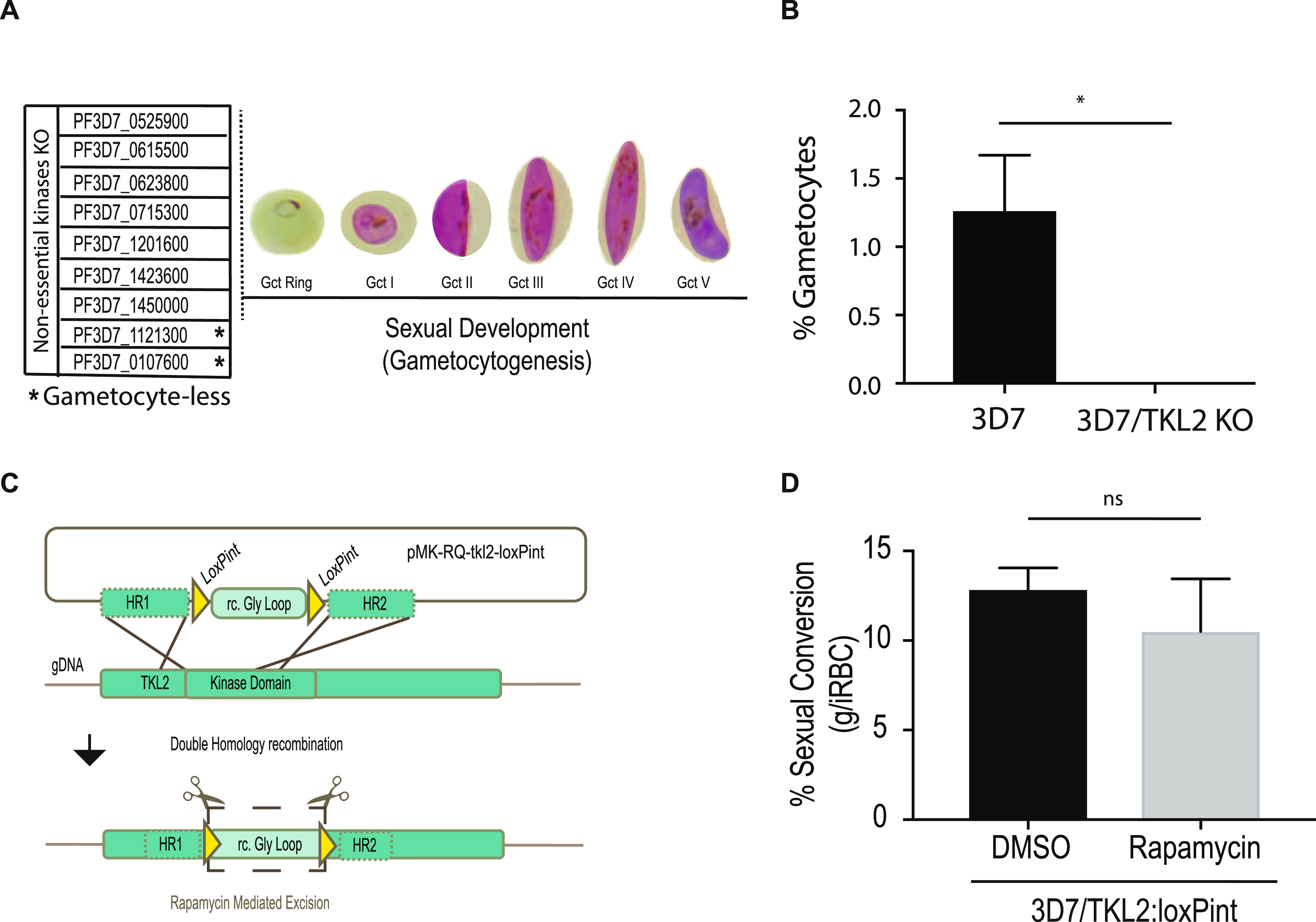
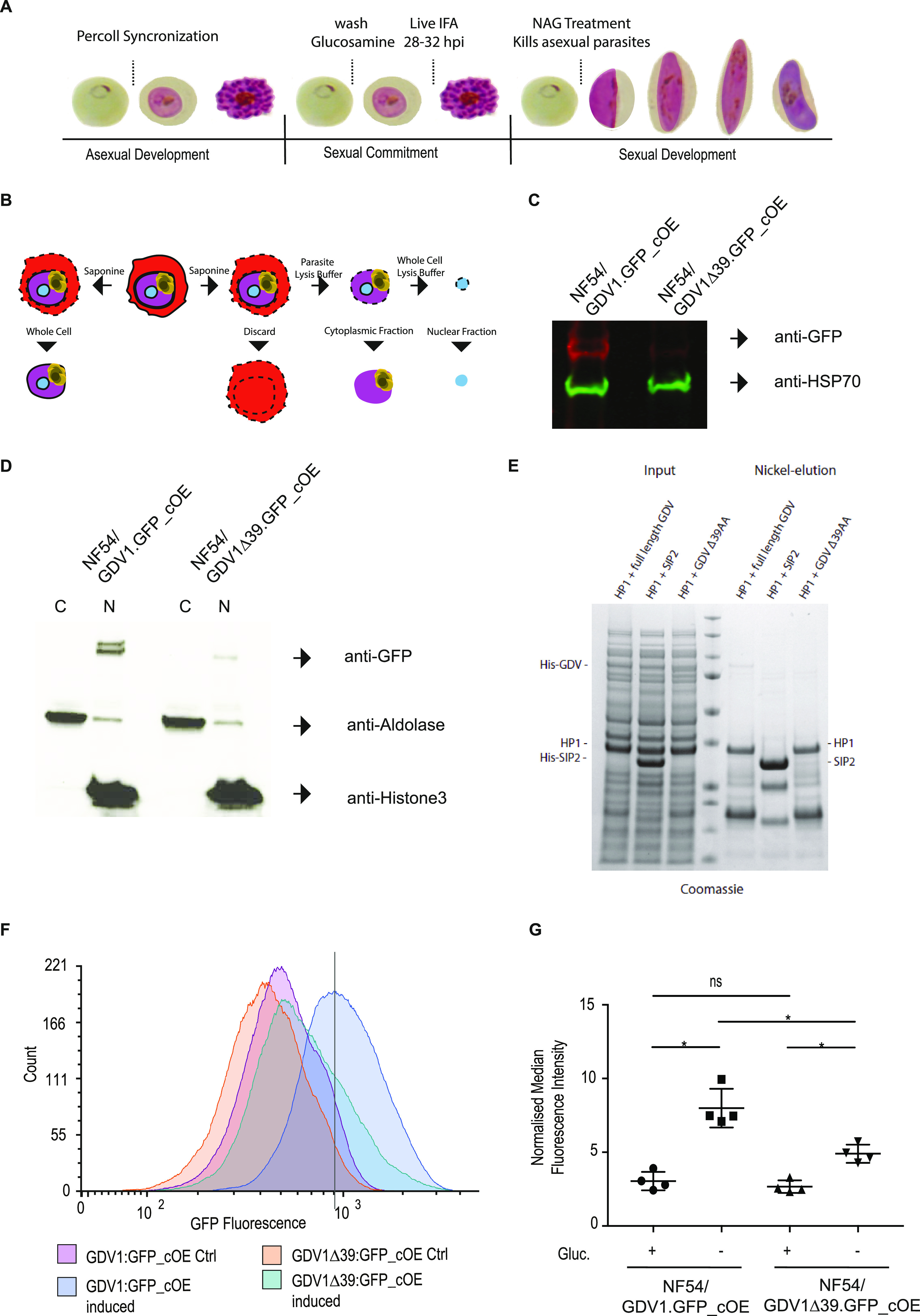
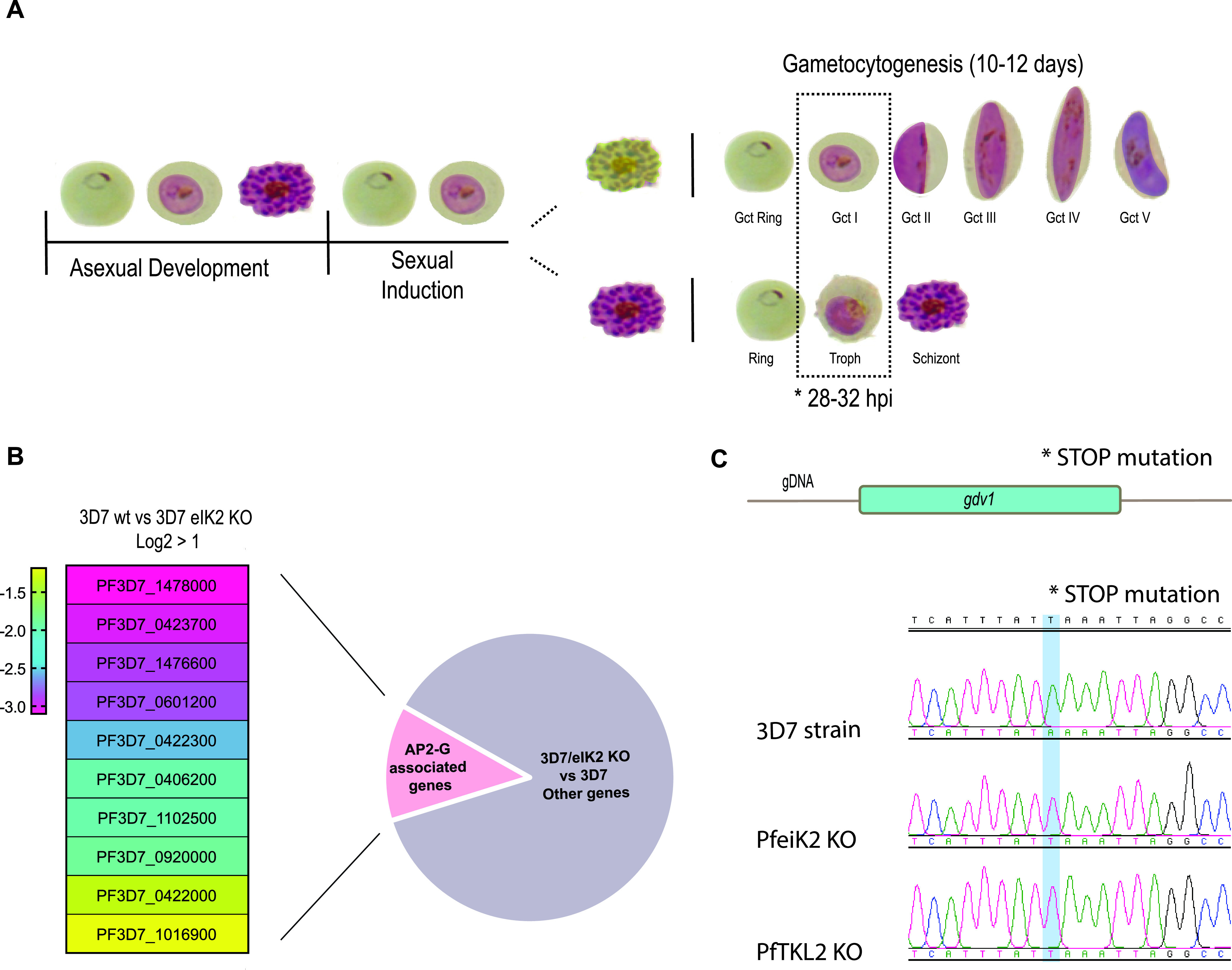
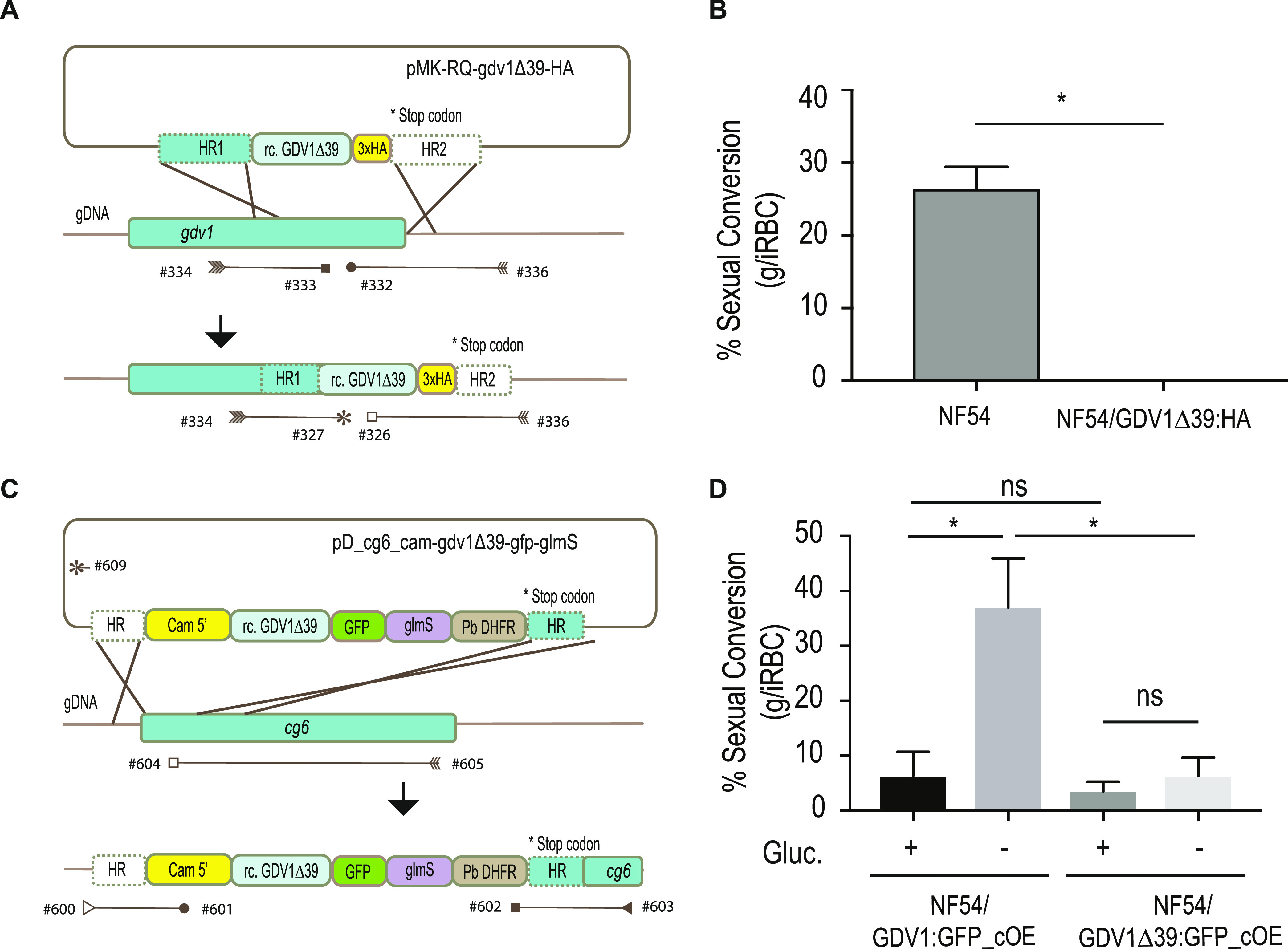
Malaria is a mosquito-borne disease caused by apicomplexan parasites of the genus Completion of the parasite's life cycle depends on the transmission of sexual stages, the gametocytes, from an infected human host to the mosquito vector. Sexual commitment occurs in only a small fraction of asexual blood-stage parasites and is initiated by external cues. The gametocyte development protein 1 (GDV1) has been described as a key facilitator to trigger sexual commitment. GDV1 interacts with the silencing factor heterochromatin protein 1 (HP1), leading to its dissociation from heterochromatic DNA at the genomic locus encoding AP2-G, the master transcription factor of gametocytogenesis. How this process is regulated is not known. In this study, we have addressed the role of protein kinases implicated in gametocyte development. From a pool of available protein kinase knockout (KO) lines, we identified two kinase knockout lines which fail to produce gametocytes. However, independent genetic verification revealed that both kinases are not required for gametocytogenesis but that both lines harbor the same mutation that leads to a truncation in the extreme C terminus of GDV1. Introduction of the identified nonsense mutation into the genome of wild-type parasite lines replicates the observed phenotype. Using a GDV1 overexpression line, we show that the truncation in the GDV1 C terminus does not interfere with the nuclear import of GDV1 or its interaction with HP1 but appears to be important to sustain GDV1 protein levels and thereby sexual commitment. Transmission of malaria-causing species by mosquitos requires the parasite to change from a continuously growing asexual parasite form growing in the blood to a sexually differentiated form, the gametocyte. Only a small subset of asexual parasites differentiates into gametocytes that are taken up by the mosquito. Transmission represents a bottleneck in the life cycle of the parasite, so a molecular understanding of the events that lead to stage conversion may identify novel intervention points. Here, we screened a subset of kinases we hypothesized to play a role in this process. While we did not identify kinases required for sexual conversion, we identified a mutation in the C terminus of the gametocyte development 1 protein (GDV1), which abrogates sexual development. The mutation destabilizes the protein but not its interaction with its cognate binding partner HP1. This suggests an important role for the GDV1 C terminus beyond trafficking and protein stability.
疟疾是一种由疟原虫属的顶复门寄生虫引起的蚊媒病。寄生虫生命周期的完成取决于有性阶段配子体的传播,从受感染的人体宿主传播到蚊子媒介。性承诺仅发生在无性血期寄生虫的一小部分中,并由外部线索引发。配子体发育蛋白 1(GDV1)已被描述为触发性承诺的关键促进剂。GDV1 与沉默因子异染色质蛋白 1(HP1)相互作用,导致其从编码配子体发生的主转录因子 AP2-G 的基因组位点上的异染色质 DNA 解离。目前尚不清楚这个过程是如何调节的。在这项研究中,我们研究了参与配子体发育的蛋白激酶的作用。从可用的蛋白激酶敲除(KO)系的池中,我们鉴定出两种激酶敲除系不能产生配子体。然而,独立的遗传验证表明,这两种激酶都不是配子体发生所必需的,但这两种系都携带有相同的突变,导致 GDV1 的极端 C 端截短。将鉴定出的无意义突变引入野生型寄生虫系的基因组中,可复制观察到的表型。使用 GDV1 过表达系,我们表明 GDV1 C 端的截断不干扰 GDV1 的核导入或其与 HP1 的相互作用,但似乎对维持 GDV1 蛋白水平并因此维持性承诺很重要。蚊子传播引起疟疾的物种需要寄生虫从不断生长的血液中的无性寄生虫形式转变为有性分化形式,即配子体。只有一小部分无性寄生虫分化为配子体,被蚊子吸收。传播代表寄生虫生命周期中的瓶颈,因此对导致阶段转换的事件的分子理解可能会确定新的干预点。在这里,我们筛选了我们假设在这个过程中发挥作用的一组激酶的子集。虽然我们没有鉴定出性转换所需的激酶,但我们在配子体发育蛋白 1(GDV1)的 C 端鉴定出一个突变,该突变阻断了性发育。该突变使蛋白质不稳定,但不影响其与同源结合伴侣 HP1 的相互作用。这表明 GDV1 C 端在运输和蛋白质稳定性之外具有重要作用。