Laboratory of Toxicology and Environmental Health, School of Medicine, IISPV, Universitat Rovira i Virgili, Sant Llorenç 21, 43201, Reus, Catalonia, Spain.
Laboratory of Toxicology and Environmental Health, School of Medicine, IISPV, Universitat Rovira i Virgili, Sant Llorenç 21, 43201, Reus, Catalonia, Spain; Environmental Engineering Laboratory, Departament d'Enginyeria Quimica, Universitat Rovira i Virgili, Av. Països Catalans 26, 43007, Tarragona, Catalonia, Spain.
Environ Res. 2021 Jan;192:110315. doi: 10.1016/j.envres.2020.110315. Epub 2020 Oct 12.
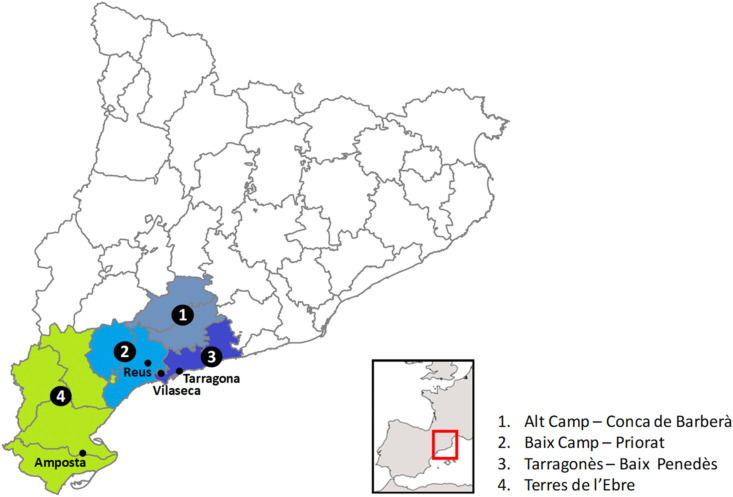
The number of studies published on COVID-19 in recent months is certainly impressive. However, there are still important gaps to know a great number of characteristics of this disease. Among these, some potential ways of transmission of the SARS-CoV-2 and the different reasons for the severity of the disease in different people. Various studies have suggested that certain air pollutants could be increasing the transmission of the coronavirus, as well as the risks of COVID-19 incidence and mortality. In the present preliminary case-study conducted in Tarragona Province (Catalonia, Spain), we studied the potential association of COVID-19 with PM, NO and O, as well as the differences in the incidence and lethality of this disease. This Province is divided into two "health regions": Camp de Tarragona, with an important industrial complex, and Terres de l'Ebre, with a great agricultural component. In spite of the notable limitations of the current study, our preliminary findings indicate that the industrialized/urban areas of Tarragona Province show a higher incidence and mortality of COVID-19 than the agricultural/rural zones. These - and previous - results would highlight the importance of conducting specific investigations focused on directly assessing whether air pollutants such as particulate matter can act as carriers of the SARS-CoV-2. If confirmed, the recommendation on keeping the "social distance" (1.5-2 m) might need to be adapted to this situation.
最近几个月发表的关于 COVID-19 的研究数量确实令人印象深刻。然而,仍有许多重要的空白需要了解这种疾病的许多特征。其中,一些 SARS-CoV-2 的潜在传播途径以及不同人群疾病严重程度的不同原因。多项研究表明,某些空气污染物可能会增加冠状病毒的传播,以及 COVID-19 发病率和死亡率的风险。在本研究中,我们在塔拉戈纳省(西班牙加泰罗尼亚)进行了初步的病例研究,研究了 COVID-19 与 PM、NO 和 O 之间的潜在关联,以及这种疾病的发病率和死亡率的差异。该省分为两个“卫生区”:拥有重要工业综合体的塔拉戈纳区,以及拥有大量农业成分的埃布罗地区。尽管本研究存在明显的局限性,但我们的初步研究结果表明,塔拉戈纳省的工业化/城区 COVID-19 的发病率和死亡率高于农业/农村地区。这些——以及之前的——结果强调了进行具体调查的重要性,这些调查集中于直接评估诸如颗粒物等空气污染物是否可以作为 SARS-CoV-2 的载体。如果得到证实,关于保持“社交距离”(1.5-2 米)的建议可能需要适应这种情况。