Vysnova Partners, Inc, 8400 Corporate Drive, Suite 130, Landover, MD, 20875, USA.
Burnet Institute, 85 Commercial Road, Melbourne, VIC, 3004, Australia.
BMC Infect Dis. 2020 Oct 15;20(1):757. doi: 10.1186/s12879-020-05476-8.
Individuals that work and sleep in remote forest and farm locations in the Greater Mekong Subregion continue to remain at high risk of both acquiring and transmitting malaria. These difficult-to-access population groups largely fall outside the reach of traditional village-centered interventions, presenting operational challenges for malaria programs. In Vietnam, over 60% of malaria cases are thought to be individuals who sleep in forests or on farms. New malaria elimination strategies are needed in countries where mobile and migrant workers frequently sleep outside of their homes. The aim of this study was to apply targeted surveillance-response based investigative approaches to gather location-specific data on confirmed malaria cases, with an objective to identify associated malaria prevention, treatment and risk behaviors of individuals sleeping in remote forest and farms sites in Vietnam.
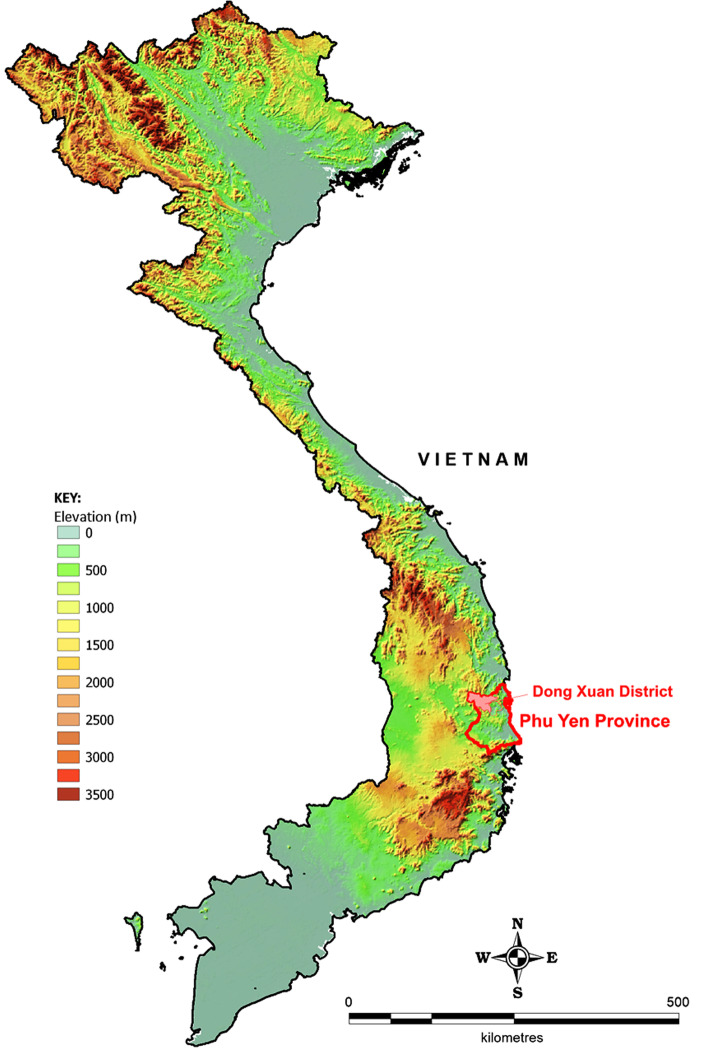
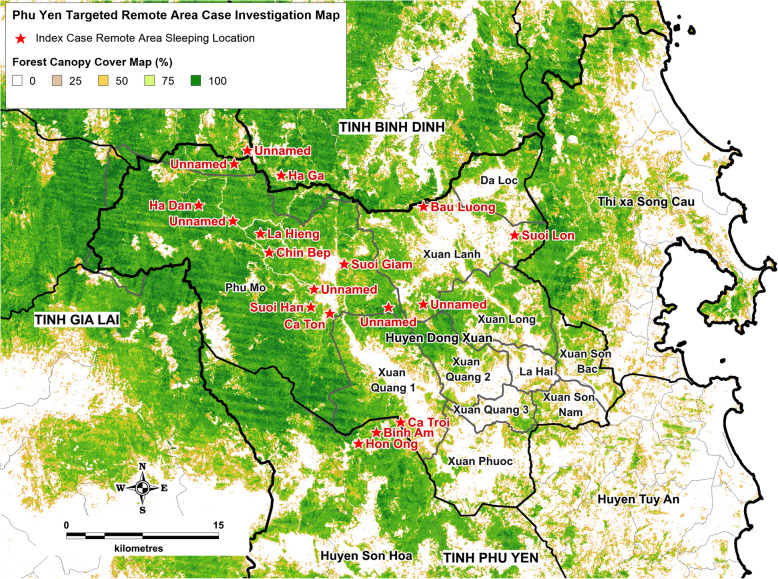
A cross-sectional study using novel targeted reactive investigative approaches at remote area sleeping sites was conducted in three mountainous communes in Phu Yen province in 2016. Index cases were defined as individuals routinely sleeping in forests or farms who had tested positive for malaria. Index cases and non-infected neighbors from forest and farm huts within 500 m of the established sleeping locations of index cases were interviewed at their remote-area sleeping sites.
A total of 307 participants, 110 index cases and 197 neighbors, were enrolled. Among 93 participants who slept in the forest, index cases were more likely to make > 5 trips to the forest per year (prevalence odds ratio (POR) 7.41, 95% confidence interval (CI) 2.66-20.63), sleep in huts without walls (POR 44.00, 95% CI 13.05-148.33), sleep without mosquito nets (POR 2.95, 95% CI 1.26-6.92), and work after dark (POR 5.48, 95% CI 1.84-16.35). Of the 204 farm-based respondents, a significantly higher proportion of index cases were involved in non-farming activities (logging) (POR 2.74, 95% CI 1.27-5.91).
Investigative approaches employed in this study allowed for the effective recruitment and characterization of high-priority individuals frequently sleeping in remote forest and farm locations, providing relevant population and site-specific data that decision makers can use to design and implement targeted interventions to support malaria elimination.
大湄公河次区域内那些在偏远森林和农场地区工作和睡觉的人仍然面临感染和传播疟疾的高风险。这些难以到达的人群群体基本上无法接触到以村庄为中心的传统干预措施,这给疟疾规划带来了操作上的挑战。在越南,超过 60%的疟疾病例被认为是在森林或农场睡觉的人。在经常有流动和移民工人在户外睡觉的国家,需要新的疟疾消除策略。本研究的目的是应用有针对性的监测-反应式调查方法,收集关于确诊疟疾病例的具体地点数据,目的是确定越南偏远森林和农场地区睡觉的个人与疟疾预防、治疗和相关风险行为。
2016 年,在富安省的三个山区公社使用新型有针对性的反应性调查方法进行了一项横断面研究。指数病例定义为常规在森林或农场睡觉且疟疾检测呈阳性的个体。在距指数病例确定的睡眠地点 500 米范围内的森林和农场小屋中,对指数病例和未感染的邻居进行访谈。
共纳入 307 名参与者,110 名指数病例和 197 名邻居。在 93 名在森林中睡觉的参与者中,指数病例每年更有可能前往森林 5 次以上(流行率优势比(POR)7.41,95%置信区间(CI)2.66-20.63),睡在没有墙壁的小屋中(POR 44.00,95% CI 13.05-148.33),不使用蚊帐睡觉(POR 2.95,95% CI 1.26-6.92),以及在天黑后工作(POR 5.48,95% CI 1.84-16.35)。在 204 名农场受访者中,指数病例更多地从事非农业活动(伐木)(POR 2.74,95% CI 1.27-5.91)。
本研究中采用的调查方法能够有效地招募和描述经常在偏远森林和农场地区睡觉的高优先级人群,并提供决策者可用于设计和实施针对性干预措施以支持疟疾消除的相关人群和特定地点数据。