Program in Developmental and Stem Cell Biology, The Hospital for Sick Children, M5G 0A4, Toronto, ON, CA.
Department of Molecular Genetics, University of Toronto, M5S 1A1, Toronto, ON, CA.
eNeuro. 2020 Dec 22;7(6). doi: 10.1523/ENEURO.0235-20.2020. Print 2020 Nov-Dec.
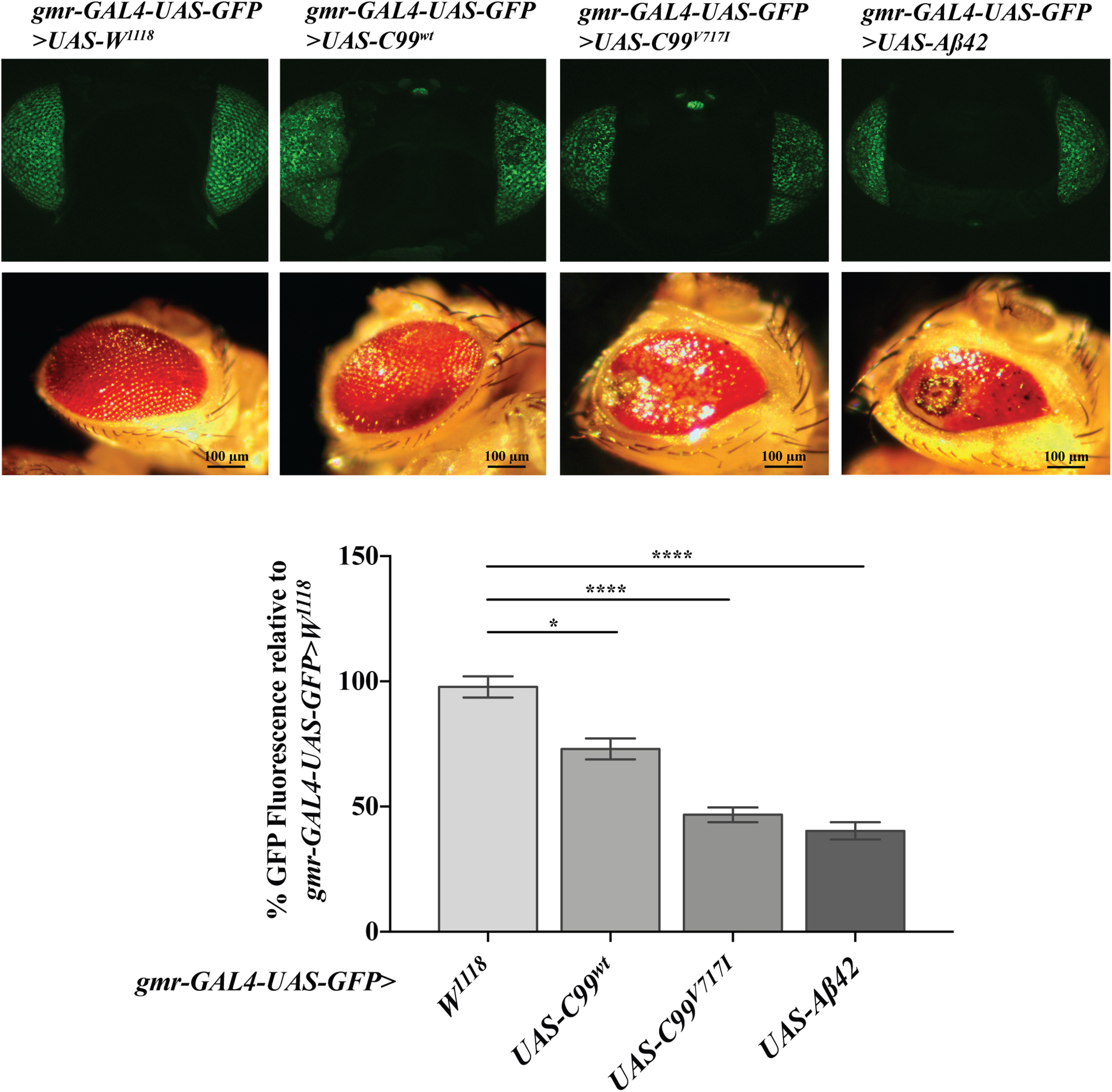
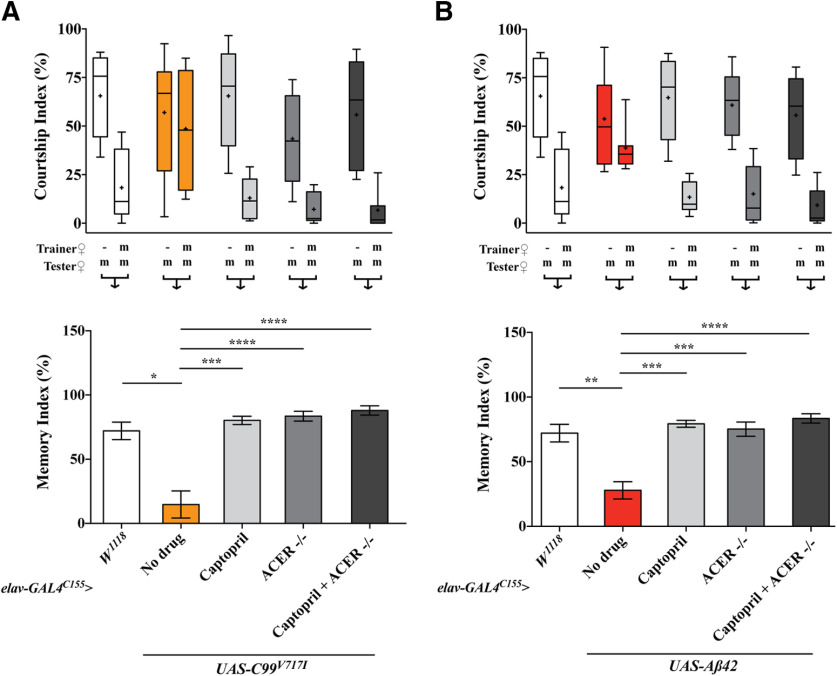
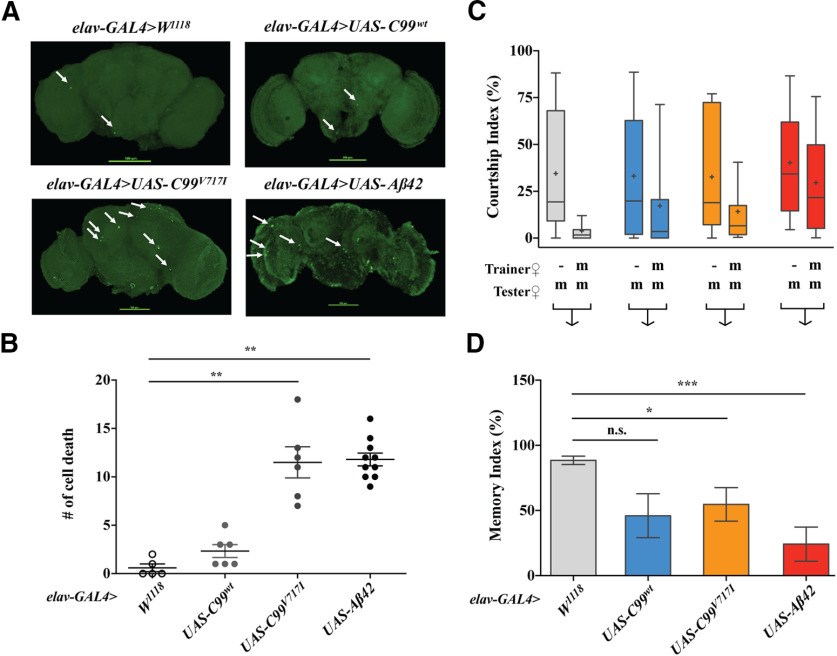
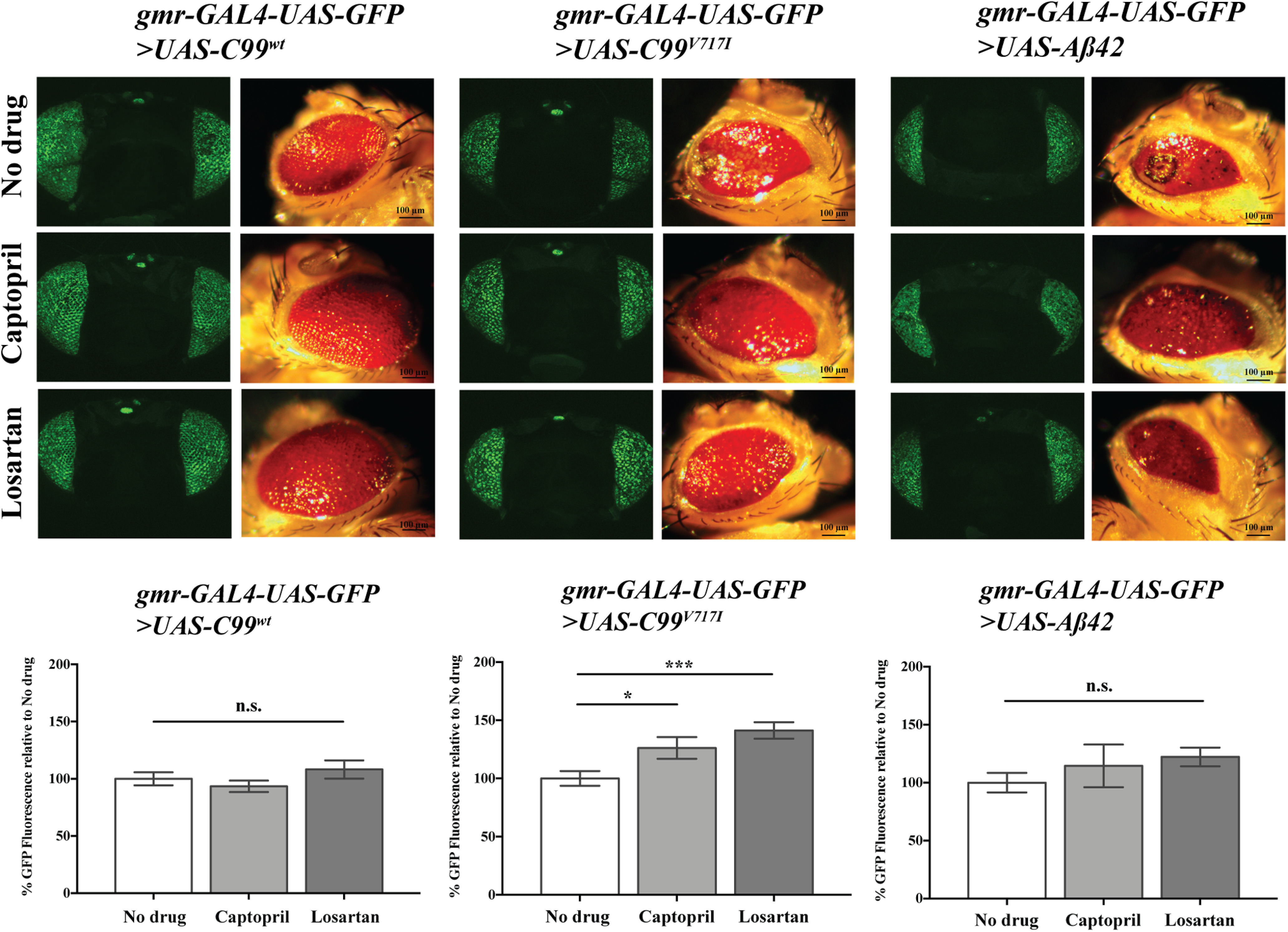
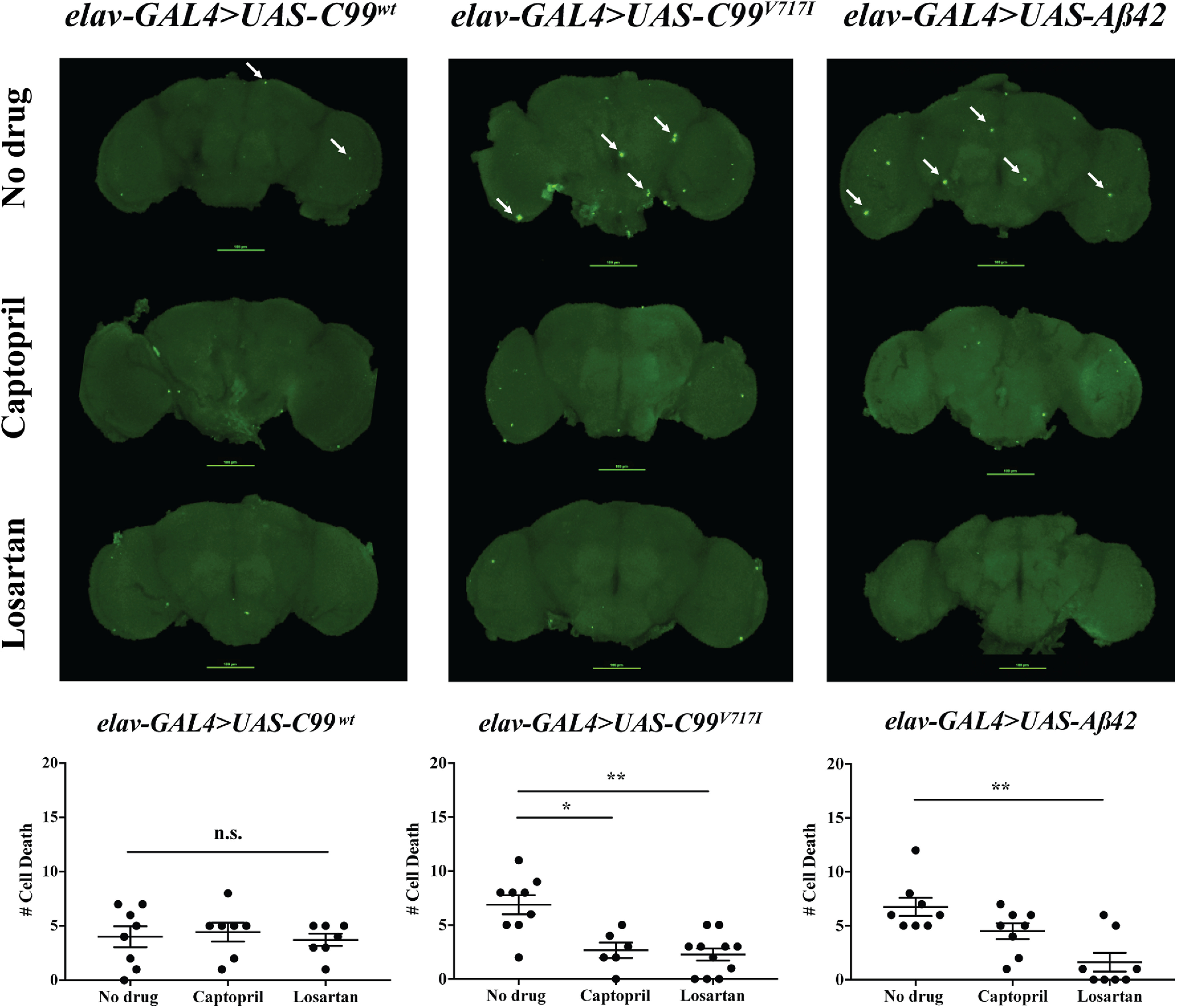
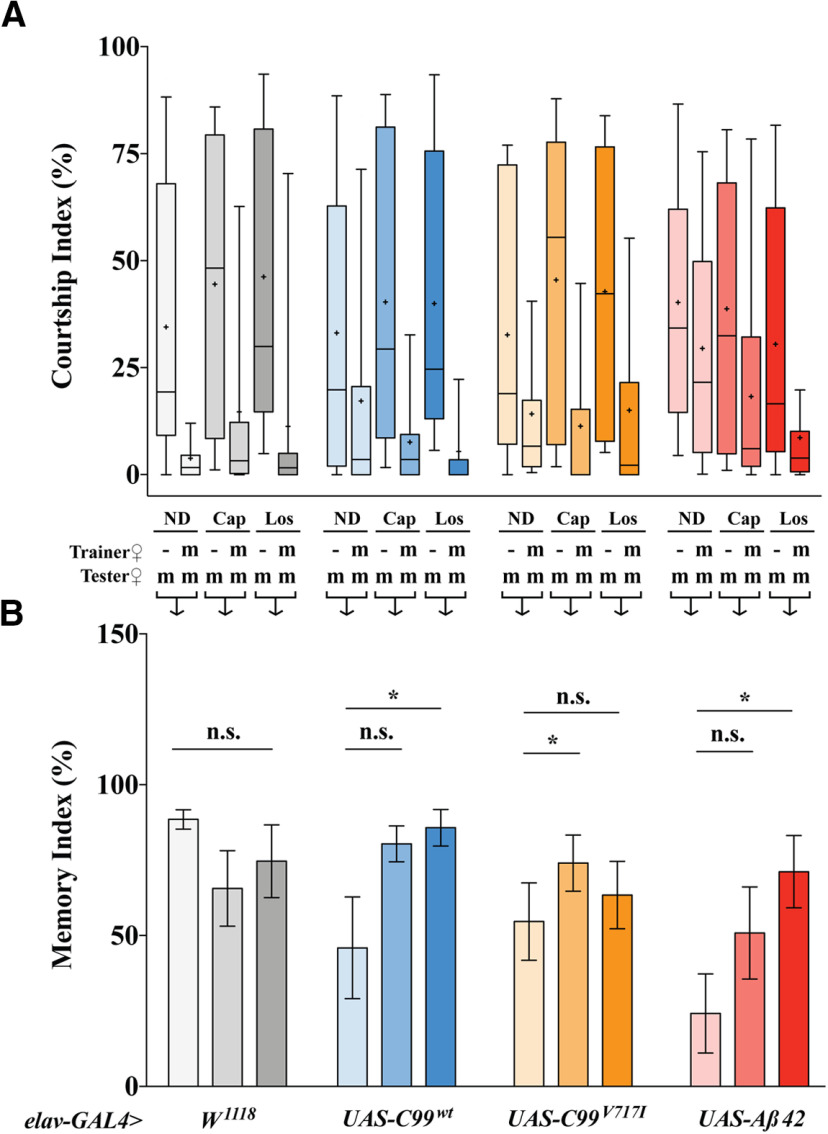
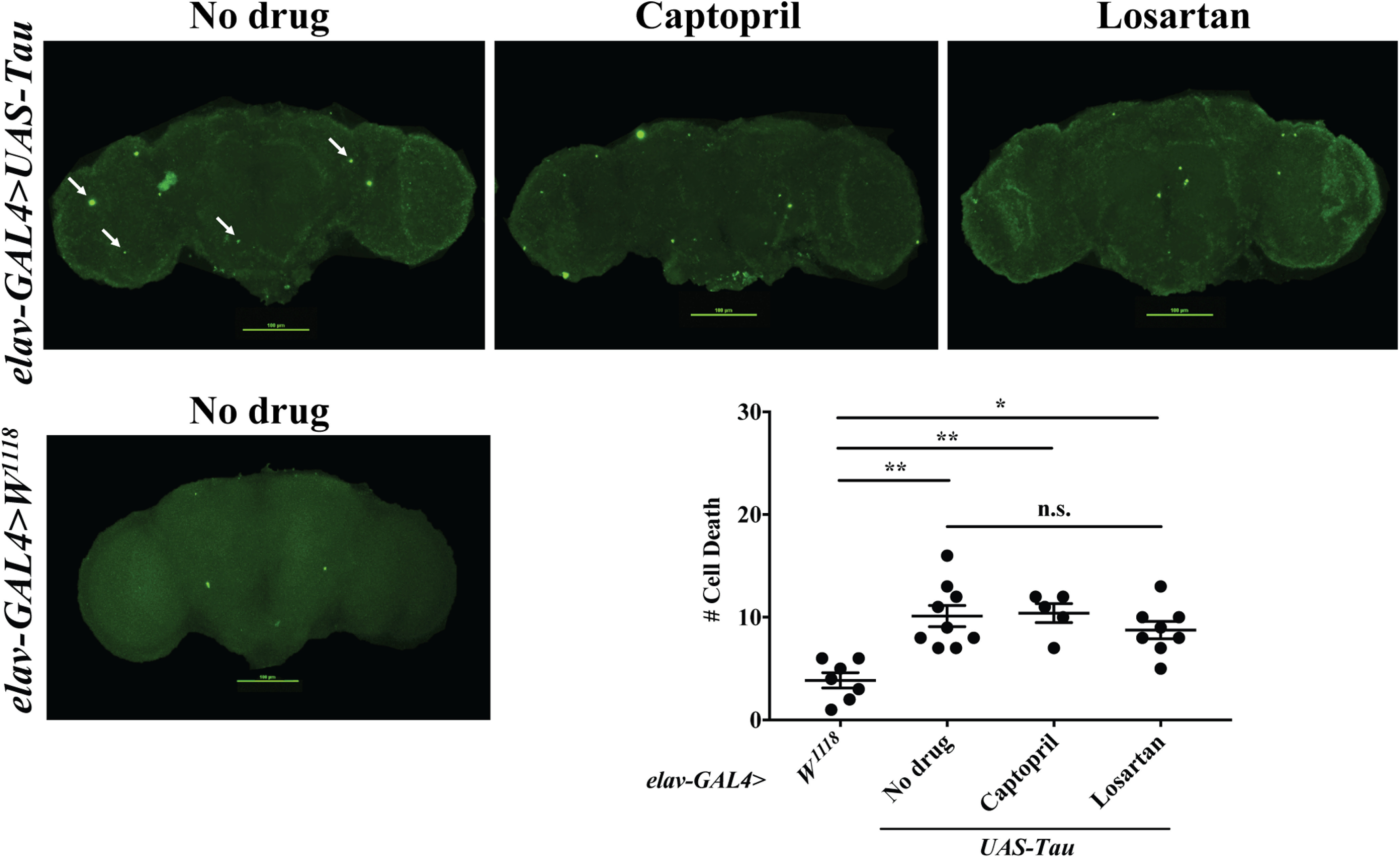
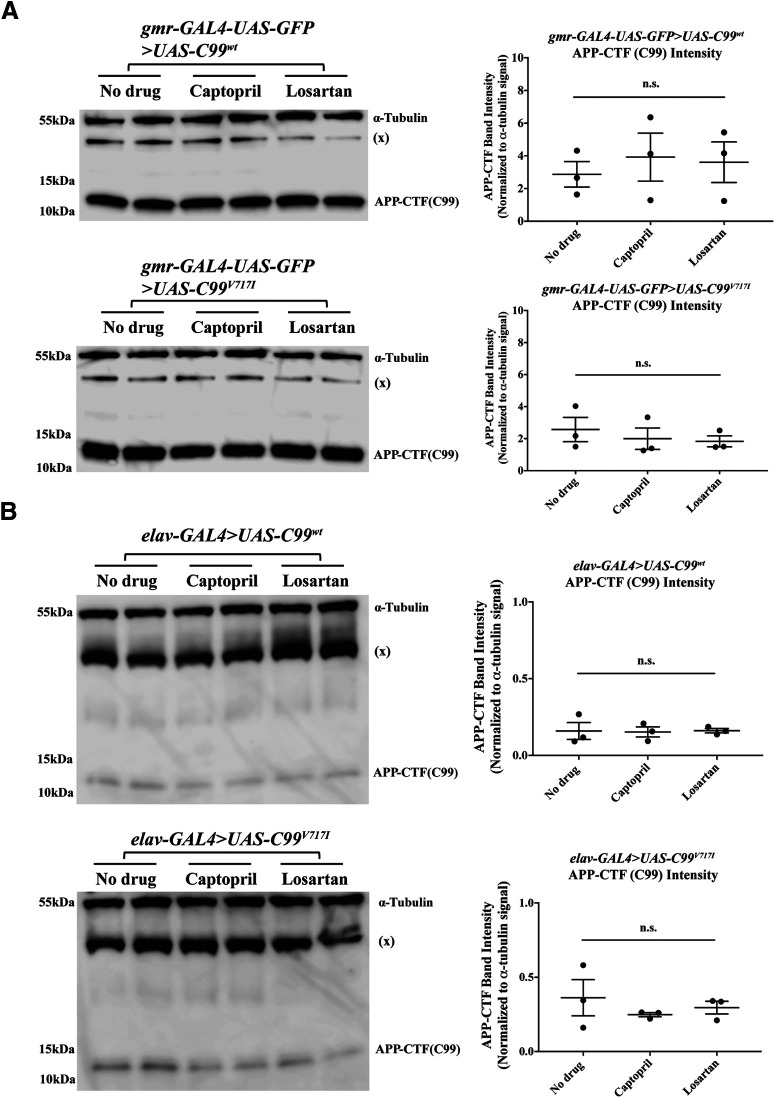
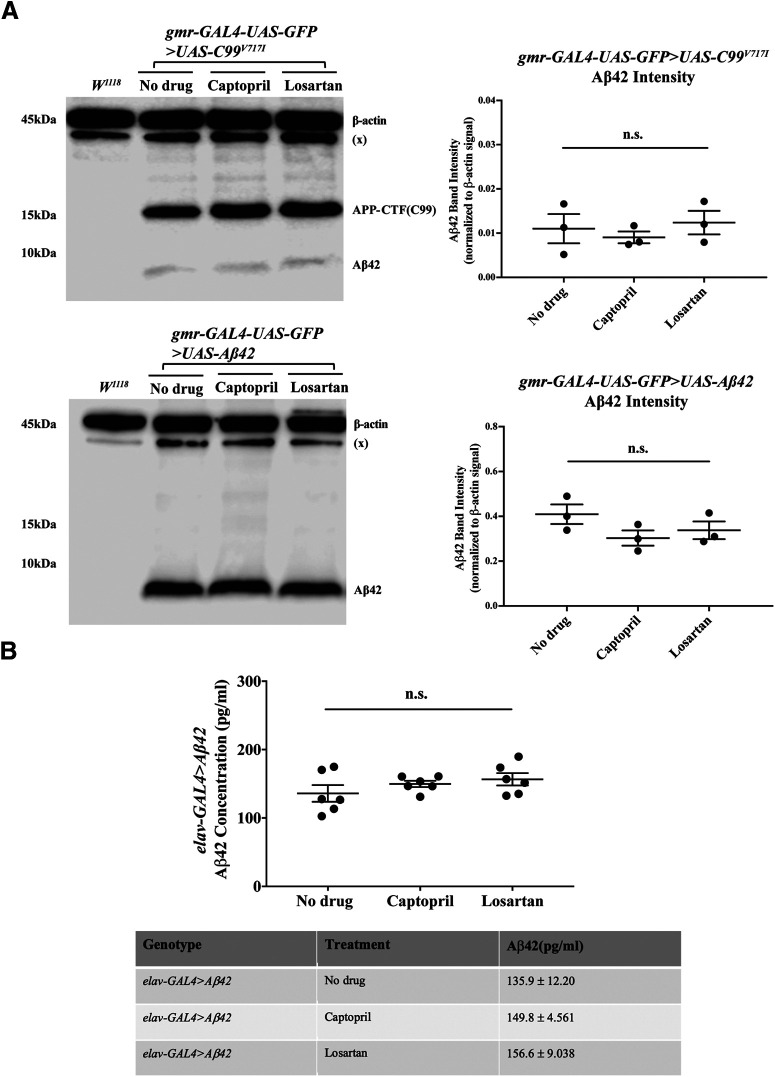
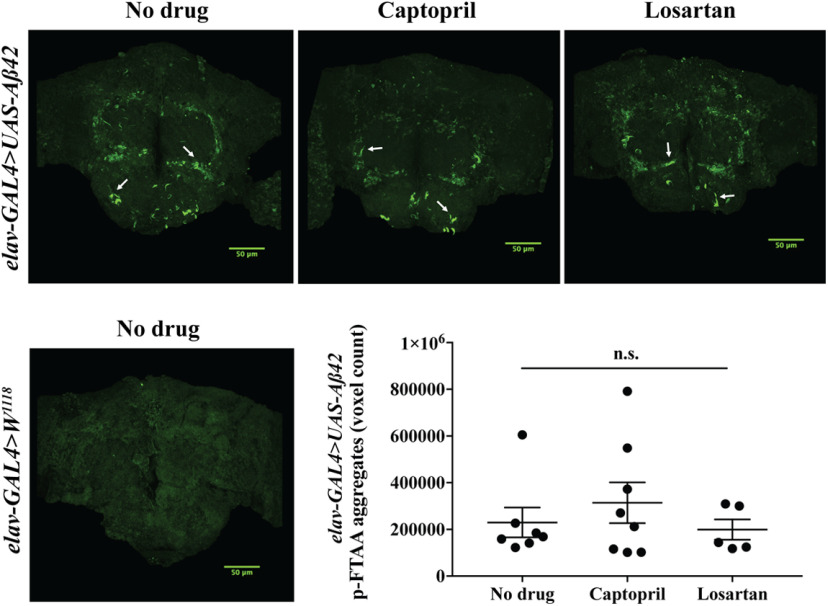
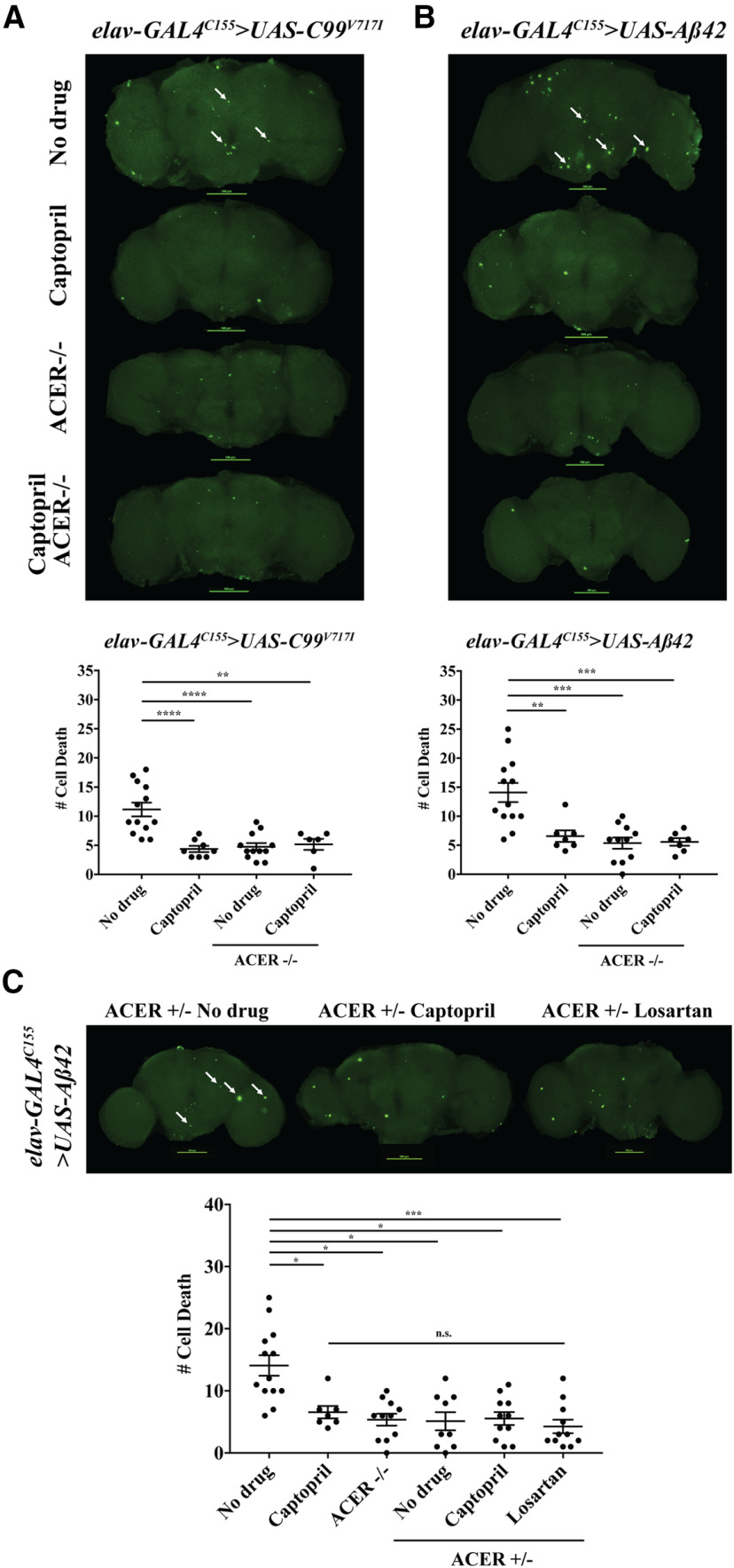
Alzheimer's disease (AD) is a degenerative disorder that causes progressive memory and cognitive decline. Recently, studies have reported that inhibitors of the mammalian renin angiotensin system (RAS) result in a significant reduction in the incidence and progression of AD by unknown mechanisms. Here, we used a genetic and pharmacological approach to evaluate the beneficial effects of angiotensin converting enzyme inhibitors (ACE-Is) and angiotensin receptor blockers (ARBs) in expressing AD-related transgenes. Importantly, while ACE orthologs have been identified in , other RAS components are not conserved. We show that captopril, an ACE-I, and losartan, an ARB, can suppress a rough eye phenotype and brain cell death in flies expressing a mutant human transgene. Captopril also significantly rescues memory defects in these flies. Similarly, both drugs reduce cell death in expressing human β and losartan significantly rescues memory deficits. However, neither drug affects production, accumulation or clearance of β Importantly, neither drug rescued brain cell death in expressing human Tau, suggesting that RAS inhibitors specifically target the amyloid pathway. Of note, we also observed reduced cell death and a complete rescue of memory deficits when we crossed a null mutation in into each transgenic line demonstrating that the target of captopril in is Acer. Together, these studies demonstrate that captopril and losartan are able to modulate AD related phenotypes in the absence of the canonical RAS pathway and suggest that both drugs have additional targets that can be identified in .
阿尔茨海默病(AD)是一种退行性疾病,会导致进行性记忆和认知能力下降。最近的研究报告称,哺乳动物肾素-血管紧张素系统(RAS)的抑制剂通过未知的机制导致 AD 的发病率和进展显著降低。在这里,我们使用遗传和药理学方法来评估血管紧张素转换酶抑制剂(ACE-Is)和血管紧张素受体阻滞剂(ARBs)在表达 AD 相关转基因的中的有益作用。重要的是,虽然在 中鉴定出了 ACE 同源物,但其他 RAS 成分并不保守。我们表明,卡托普利,一种 ACE-I,和氯沙坦,一种 ARB,可以抑制表达突变型人 转基因的果蝇中的粗糙眼表型和脑细胞死亡。卡托普利还显著挽救了这些果蝇的记忆缺陷。同样,这两种药物都减少了表达人类 β和氯沙坦的果蝇中的细胞死亡,并且显著挽救了记忆缺陷。然而,这两种药物都不会影响β的产生、积累或清除。重要的是,这两种药物都不能挽救表达人类 Tau 的果蝇中的脑细胞死亡,这表明 RAS 抑制剂特异性靶向淀粉样蛋白途径。值得注意的是,当我们将 中的 null 突变交叉到每个转基因系中时,我们观察到细胞死亡减少和记忆缺陷完全挽救,这表明卡托普利在 中的靶标是 Acer。总之,这些研究表明,在缺乏典型 RAS 途径的情况下,卡托普利和氯沙坦能够调节 AD 相关表型,并表明这两种药物都有其他可以在 中鉴定的靶点。