Department of Science of Biological Production, Graduate School of Agriculture, Tokyo University of Agriculture and Technology, 3-5-8 Saiwai-cho, Fuchu-shi, Tokyo, 183-8509, Japan.
Database Center for Life Science (DBCLS), Joint Support-Center for Data Science Research, Research Organization of Information and Systems (ROIS), Mishima, Shizuoka, 411-8540, Japan.
Sci Rep. 2020 Oct 15;10(1):17509. doi: 10.1038/s41598-020-74590-z.
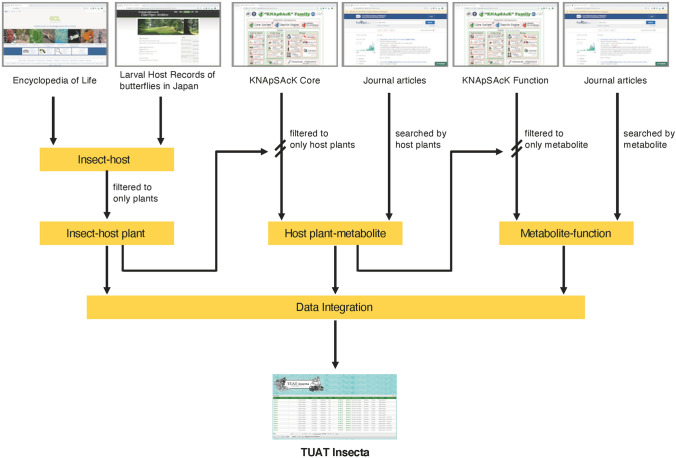
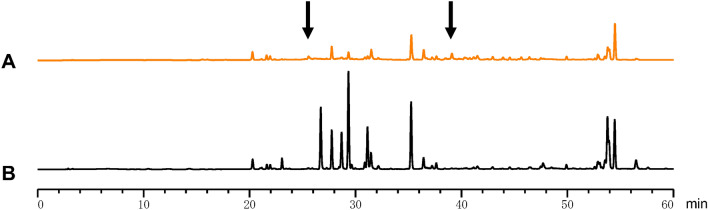
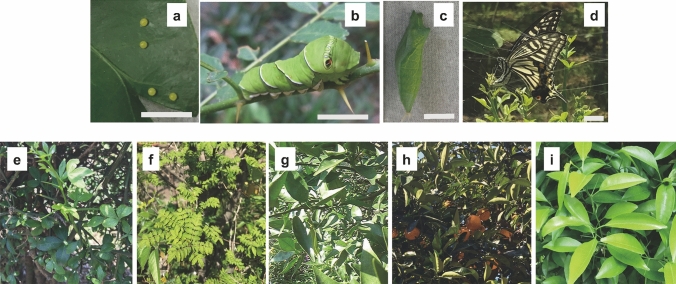
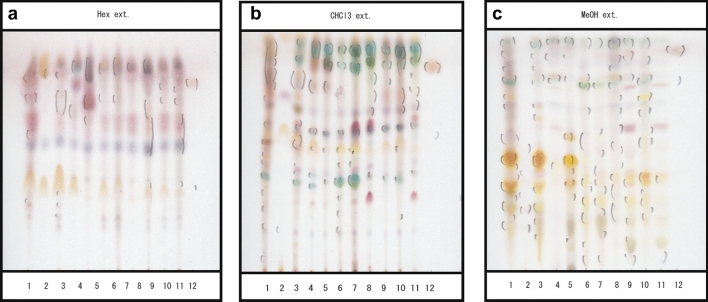
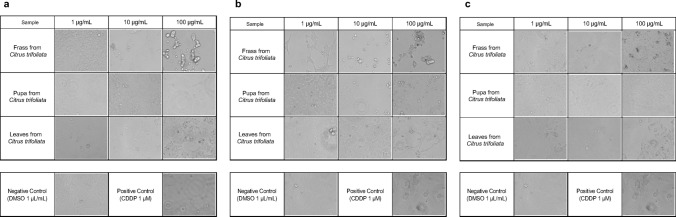
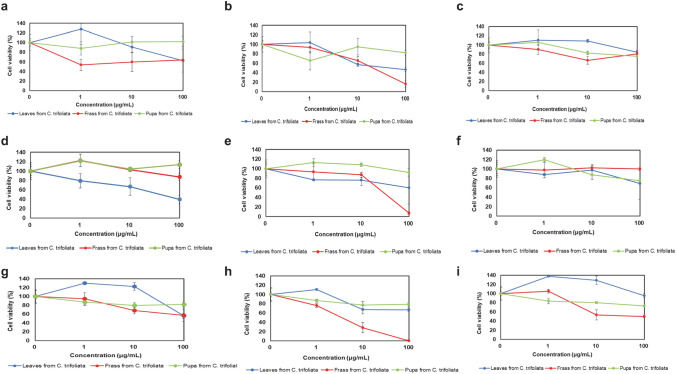
Phytophagous insect larvae feed on plants containing secondary metabolic products with biological activity against other predatory organisms. Phytophagous insects can use their specialised metabolic systems to covert these secondary metabolic products into compounds with therapeutic properties useful to mankind. Some Asians drink tea decoctions made from phytophagous insect frass which is believed to be effective against inflammatory diseases. However, insects that can convert plant-derived secondary metabolic products into useful human therapeutic agents remain poorly studied. Here, we constructed the TUATinsecta database by integrating publicly plant/insect datasets for the purpose of selecting insect species. Using TUAT-insecta we selected the Asian swallowtail butterfly, Papilio xuthus larvae fed on several species of Rutaceous plants and examined whether the plant-derived secondary metabolites, especially those present in frass, were chemically altered or not. We extracted metabolic products from frass using three organic solvents with different polarities, and evaluated solvent fractions for their cytotoxic effects against several human cell lines. We found that chloroform frass extracts from P. xuthus larvae fed on Poncirus trifoliata leaves contained significant cytotoxic activity. Our findings demonstrate that screening of insect species using the 'TUATinsecta' database provides an important pipeline for discovering novel therapeutic agents that might be useful for mankind.
植食性昆虫幼虫以含有对其他捕食性生物具有生物活性的次生代谢产物的植物为食。植食性昆虫可以利用其专门的代谢系统将这些次生代谢产物转化为具有治疗人类疾病的有用化合物。一些亚洲人饮用由植食性昆虫粪便制成的茶剂,据信这些茶剂对炎症性疾病有效。然而,能够将植物来源的次生代谢产物转化为有用的人类治疗剂的昆虫仍未得到充分研究。在这里,我们通过整合公开的植物/昆虫数据集来构建 TUATinsecta 数据库,目的是选择昆虫物种。使用 TUAT-insecta,我们选择了亚洲凤蝶幼虫,这些幼虫以几种芸香科植物为食,并研究了植物来源的次生代谢产物,特别是存在于粪便中的次生代谢产物是否发生了化学变化。我们使用三种不同极性的有机溶剂从粪便中提取代谢产物,并评估溶剂馏分对几种人类细胞系的细胞毒性作用。我们发现,从 P. xuthus 幼虫食用枳椇叶的氯仿粪便提取物中含有显著的细胞毒性活性。我们的研究结果表明,使用“TUATinsecta”数据库筛选昆虫物种为发现可能对人类有用的新型治疗剂提供了重要途径。