O'Connell Timothy D, Mason Richard Preston, Budoff Matthew J, Navar Ann Marie, Shearer Gregory C
Department of Integrative Biology and Physiology, University of Minnesota, 3-141 CCRB, 2231 6th Street SE, Minneapolis, MN 55414, USA.
Cardiovascular Division, Department of Medicine, Brigham and Women's Hospital, Boston, MA, USA.
Eur Heart J Suppl. 2020 Oct 6;22(Suppl J):J3-J20. doi: 10.1093/eurheartj/suaa115. eCollection 2020 Oct.
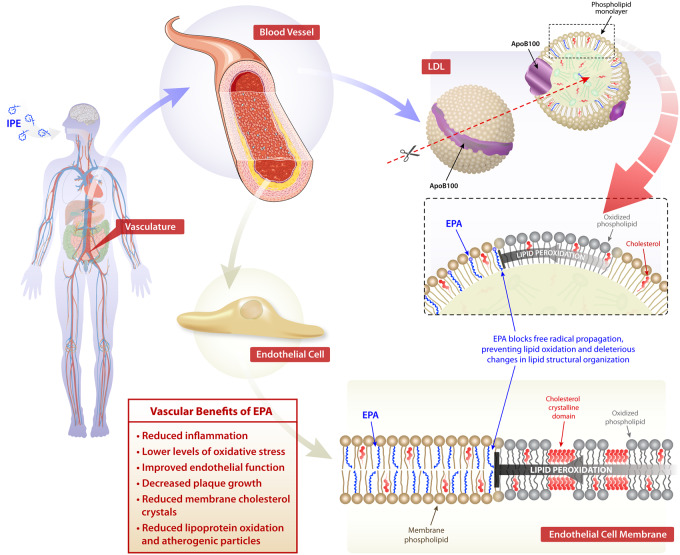
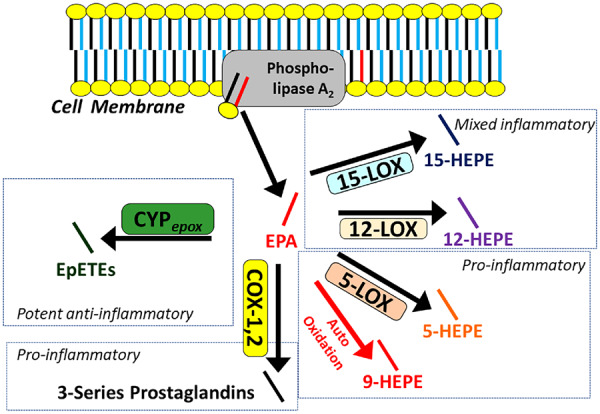
Patients with well-controlled low-density lipoprotein cholesterol levels, but persistent high triglycerides, remain at increased risk for cardiovascular events as evidenced by multiple genetic and epidemiologic studies, as well as recent clinical outcome trials. While many trials of low-dose ω3-polyunsaturated fatty acids (ω3-PUFAs), eicosapentaenoic acid (EPA), and docosahexaenoic acid (DHA) have shown mixed results to reduce cardiovascular events, recent trials with high-dose ω3-PUFAs have reignited interest in ω3-PUFAs, particularly EPA, in cardiovascular disease (CVD). REDUCE-IT demonstrated that high-dose EPA (4 g/day icosapent-ethyl) reduced a composite of clinical events by 25% in statin-treated patients with established CVD or diabetes and other cardiovascular risk factors. Outcome trials in similar statin-treated patients using DHA-containing high-dose ω3 formulations have not yet shown the benefits of EPA alone. However, there are data to show that high-dose ω3-PUFAs in patients with acute myocardial infarction had reduced left ventricular remodelling, non-infarct myocardial fibrosis, and systemic inflammation. ω3-polyunsaturated fatty acids, along with their metabolites, such as oxylipins and other lipid mediators, have complex effects on the cardiovascular system. Together they target free fatty acid receptors and peroxisome proliferator-activated receptors in various tissues to modulate inflammation and lipid metabolism. Here, we review these multifactorial mechanisms of ω3-PUFAs in view of recent clinical findings. These findings indicate physico-chemical and biological diversity among ω3-PUFAs that influence tissue distributions as well as disparate effects on membrane organization, rates of lipid oxidation, as well as various receptor-mediated signal transduction pathways and effects on gene expression.
多项遗传学和流行病学研究以及近期的临床结局试验表明,低密度脂蛋白胆固醇水平得到良好控制但甘油三酯持续升高的患者,心血管事件风险依然增加。虽然许多关于低剂量ω-3多不饱和脂肪酸(ω-3-PUFA)、二十碳五烯酸(EPA)和二十二碳六烯酸(DHA)的试验在降低心血管事件方面结果不一,但近期高剂量ω-3-PUFA试验重新点燃了人们对ω-3-PUFA,尤其是EPA在心血管疾病(CVD)中作用的兴趣。REDUCE-IT研究表明,高剂量EPA(4克/天的二十碳五烯酸乙酯)可使已确诊患有CVD或糖尿病及其他心血管危险因素的他汀类药物治疗患者的临床事件复合终点降低25%。在使用含DHA的高剂量ω-3制剂的类似他汀类药物治疗患者中进行的结局试验尚未显示出单独使用EPA的益处。然而,有数据表明,急性心肌梗死患者服用高剂量ω-3-PUFA可减轻左心室重塑、非梗死心肌纤维化和全身炎症。ω-3多不饱和脂肪酸及其代谢产物,如氧化脂质和其他脂质介质,对心血管系统有复杂的影响。它们共同作用于各种组织中的游离脂肪酸受体和过氧化物酶体增殖物激活受体,以调节炎症和脂质代谢。在此,我们根据近期临床研究结果综述ω-3-PUFA的这些多因素作用机制。这些研究结果表明,ω-3-PUFA之间存在物理化学和生物学差异,这些差异影响组织分布以及对膜组织、脂质氧化速率以及各种受体介导的信号转导途径和基因表达的不同影响。