Division of Laboratory Sciences, National Center for Environmental Health, Centers for Disease Control and Prevention, 4770 Buford Highway, Northeast, Atlanta, Georgia 30341, United States.
Anal Chem. 2020 Nov 3;92(21):14730-14739. doi: 10.1021/acs.analchem.0c03301. Epub 2020 Oct 16.
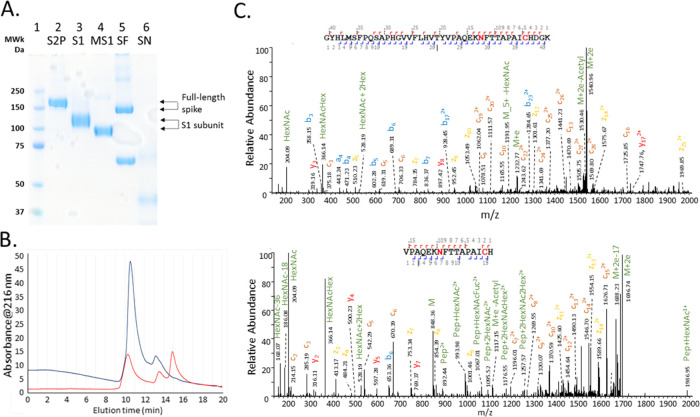
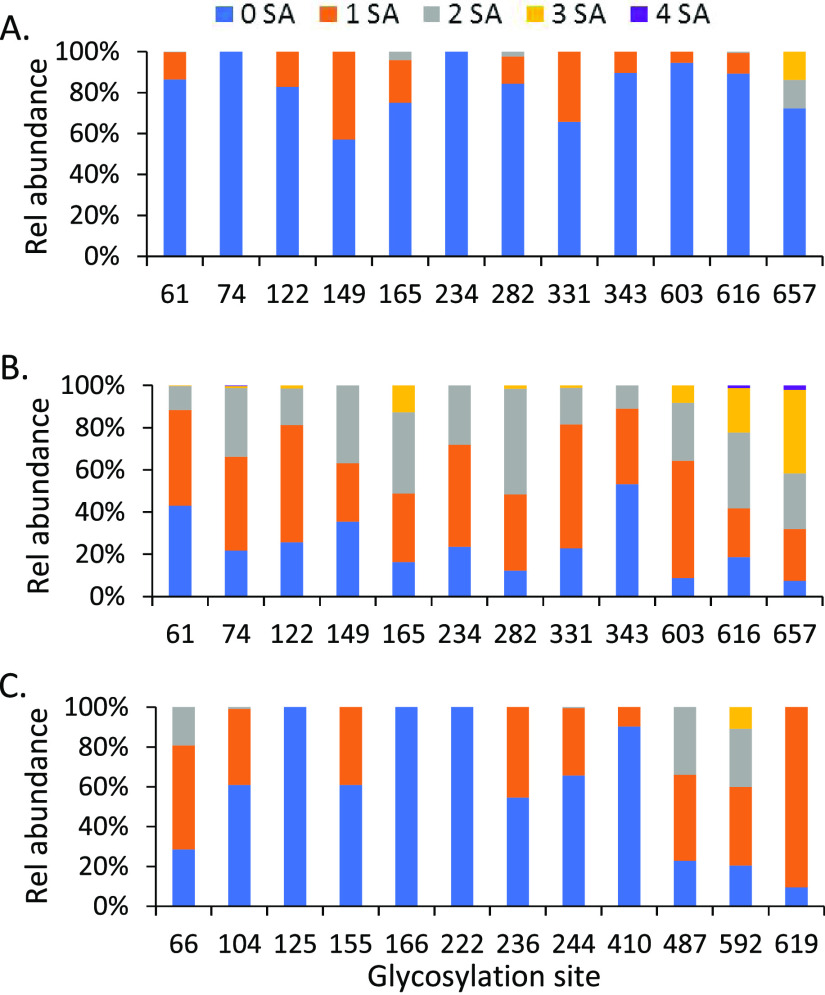
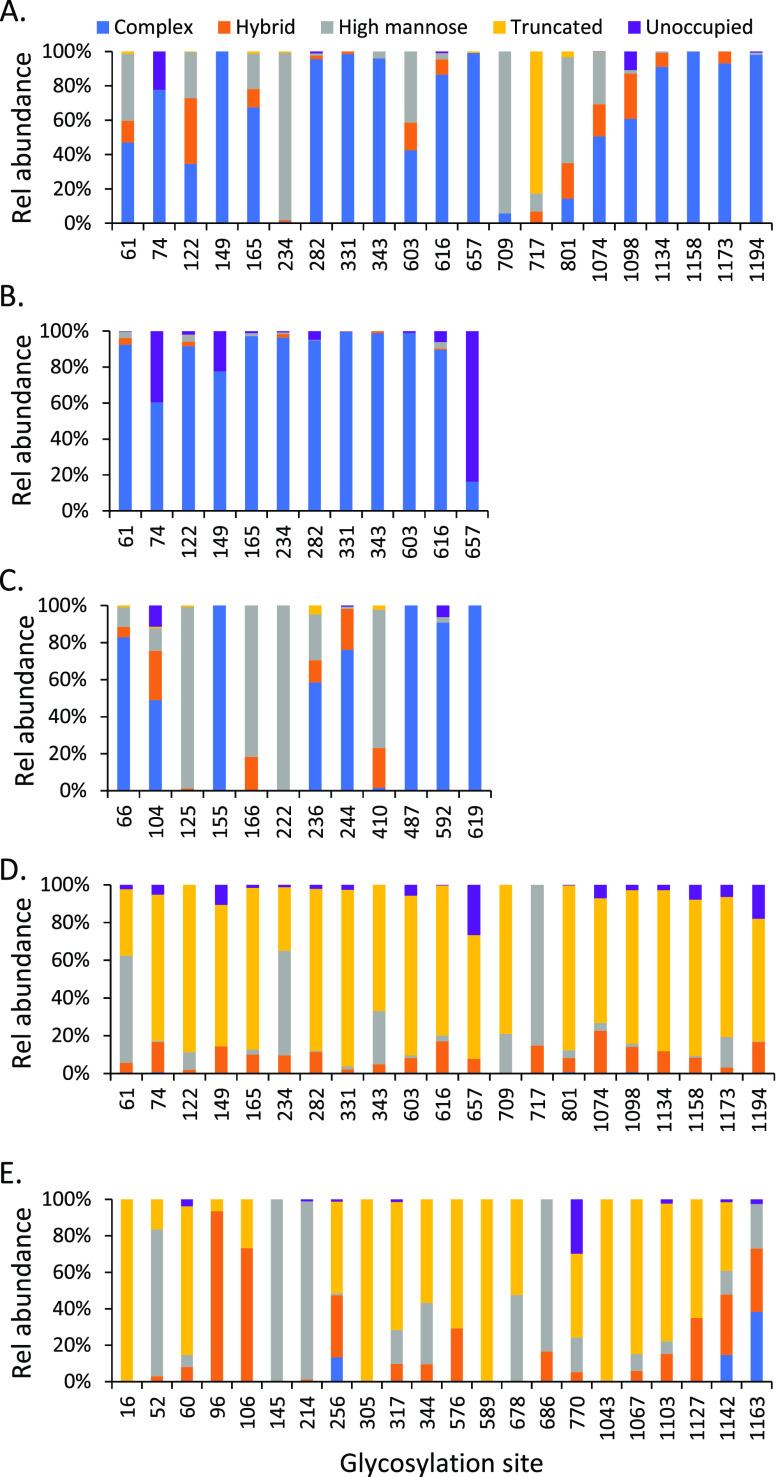
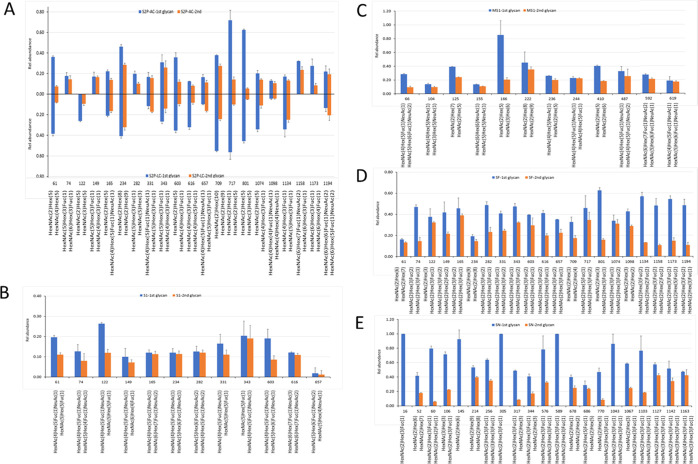
Severe acute respiratory syndrome coronavirus 2 (SARS-CoV-2) has led to a global pandemic of coronavirus disease 2019 (COVID-19). The spike protein expressed on the surface of this virus is highly glycosylated and plays an essential role during the process of infection. We conducted a comprehensive mass spectrometric analysis of the N-glycosylation profiles of the SARS-CoV-2 spike proteins using signature ions-triggered electron-transfer/higher-energy collision dissociation (EThcD) mass spectrometry. The patterns of N-glycosylation within the recombinant ectodomain and S1 subunit of the SARS-CoV-2 spike protein were characterized using this approach. Significant variations were observed in the distribution of glycan types as well as the specific individual glycans on the modification sites of the ectodomain and subunit proteins. The relative abundance of sialylated glycans in the S1 subunit compared to the full-length protein could indicate differences in the global structure and function of these two species. In addition, we compared N-glycan profiles of the recombinant spike proteins produced from different expression systems, including human embryonic kidney (HEK 293) cells and (SF9) insect cells. These results provide useful information for the study of the interactions of SARS-CoV-2 viral proteins and for the development of effective vaccines and therapeutics.
严重急性呼吸综合征冠状病毒 2(SARS-CoV-2)导致了 2019 年冠状病毒病(COVID-19)的全球大流行。该病毒表面表达的刺突蛋白高度糖基化,在感染过程中发挥着重要作用。我们使用特征离子触发的电子转移/更高能碰撞解离(EThcD)质谱法,对 SARS-CoV-2 刺突蛋白的 N-糖基化谱进行了全面的质谱分析。使用这种方法对 SARS-CoV-2 刺突蛋白的重组外域和 S1 亚基的 N-糖基化模式进行了表征。在外域和亚基蛋白的修饰位点上,观察到糖型分布以及特定的单个糖基存在显著差异。S1 亚基中唾液酸化聚糖的相对丰度与全长蛋白相比,可能表明这两种物质的整体结构和功能存在差异。此外,我们比较了来自不同表达系统(包括人胚肾(HEK 293)细胞和昆虫细胞(SF9))的重组刺突蛋白的 N-糖基化谱。这些结果为研究 SARS-CoV-2 病毒蛋白的相互作用以及开发有效的疫苗和治疗方法提供了有用信息。