Stomatological Hospital, Southern Medical University, 366 South Jiangnan Road, Guangzhou, 510280, China.
Nanfang Hospital, Southern Medical University, 1838 North Guangzhou Street, Guangzhou, 510515, China.
Part Fibre Toxicol. 2020 Oct 16;17(1):53. doi: 10.1186/s12989-020-00372-0.
Widespread biomedical applications of nanomaterials (NMs) bring about increased human exposure risk due to their unique physicochemical properties. Autophagy, which is of great importance for regulating the physiological or pathological activities of the body, has been reported to play a key role in NM-driven biological effects both in vivo and in vitro. The coexisting hazard and health benefits of NM-mediated autophagy in biomedicine are nonnegligible and require our particular concerns.
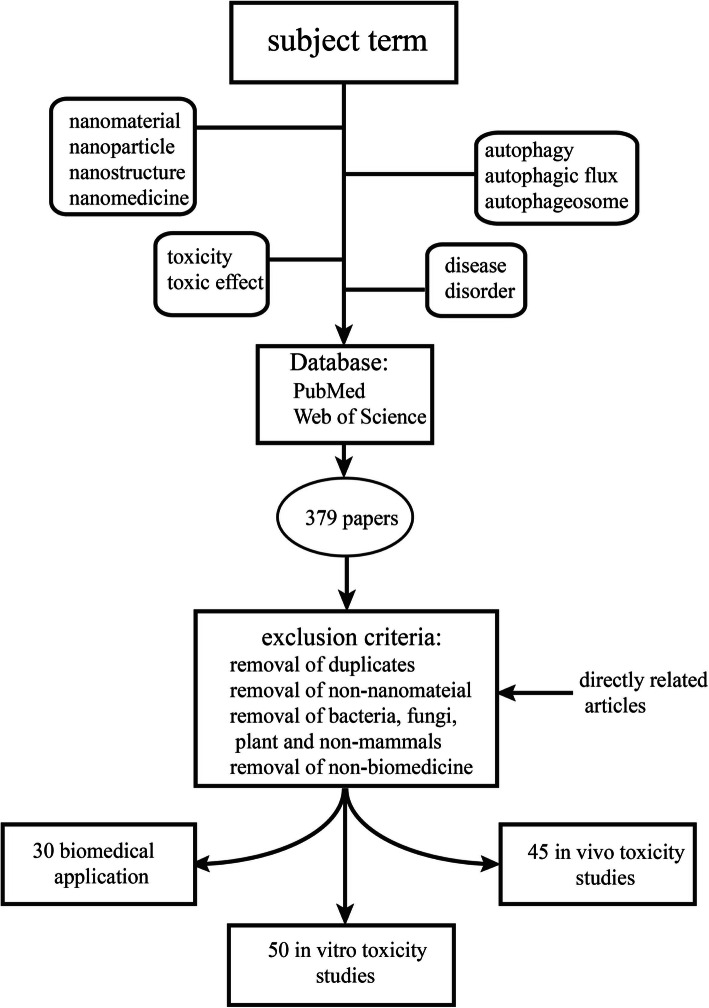
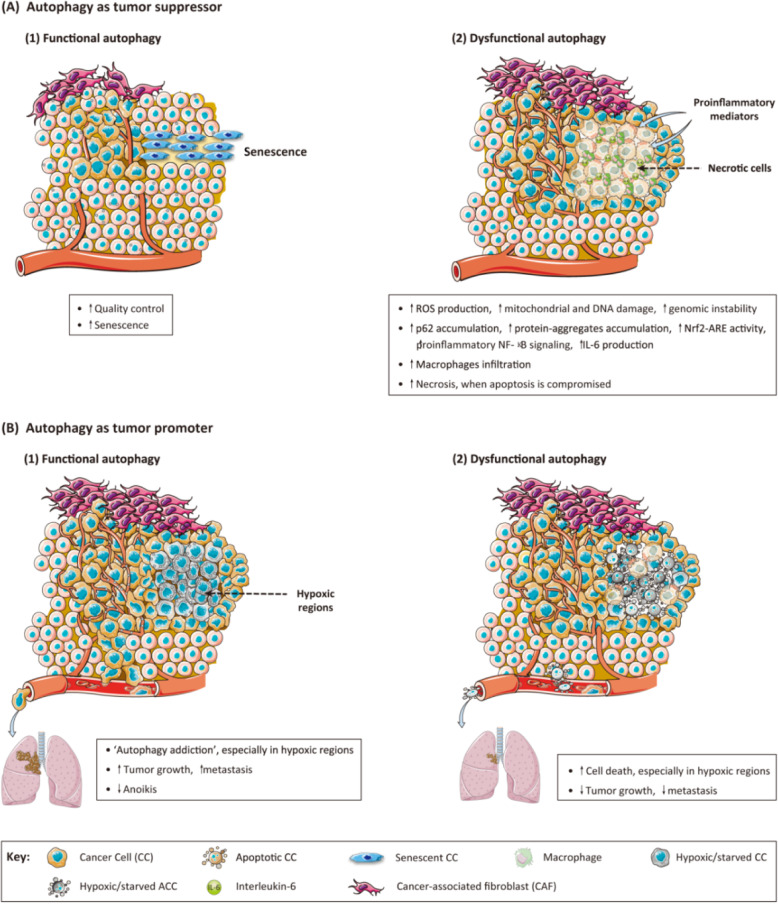
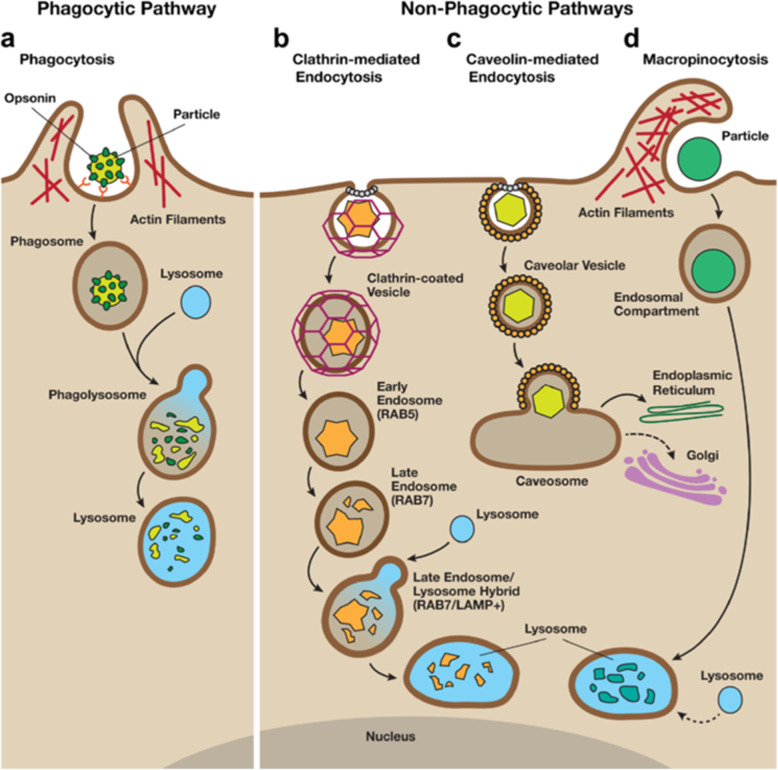
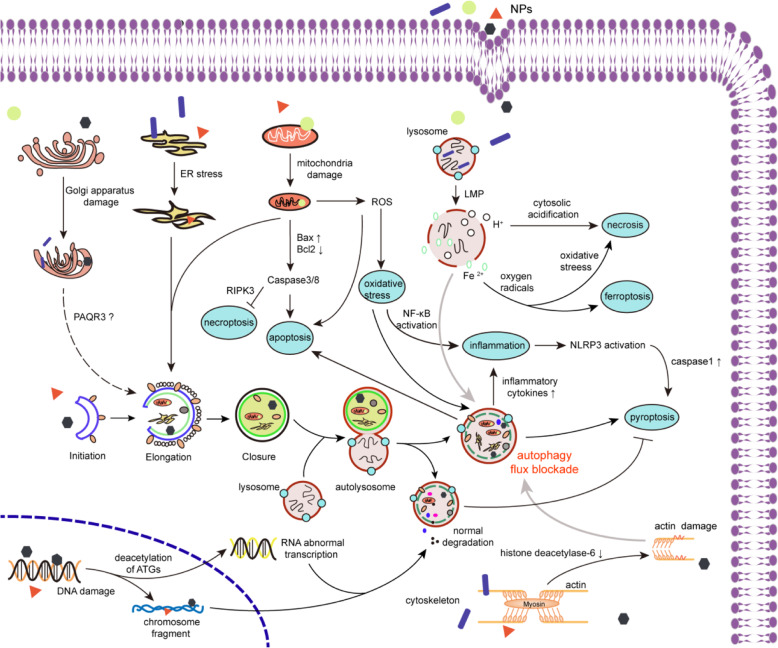
We collected research on the toxic effects related to NM-mediated autophagy both in vivo and in vitro. Generally, NMs can be delivered into animal models through different administration routes, or internalized by cells through different uptake pathways, exerting varying degrees of damage in tissues, organs, cells, and organelles, eventually being deposited in or excreted from the body. In addition, other biological effects of NMs, such as oxidative stress, inflammation, necroptosis, pyroptosis, and ferroptosis, have been associated with autophagy and cooperate to regulate body activities. We therefore highlight that NM-mediated autophagy serves as a double-edged sword, which could be utilized in the treatment of certain diseases related to autophagy dysfunction, such as cancer, neurodegenerative disease, and cardiovascular disease. Challenges and suggestions for further investigations of NM-mediated autophagy are proposed with the purpose to improve their biosafety evaluation and facilitate their wide application. Databases such as PubMed and Web of Science were utilized to search for relevant literature, which included all published, Epub ahead of print, in-process, and non-indexed citations.
In this review, we focus on the dual effect of NM-mediated autophagy in the biomedical field. It has become a trend to use the benefits of NM-mediated autophagy to treat clinical diseases such as cancer and neurodegenerative diseases. Understanding the regulatory mechanism of NM-mediated autophagy in biomedicine is also helpful for reducing the toxic effects of NMs as much as possible.
纳米材料(NMs)广泛的生物医学应用由于其独特的物理化学性质,增加了人类暴露的风险。自噬对于调节身体的生理或病理活动非常重要,据报道,它在体内和体外的 NM 驱动的生物学效应中起着关键作用。在生物医学中,NM 介导的自噬的共存危害和健康益处不可忽视,需要我们特别关注。
我们收集了体内和体外与 NM 介导的自噬相关的毒性作用的研究。通常,NMs 可以通过不同的给药途径递送到动物模型中,或者通过不同的摄取途径被细胞内化,在组织、器官、细胞和细胞器中产生不同程度的损伤,最终被沉积在体内或从体内排出。此外,NMs 的其他生物学效应,如氧化应激、炎症、坏死性凋亡、细胞焦亡和铁死亡,与自噬有关,并协同调节身体活动。因此,我们强调 NM 介导的自噬是一把双刃剑,可以用于治疗与自噬功能障碍相关的某些疾病,如癌症、神经退行性疾病和心血管疾病。提出了进一步研究 NM 介导的自噬的挑战和建议,目的是提高它们的生物安全性评价,并促进它们的广泛应用。我们利用 PubMed 和 Web of Science 等数据库搜索了相关文献,包括已发表、预印本、进行中和未索引的引文。
在这篇综述中,我们重点关注了 NM 介导的自噬在生物医学领域的双重作用。利用 NM 介导的自噬的益处来治疗癌症和神经退行性疾病等临床疾病已成为一种趋势。了解 NM 介导的自噬在生物医学中的调节机制也有助于尽可能减少 NMs 的毒性作用。