Laboratory of Pathoneurochemistry, Department of Neurochemistry, Mossakowski Medical Research Institute, Polish Academy of Sciences, 5 Pawińskiego str., 02-106 Warsaw, Poland.
Int J Mol Sci. 2023 Oct 20;24(20):15386. doi: 10.3390/ijms242015386.
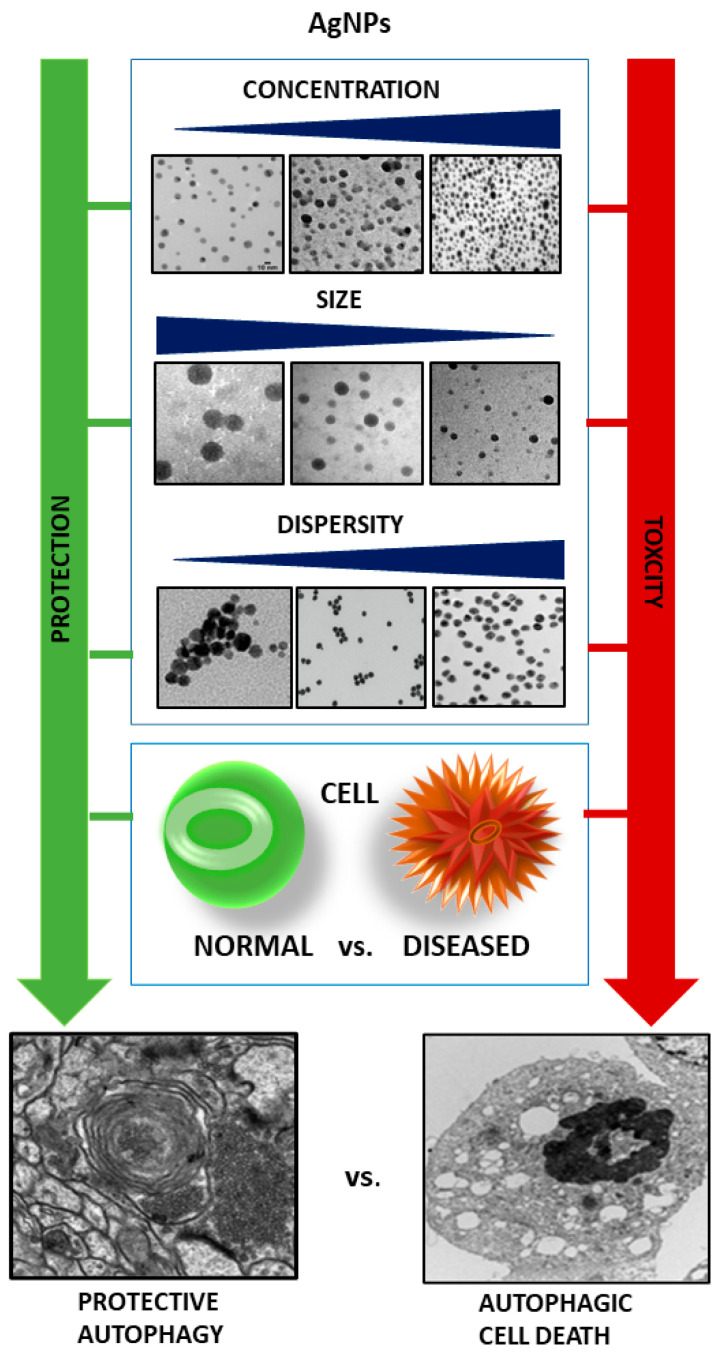
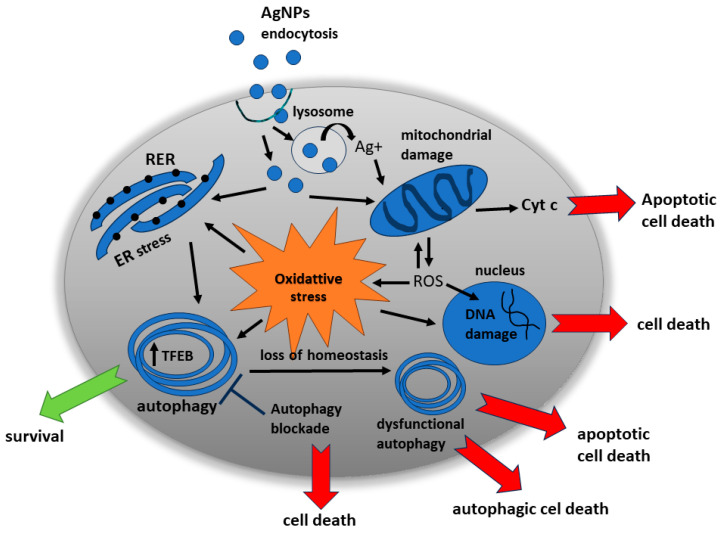
In recent years, efforts have been made to identify new anti-cancer therapies. Various types of nanomaterials, including silver nanoparticles (AgNPs), are being considered as an option. In addition to its well-known antibacterial activity, AgNPs exhibit cytotoxic potential in both physiological and cancer cells by inducing stress-mediated autophagy and apoptotic cell death. A rapidly growing collection of data suggests that the proper regulation of autophagic machinery may provide an efficient tool for suppressing the development of cancer. In this light, AgNPs have emerged as a potential anti-cancer agent to support therapy of the disease. This review summarizes current data indicating the dual role of AgNP-induced autophagy and highlights factors that may influence its protective vs. its toxic potential. It also stresses that our understanding of the cellular and molecular mechanisms of autophagy machinery in cancer cells, as well as AgNP-triggered autophagy in both normal and diseased cells, remains insufficient.
近年来,人们一直在努力寻找新的抗癌疗法。各种类型的纳米材料,包括银纳米粒子(AgNPs),被认为是一种选择。除了众所周知的抗菌活性外,AgNPs 通过诱导应激介导的自噬和凋亡细胞死亡,在生理细胞和癌细胞中表现出细胞毒性潜力。越来越多的数据表明,适当调节自噬机制可能为抑制癌症的发展提供有效的工具。在这方面,AgNPs 已成为一种潜在的抗癌药物,以支持对该疾病的治疗。这篇综述总结了目前的数据,表明 AgNP 诱导的自噬的双重作用,并强调了可能影响其保护作用与毒性作用的因素。它还强调,我们对癌细胞中自噬机制的细胞和分子机制以及正常和患病细胞中 AgNP 触发的自噬的理解仍然不足。