Sir Run Run Shaw Hospital, Zhejiang University School of Medicine, Hangzhou, People's Republic of China.
Institute for Translational Medicine, Zhejiang University School of Medicine, Hangzhou, People's Republic of China.
Eur J Clin Microbiol Infect Dis. 2021 Mar;40(3):581-590. doi: 10.1007/s10096-020-04067-4. Epub 2020 Oct 16.
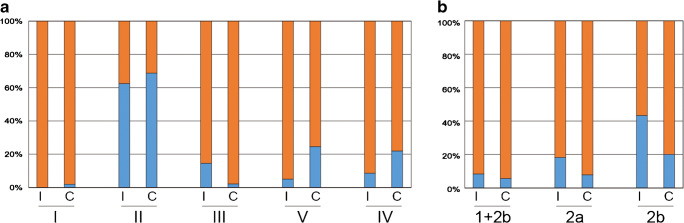
Capsular polysaccharide (CPS) genes and pilus islands encode important virulence factors for group B Streptococcus (GBS) genomes. This study aims to detect phylogenetic inconsistency in CPS genes and pilus islands in GBSs and to explore its relationship with invasiveness. A total of 1016 GBS genomes were downloaded from the NCBI public database. The multi-locus sequence typing (MLST) and Bayesian analysis of Population Structure (BAPS) analyses were both conducted for phylogeny construction. Serotyping and pilus typing were determined in silico using the genomic sequences. The CPS and pilus typing results were generally consistent with MLST and BAPS clustering. GBS isolates of serotype II and of the PI-1 + PI-2b and PI-2a types were more prone to phylogenetic inconsistency than the others. Isolates of serotype Ib and of PI-1 + PI-2a were more likely to appear as colonizing strains, whereas PI-2b was more likely to appear in invasive strains. For serotype V, phylogenetic inconsistency occurred more commonly in colonizing isolates, while for serotype III, the opposite occurred. The present study profiles for the first time the phylogenetic inconsistency of CPS genes and pilus islands in global GBS isolates, which is helpful for infection control and the development of new vaccines for the prevention of GBS occurrence.
荚膜多糖 (CPS) 基因和菌毛岛编码 B 群链球菌 (GBS) 基因组的重要毒力因子。本研究旨在检测 GBS 中 CPS 基因和菌毛岛的系统发育不一致性,并探讨其与侵袭性的关系。从 NCBI 公共数据库中下载了 1016 个 GBS 基因组。进行了多位点序列分型 (MLST) 和群体结构贝叶斯分析 (BAPS) 分析,以构建系统发育。使用基因组序列进行了血清型和菌毛型的计算机预测。CPS 和菌毛型分型结果与 MLST 和 BAPS 聚类基本一致。与其他血清型相比,II 型和 PI-1+PI-2b 和 PI-2a 型的 GBS 分离株更易出现系统发育不一致性。Ib 型和 PI-1+PI-2a 型分离株更易出现定植菌株,而 PI-2b 型更易出现侵袭性菌株。对于 V 型血清型,定植分离株中更常见系统发育不一致性,而对于 III 型血清型,则相反。本研究首次对全球 GBS 分离株中 CPS 基因和菌毛岛的系统发育不一致性进行了分析,有助于感染控制和开发预防 GBS 发生的新型疫苗。