Department of Pathophysiology, Key Lab of Neurological Disorder of Education Ministry, School of Basic Medicine, Tongji Medical College, Huazhong University of Science and Technology, Wuhan, China.
The Institute of Brain Research, Collaborative Innovation Center for Brain Science, Huazhong University of Science and Technology, Wuhan, China.
Aging Cell. 2020 Nov;19(11):e13235. doi: 10.1111/acel.13235. Epub 2020 Oct 17.
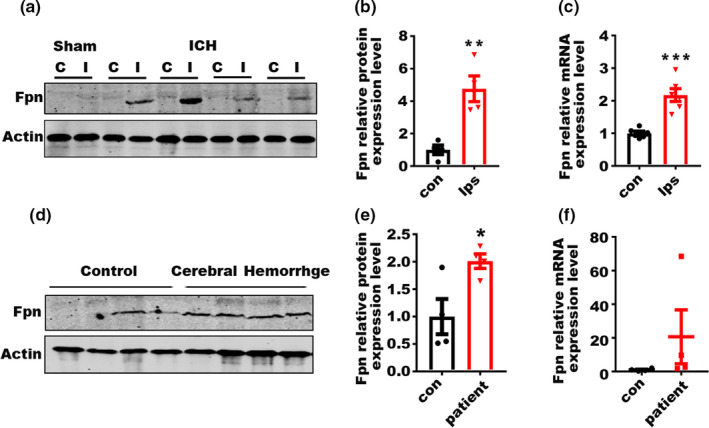
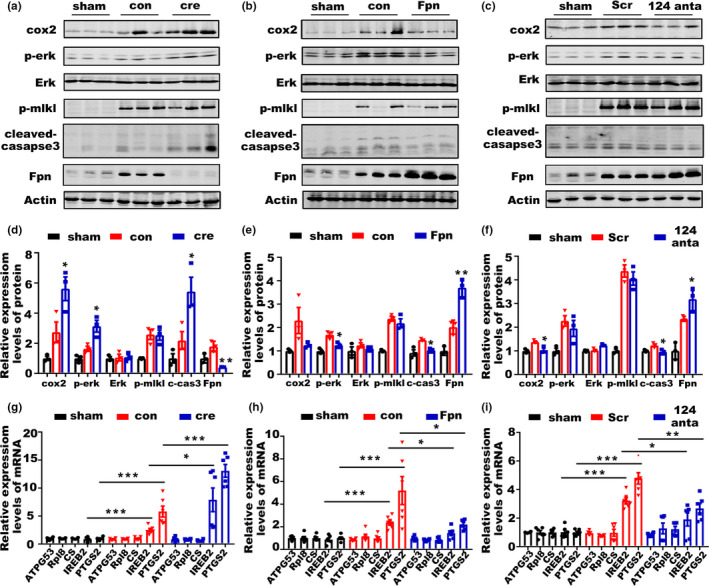
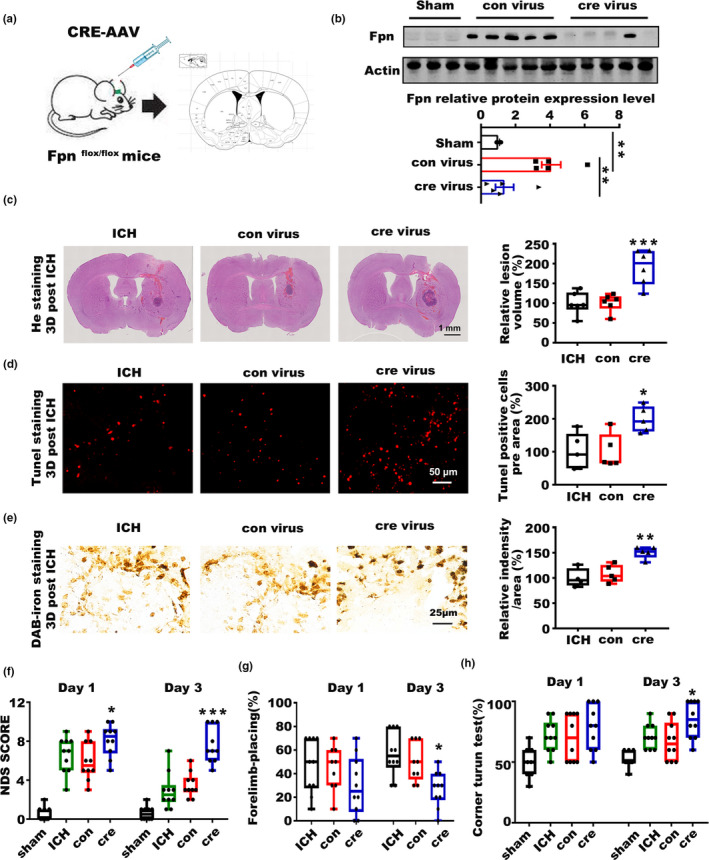
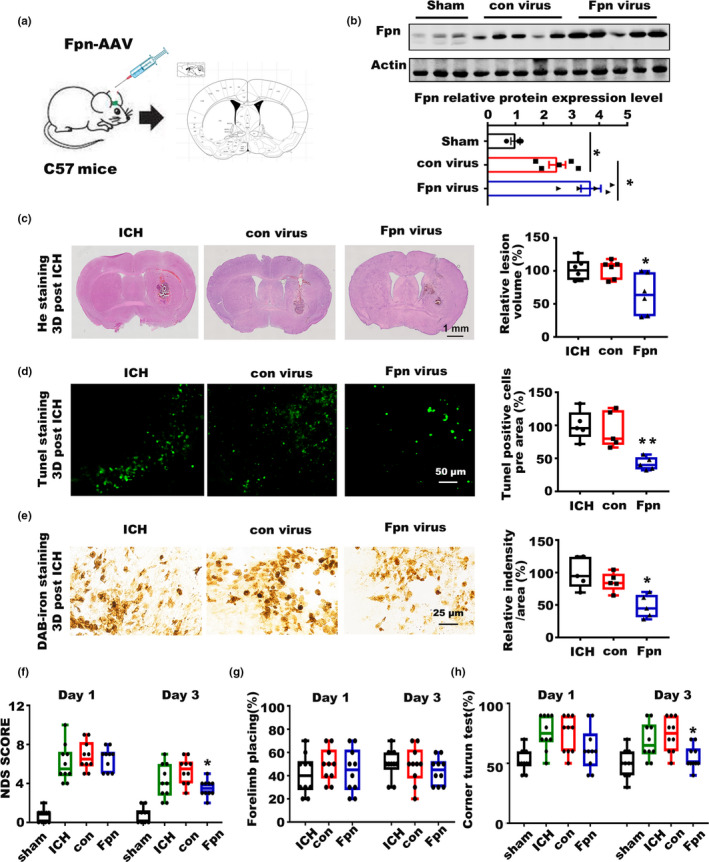
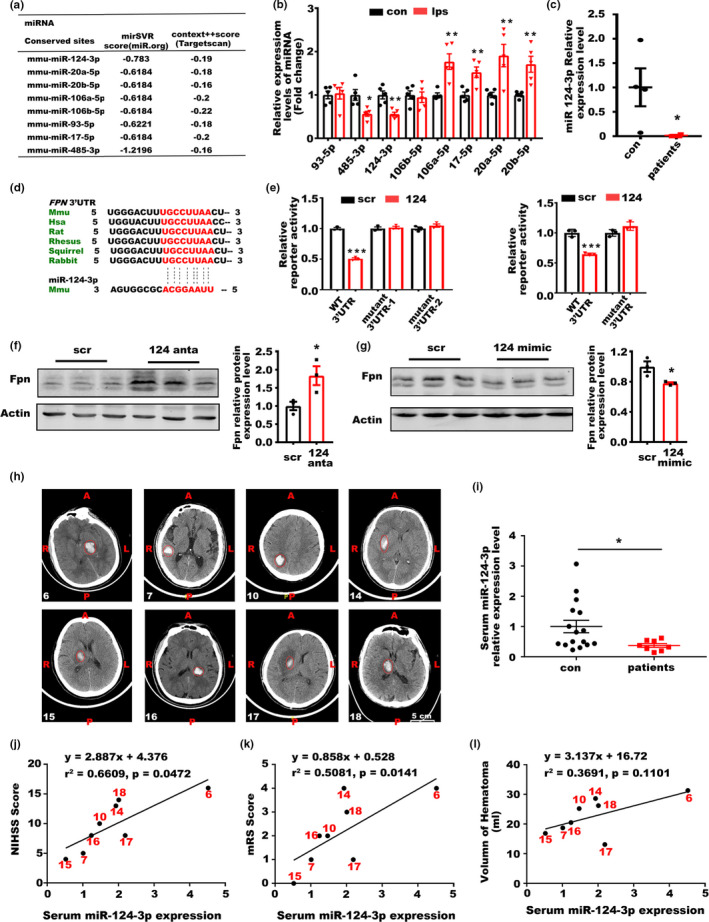
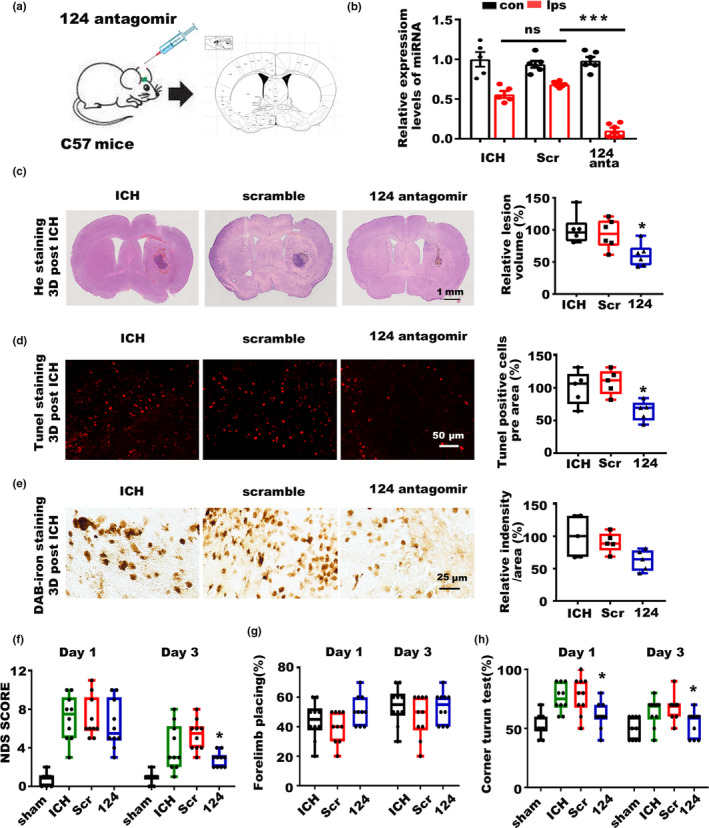
Incidence of intracerebral hemorrhage (ICH) and brain iron accumulation increases with age. Excess iron accumulation in brain tissues post-ICH induces oxidative stress and neuronal damage. However, the mechanisms underlying iron deregulation in ICH, especially in the aged ICH model have not been well elucidated. Ferroportin1 (Fpn) is the only identified nonheme iron exporter in mammals to date. In our study, we reported that Fpn was significantly upregulated in perihematomal brain tissues of both aged ICH patients and mouse model. Fpn deficiency induced by injecting an adeno-associated virus (AAV) overexpressing cre recombinase into aged Fpn-floxed mice significantly worsened the symptoms post-ICH, including hematoma volume, cell apoptosis, iron accumulation, and neurologic dysfunction. Meanwhile, aged mice pretreated with a virus overexpressing Fpn showed significant improvement of these symptoms. Additionally, based on prediction of website tools, expression level of potential miRNAs in ICH tissues and results of luciferase reporter assays, miR-124 was identified to regulate Fpn expression post-ICH. Higher serum miR-124 levels were correlated with poor neurologic scores of aged ICH patients. Administration of miR-124 antagomir enhanced Fpn expression and attenuated iron accumulation in aged mice model. Both apoptosis and ferroptosis, but not necroptosis, were regulated by miR-124/Fpn signaling manipulation. Our study demonstrated the critical role of miR-124/Fpn signaling in iron metabolism and neuronal death post-ICH in aged murine model. Thus, Fpn upregulation or miR-124 inhibition might be promising therapeutic approachs for this disease.
脑出血 (ICH) 和脑铁积累的发生率随着年龄的增长而增加。ICH 后脑组织中铁的过度积累会引起氧化应激和神经元损伤。然而,ICH 中铁失调的机制,尤其是在老年 ICH 模型中,尚未得到很好的阐明。铁蛋白 1 (Fpn) 是迄今为止在哺乳动物中发现的唯一一种非血红素铁输出蛋白。在我们的研究中,我们报道 Fpn 在老年 ICH 患者和小鼠模型的血肿周围脑组织中显著上调。通过向老年 Fpn 基因敲除小鼠脑内注射表达 Cre 重组酶的腺相关病毒 (AAV) 来抑制 Fpn 的表达,显著加重了 ICH 后的症状,包括血肿体积、细胞凋亡、铁积累和神经功能障碍。同时,用表达 Fpn 的病毒预先处理老年小鼠,这些症状得到了显著改善。此外,基于网站工具的预测、ICH 组织中潜在 miRNAs 的表达水平以及荧光素酶报告基因检测的结果,miR-124 被鉴定为 ICH 后调节 Fpn 表达的 miRNA。较高的血清 miR-124 水平与老年 ICH 患者的神经功能评分较差相关。给予 miR-124 拮抗剂可增强老年小鼠模型中 Fpn 的表达并减少铁积累。miR-124/Fpn 信号通路的调控不仅影响铁代谢,还影响神经元死亡。我们的研究表明,miR-124/Fpn 信号通路在老年小鼠 ICH 模型中铁代谢和神经元死亡中起着关键作用。因此,Fpn 的上调或 miR-124 的抑制可能是治疗这种疾病的有前途的方法。