DNA Damage Laboratory of Food Science Department, Faculty of Pharmacy, Medical University of Lodz, Ul. Muszynskiego 1, 90-151, Lodz, Poland.
Mol Biol Rep. 2020 Nov;47(11):9075-9086. doi: 10.1007/s11033-020-05900-x. Epub 2020 Oct 18.
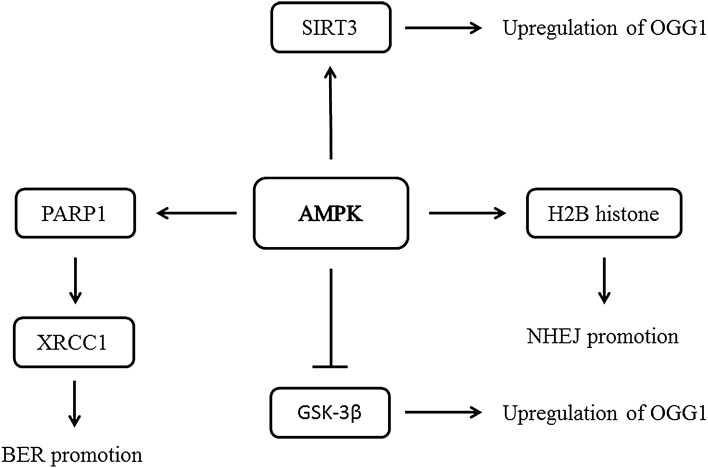
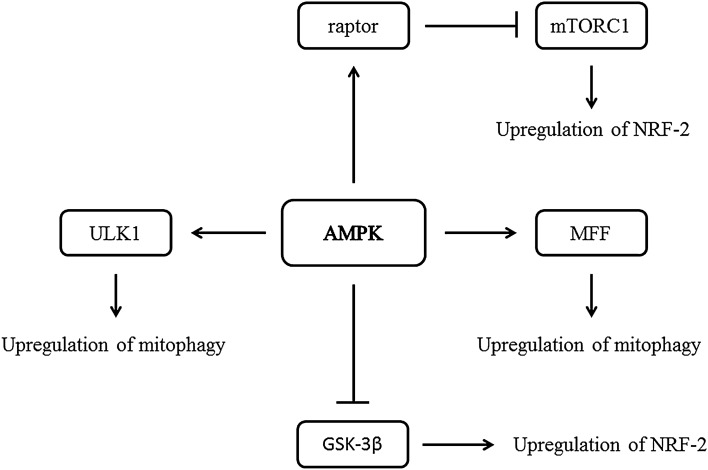
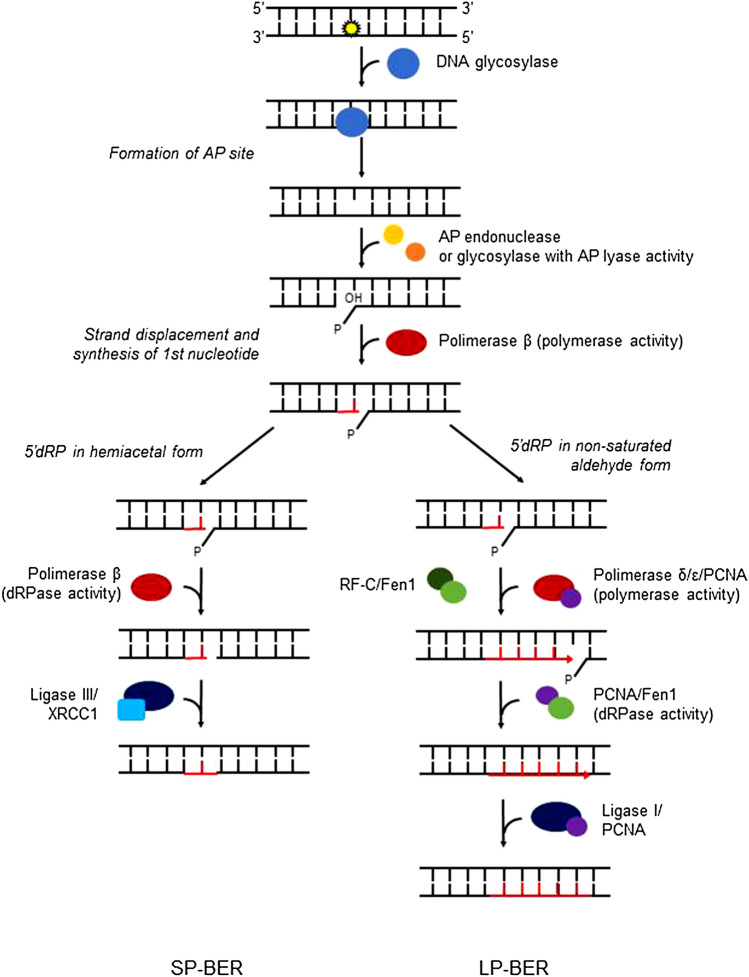
One of the most complex health disproportions in the human body is the metabolic syndrome (MetS). It can result in serious health consequences such as type 2 diabetes mellitus, atherosclerosis or insulin resistance. The center of energy regulation in human is AMP-activated protein kinase (AMPK), which modulates cells' metabolic pathways and protects them against negative effects of metabolic stress, e.g. reactive oxygen species. Moreover, recent studies show the relationship between the AMPK activity and the regulation of DNA damage repair such as base excision repair (BER) system, which is presented in relation to the influence of MetS on human genome. Hence, AMPK is studied not only in the field of counteracting MetS but also prevention of genetic alterations and cancer development. Through understanding AMPK pathways and its role in cells with damaged DNA it might be possible to improve cell's repair processes and develop new therapies. This review presents AMPK role in eukaryotic cells and focuses on the relationship between AMPK activity and the regulation of BER system through its main component-8-oxoguanine glycosylase (OGG1).
人体中最复杂的健康不均衡之一是代谢综合征(MetS)。它可能导致严重的健康后果,如 2 型糖尿病、动脉粥样硬化或胰岛素抵抗。人类能量调节的中心是 AMP 激活的蛋白激酶(AMPK),它调节细胞的代谢途径,保护它们免受代谢应激的负面影响,例如活性氧。此外,最近的研究表明 AMPK 活性与 DNA 损伤修复的调节之间存在关系,如碱基切除修复(BER)系统,这与 MetS 对人类基因组的影响有关。因此,AMPK 不仅在对抗 MetS 的领域,而且在预防遗传改变和癌症发展方面都有研究。通过了解 AMPK 途径及其在受损 DNA 细胞中的作用,可能改善细胞的修复过程并开发新的治疗方法。本文综述了 AMPK 在真核细胞中的作用,并重点介绍了 AMPK 活性与 BER 系统调节之间的关系,通过其主要成分 8-氧鸟嘌呤糖苷酶(OGG1)来实现。