Ogawa Tatsuyuki, Fukasawa Hiroko, Hirata Shuji
Department of Obstetrics and Gynecology Faculty of Medicine University of Yamanashi Chuo Japan.
Reprod Med Biol. 2020 Jun 27;19(4):357-364. doi: 10.1002/rmb2.12335. eCollection 2020 Oct.
Assisted reproductive technology (ART) is a widely applied fertility treatment. However, the developmental competence of aged oocytes from women of a late reproductive age is seriously reduced and the aged oocytes often fail in fertilization even when ART is used. To resolve this problem, we examined usefulness of a new method "the metaphase II spindle transfer (MESI)" as ART using mouse oocytes.
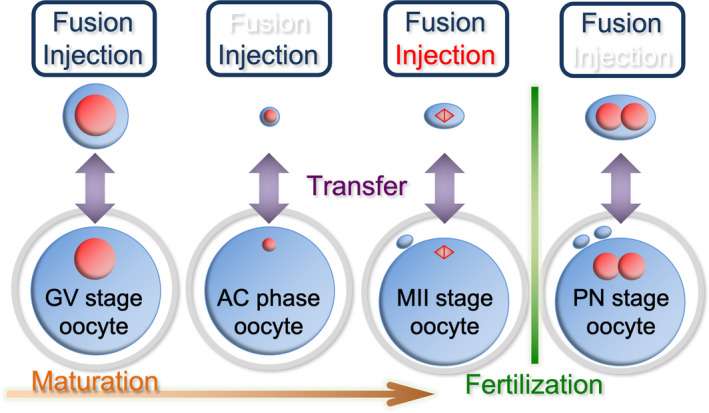
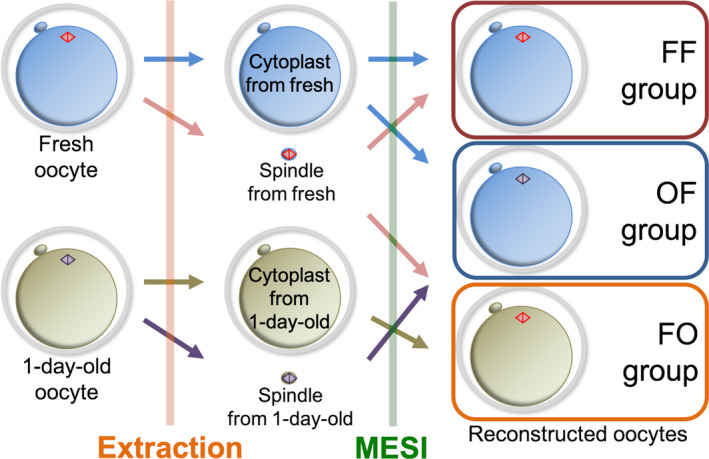
This work was composed of two experiments. First, 24 hours after collection, embryos from oocytes (1-day-old oocytes, called postovulatory-aged oocytes), were observed, after intracytoplasmic sperm injection (ICSI), and it was found that they were not able to reach the blastocyst stage. Next, the metaphase II chromosome-spindle complexes from 1-day-old oocytes were injected into cytoplasts from oocytes just collected, using piezo pulses to generate reconstructed oocytes. This procedure was named metaphase II spindle injection (MESI).
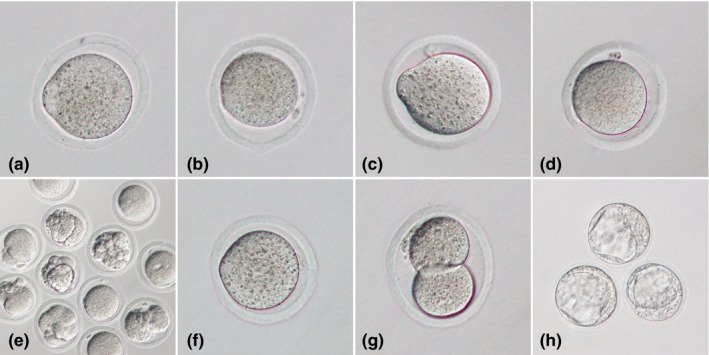
After ICSI, embryos from the reconstructed oocytes (32/105), which contained the genes of 1-day-old oocytes, were able to develop into the blastocyst stage. The fragmentation rate after ICSI was 28.6%. Thus, the developmental competence of 1-day-old oocytes was improved by MESI.
The MESI method has the potential to improve the success rate of infertility treatments for women of a late reproductive age.
辅助生殖技术(ART)是一种广泛应用的生育治疗方法。然而,晚育女性的老龄卵母细胞发育能力严重下降,即使采用ART,老龄卵母细胞也常常受精失败。为了解决这个问题,我们使用小鼠卵母细胞研究了一种新方法“中期II纺锤体转移(MESI)”作为ART的有效性。
本研究由两个实验组成。首先,收集后24小时,对卵母细胞(1日龄卵母细胞,称为排卵后老龄卵母细胞)经胞浆内单精子注射(ICSI)后的胚胎进行观察,发现它们无法发育到囊胚阶段。接下来,使用压电脉冲将1日龄卵母细胞的中期II染色体-纺锤体复合体注入刚收集的卵母细胞的胞质体中,以产生重构卵母细胞。此过程称为中期II纺锤体注射(MESI)。
ICSI后,含有1日龄卵母细胞基因的重构卵母细胞(32/105)所形成的胚胎能够发育到囊胚阶段。ICSI后的碎片率为28.6%。因此,MESI提高了1日龄卵母细胞的发育能力。
MESI方法有可能提高晚育女性不孕症治疗的成功率。