Fesce Riccardo
Department of Biomedical Sciences, Humanitas University, Pieve Emanuele, Italy.
Front Neurosci. 2020 Sep 23;14:548071. doi: 10.3389/fnins.2020.548071. eCollection 2020.
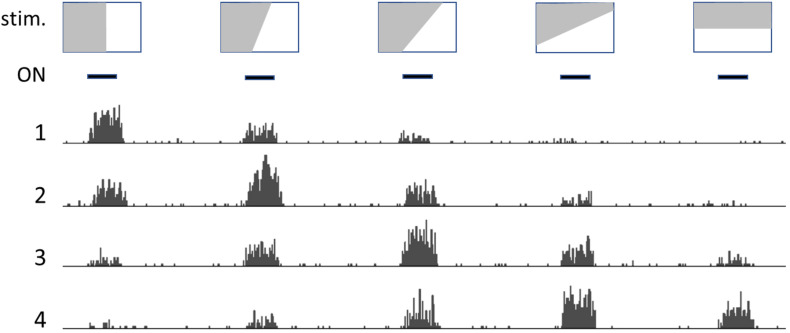
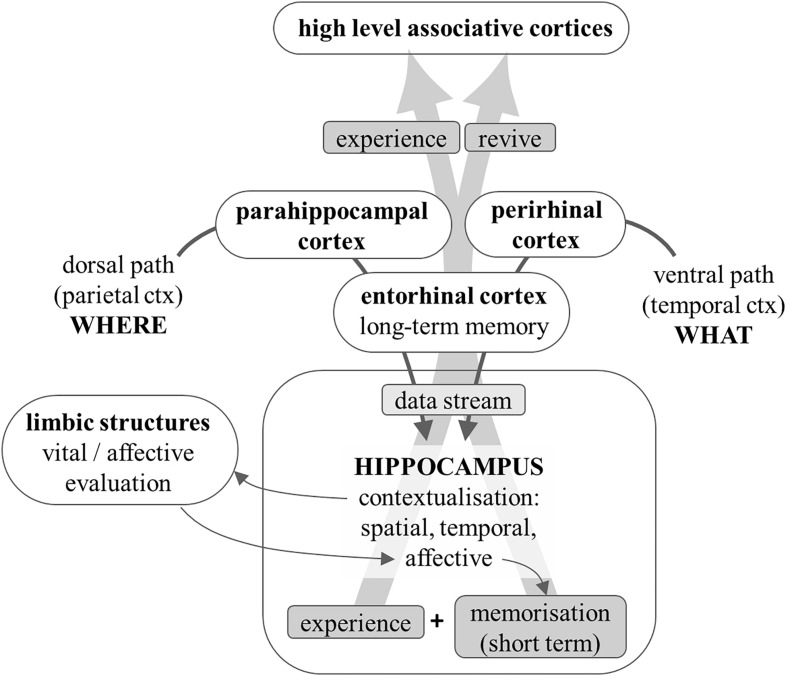
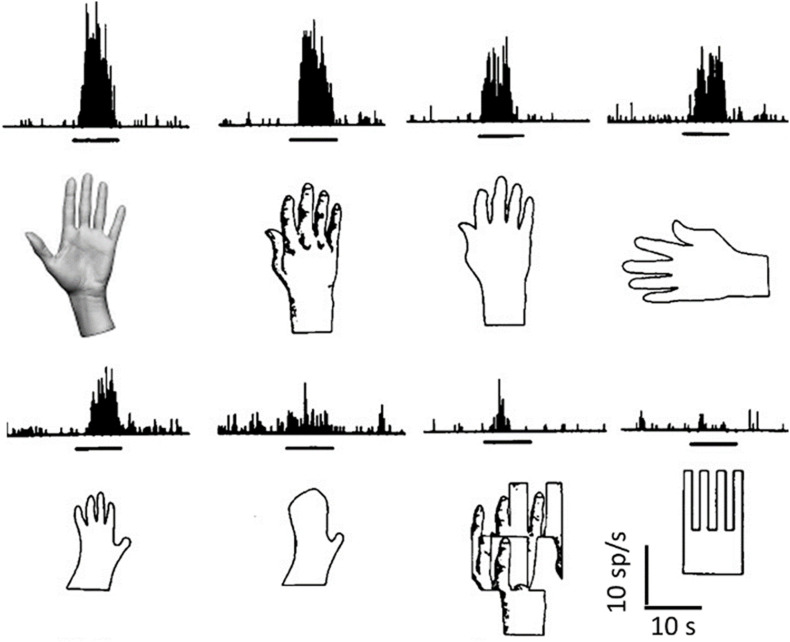
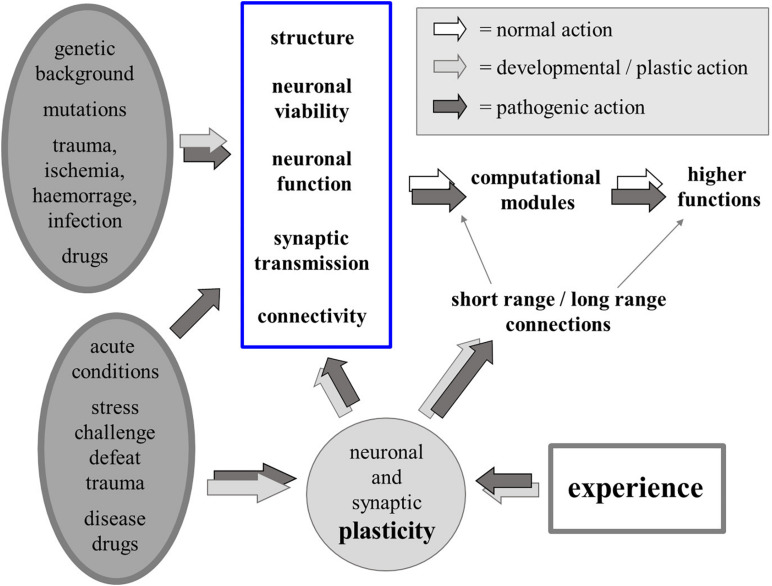
Here, we examine subjectivity and consciousness as of the computational complexity of information processing by the brain, rather than metaphysical phenomena. While Psychology concentrates on the emergent properties and Neurobiology examines the properties of the biological substrate, Neurophysiology and Cognitive Neuroscience link the two levels by investigating the mechanisms and processes by which the functions of the brain from the anatomical, cellular and network properties of the nervous system. Our purpose here is not to locate the neural structures that sustain subjectivity or other psychic functions; rather, we examine the operating modes of neurons and neural circuits: they reveal an intrinsically relational quality; sensory elaboration itself proves to be relational and self-centred, necessarily associated with the vital, hedonic, emotional relevance of each experience and external cue, and intrinsically oriented to a behavioral interaction with the latter. The hippocampus adds to this self-centred relational perspective the capability of transforming the identification and the spatial location of objects into a contextualized representation of reality. Since the hippocampus is strongly interconnected with the archaic structures that evaluate vital and hedonic relevance and generate emotional responses, the contextualized information, emotionally colored, is transformed into a comprehensive individual experience. This way, a subjective, self-centred, affectively colored perspective arises in animals due to the intrinsic properties of neuronal circuits in the brain. We conclude that neuronal network processing is strongly characterized by a relational and self-centred () and emotionally colored, motivationally oriented () perspective. The properties and features of neural processing discussed here constitute well-established knowledge in the neuroscientific community. Yet, from a layman's perception, subjectivity still mysteriously arises in our brain due to the action of consciousness, and in epistemological and philosophical debates, the question often arises as to how consciousness may add the subjective and personal perspective to neural elaboration. The answer appears to be simple: it does not; subjectivity is already there, present in neuronal processing and not added by some other "consciousness" function of unclear neural basis.
在此,我们将主观性和意识视为大脑信息处理的计算复杂性的体现,而非形而上学现象。心理学专注于涌现特性,神经生物学研究生物基质的特性,而神经生理学和认知神经科学则通过研究大脑功能从神经系统的解剖学、细胞和网络特性中产生的机制和过程,将这两个层面联系起来。我们在此的目的并非定位维持主观性或其他心理功能的神经结构;相反,我们研究神经元和神经回路的运作模式:它们揭示了一种内在的关系性特质;感觉加工本身被证明是关系性且以自我为中心的,必然与每种体验和外部线索的生命、享乐、情感相关性相关联,并且内在地导向与后者的行为交互。海马体为这种以自我为中心的关系视角增添了将物体的识别和空间位置转化为情境化现实表征的能力。由于海马体与评估生命和享乐相关性并产生情感反应的古老结构紧密相连,带有情感色彩的情境化信息就被转化为一种全面的个体体验。这样,由于大脑中神经元回路的内在特性,动物中就产生了一种主观的、以自我为中心的、带有情感色彩的视角。我们得出结论,神经元网络处理具有强烈的以关系和自我为中心( )以及带有情感色彩、以动机为导向( )的视角特征。这里讨论的神经处理的特性和特征在神经科学界是公认的知识。然而,从外行的角度来看,主观性仍然因意识的作用而神秘地在我们大脑中产生,并且在认识论和哲学辩论中,经常会出现意识如何能为神经加工增添主观和个人视角的问题。答案似乎很简单:它不会;主观性已经存在于神经元处理过程中,并非由某种神经基础不明的其他“意识”功能添加。