National Children's Research Centre, Children's Health Ireland, Dublin, Ireland.
National Virus Reference Laboratory, University College Dublin, Dublin, Ireland.
Front Immunol. 2020 Sep 18;11:2089. doi: 10.3389/fimmu.2020.02089. eCollection 2020.
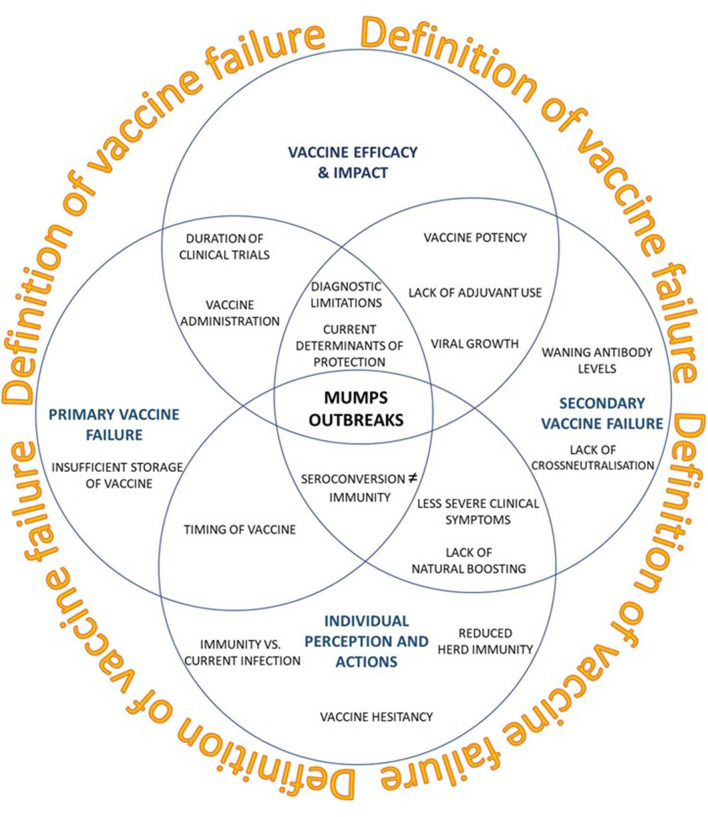
History illustrates the remarkable public health impact of mass vaccination, by dramatically improving life expectancy and reducing the burden of infectious diseases and co-morbidities worldwide. It has been perceived that if an individual adhered to the MMR vaccine schedule that immunity to mumps virus (MuV) would be lifelong. Recent mumps outbreaks in individuals who had received two doses of the Measles Mumps Rubella (MMR) vaccine has challenged the efficacy of the MMR vaccine. However, clinical symptoms, complications, viral shedding and transmission associated with mumps infection has been shown to be reduced in vaccinated individuals, demonstrating a benefit of this vaccine. Therefore, the question of what constitutes a good mumps vaccine and how its impact is assessed in this modern era remains to be addressed. Epidemiology of the individuals most affected by the outbreaks (predominantly young adults) and variance in the circulating MuV genotype have been well-described alluding to a collection of influences such as vaccine hesitancy, heterogeneous vaccine uptake, primary, and/or secondary vaccine failures. This review aims to discuss in detail the interplay of factors thought to be contributing to the current mumps outbreaks seen in highly vaccinated populations. In addition, how mumps diagnoses has progressed and impacted the understanding of mumps infection since a mumps vaccine was first developed, the limitations of current laboratory tests in confirming protection in vaccinated individuals and how vaccine effectiveness is quantified are also considered. By highlighting knowledge gaps within this area, this state-of-the-art review proposes a change of perspective regarding the impact of a vaccine in a highly vaccinated population from a clinical, diagnostic and public perspective, highlighting a need for a paradigm shift on what is considered vaccine immunity.
历史表明,大规模疫苗接种对公共卫生产生了显著影响,极大地提高了全球的预期寿命,并降低了传染病和合并症的负担。人们普遍认为,如果个体遵循麻疹、腮腺炎、风疹(MMR)疫苗接种计划,那么对腮腺炎病毒(MuV)的免疫力将是终身的。最近,在已经接种了两剂麻疹、腮腺炎、风疹(MMR)疫苗的个体中发生了腮腺炎疫情,这对 MMR 疫苗的效力提出了挑战。然而,接种疫苗的个体中腮腺炎感染的临床症状、并发症、病毒脱落和传播已被证明有所减少,这表明该疫苗具有益处。因此,什么是好的腮腺炎疫苗以及如何在现代评估其影响的问题仍然需要解决。受疫情影响最严重的个体(主要是年轻人)的流行病学特征和循环 MuV 基因型的差异已经得到了很好的描述,这暗示了一系列因素的影响,如疫苗犹豫、疫苗接种率的异质性、原发性和/或继发性疫苗失败。这篇综述旨在详细讨论被认为是导致高度接种人群中当前腮腺炎疫情的因素之间的相互作用。此外,自首次开发腮腺炎疫苗以来,腮腺炎诊断技术的发展以及对腮腺炎感染的理解如何影响,当前实验室检测在确认接种个体保护方面的局限性以及如何量化疫苗效力也得到了考虑。通过突出该领域的知识空白,这篇综述从临床、诊断和公共卫生的角度提出了一种关于高度接种人群中疫苗影响的观点转变,强调了需要转变对疫苗免疫的看法。