Multidisciplinary Sepsis Group, Health Research Institute of the Balearic Islands (IdISBa), Palma de Mallorca, Spain.
Vascular and Metabolic Pathologies, Health Research Institute of the Balearic Islands (IdISBa), Palma de Mallorca, Spain.
Front Immunol. 2020 Sep 24;11:558898. doi: 10.3389/fimmu.2020.558898. eCollection 2020.
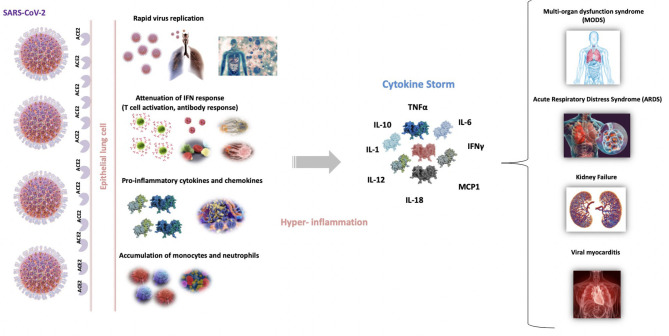
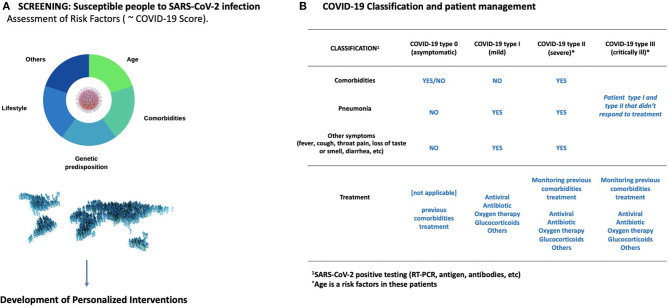
The dysregulated release of cytokines has been identified as one of the key factors behind poorer outcomes in COVID-19. This "cytokine storm" produces an excessive inflammatory and immune response, especially in the lungs, leading to acute respiratory distress (ARDS), pulmonary edema and multi-organ failure. Alleviating this inflammatory state is crucial to improve prognosis. Pro-inflammatory factors play a central role in COVID-19 severity, especially in patients with comorbidities. In these situations, an overactive, untreated immune response can be deadly, suggesting that mortality in COVID-19 cases is likely due to this virally driven hyperinflammation. Administering immunomodulators has not yielded conclusive improvements in other pathologies characterized by dysregulated inflammation such as sepsis, SARS-CoV-1, and MERS. The success of these drugs at reducing COVID-19-driven inflammation is still anecdotal and comes with serious risks. It is also imperative to screen the elderly for risk factors that predispose them to severe COVID-19. Immunosenescence and comorbidities should be taken into consideration. In this review, we summarize the latest data available about the role of the cytokine storm in COVID-19 disease severity as well as potential therapeutic approaches to ameliorate it. We also examine the role of inflammation in other diseases and conditions often comorbid with COVID-19, such as aging, sepsis, and pulmonary disorders. Finally, we identify gaps in our knowledge and suggest priorities for future research aimed at stratifying patients according to risk as well as personalizing therapies in the context of COVID19-driven hyperinflammation.
细胞因子的失调释放已被确定为 COVID-19 预后较差的关键因素之一。这种“细胞因子风暴”会产生过度的炎症和免疫反应,特别是在肺部,导致急性呼吸窘迫(ARDS)、肺水肿和多器官衰竭。缓解这种炎症状态对于改善预后至关重要。促炎因子在 COVID-19 严重程度中起着核心作用,尤其是在合并症患者中。在这些情况下,过度活跃且未经治疗的免疫反应可能是致命的,这表明 COVID-19 病例的死亡率可能是由于这种病毒驱动的过度炎症。免疫调节剂在其他以炎症失调为特征的病理中(如败血症、SARS-CoV-1 和 MERS)的应用并没有产生明确的改善。这些药物在减轻 COVID-19 驱动的炎症方面的成功仍然是轶事证据,并且伴随着严重的风险。筛选老年人易患 COVID-19 的风险因素也至关重要。免疫衰老和合并症都应该考虑在内。在这篇综述中,我们总结了关于细胞因子风暴在 COVID-19 疾病严重程度中的作用以及潜在治疗方法的最新数据。我们还研究了炎症在其他与 COVID-19 经常合并的疾病和病症中的作用,如衰老、败血症和肺部疾病。最后,我们确定了我们知识中的空白,并提出了未来研究的优先事项,旨在根据风险对患者进行分层,并在 COVID19 驱动的过度炎症的背景下对治疗方法进行个性化。