Ahmetaj-Shala Blerina, Vaja Ricky, Atanur Santosh S, George Peter M, Kirkby Nicholas S, Mitchell Jane A
Cardiorespiratory Interface, National Heart and Lung Institute, Imperial College London, London, United Kingdom.
Department of Metabolism, Digestion and Reproduction, Faculty of Medicine, Imperial College London, London, United Kingdom.
JACC Basic Transl Sci. 2020 Nov;5(11):1111-1123. doi: 10.1016/j.jacbts.2020.09.010. Epub 2020 Oct 9.
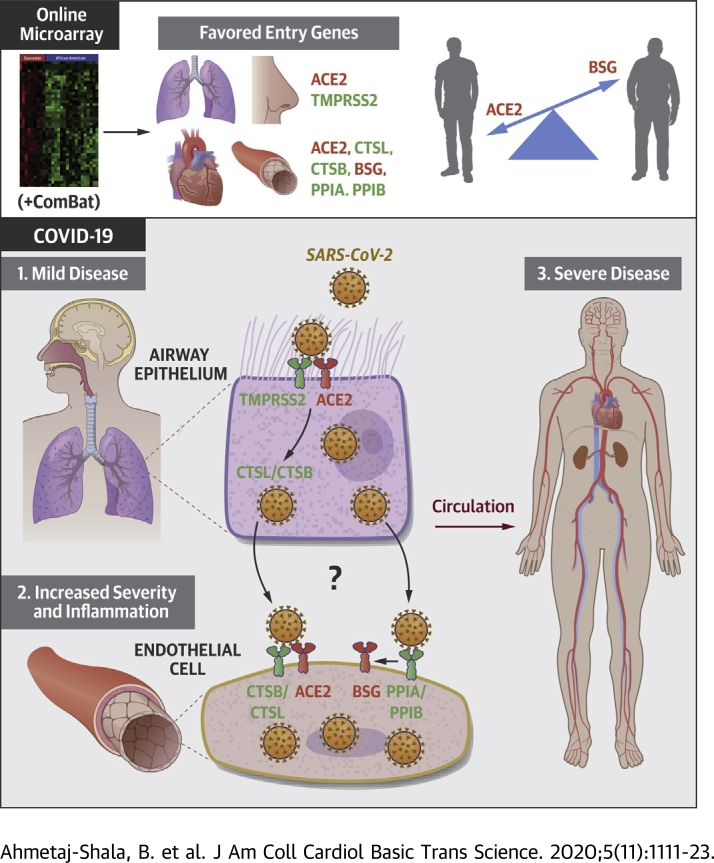
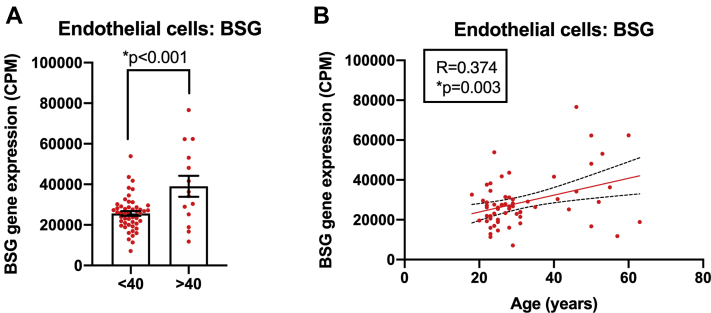
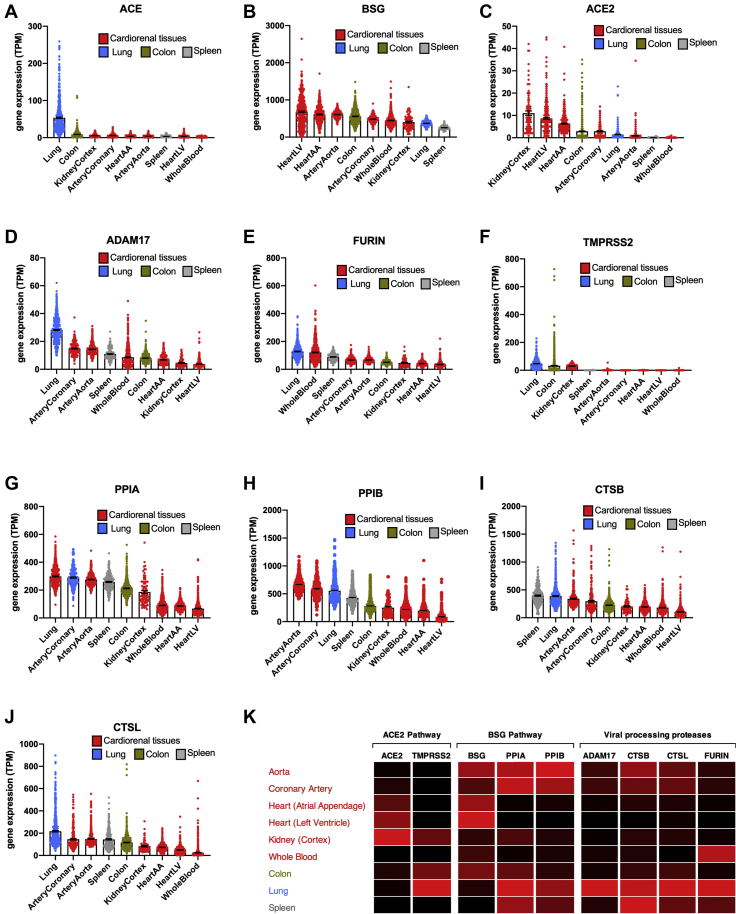
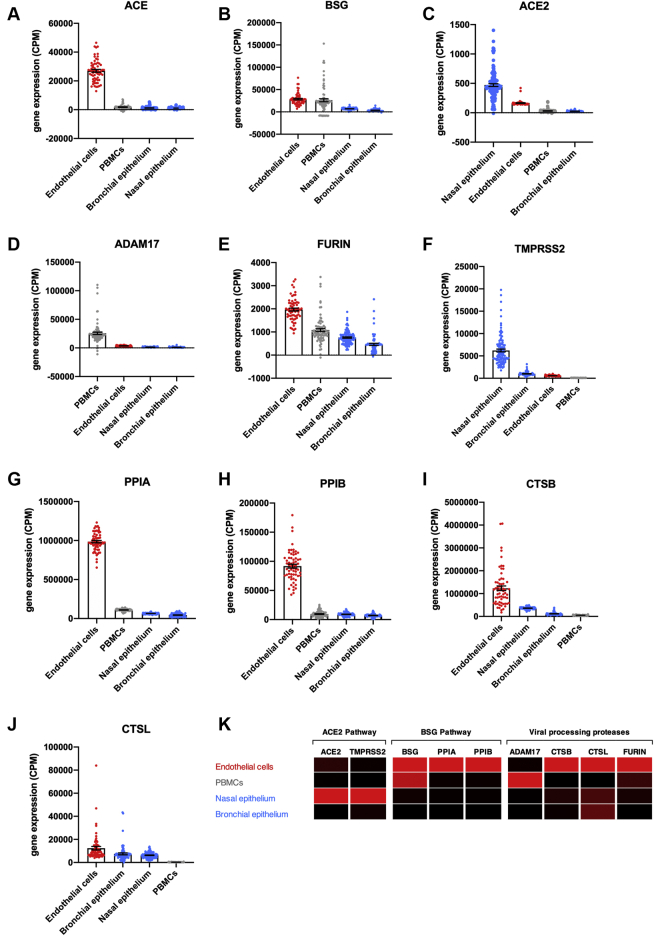
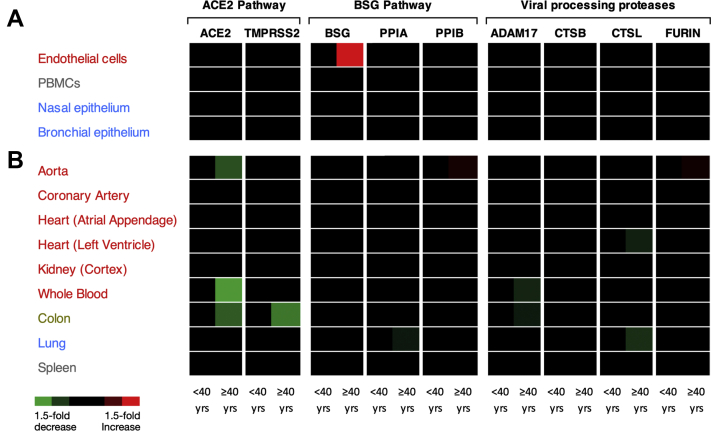
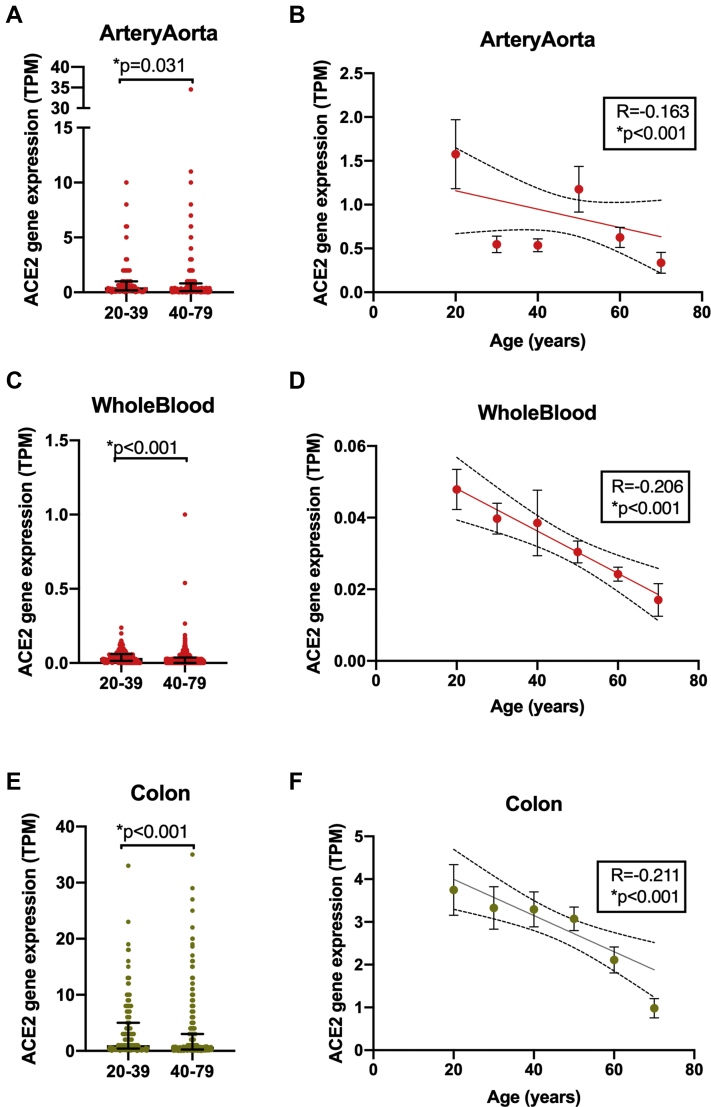
Vascular and cardiovascular inflammation and thrombosis occur in patients with severe coronavirus disease-2019 (COVID-19). Advancing age is the most significant risk factor for severe COVID-19. Using transcriptomic databases, the authors found that: 1) cardiovascular tissues and endothelial cells express putative genes for severe acute respiratory syndrome coronavirus-2 infection, including angiotensin-converting enzyme 2 () and basigin (); 2) severe acute respiratory syndrome coronavirus-2 receptor pathways /transmembrane serine protease 2 and /peptidylprolyl isomerase B(A) polarize to lung/epithelium and vessel/endothelium, respectively; 3) expression of host genes is relatively stable with age; and 4) notable exceptions are , which decreases with age in some tissues, and , which increases with age in endothelial cells, suggesting that expression in the vasculature may explain the heightened risk for severe disease with age.
血管和心血管炎症及血栓形成发生在患有严重2019冠状病毒病(COVID-19)的患者中。高龄是严重COVID-19最重要的危险因素。作者利用转录组数据库发现:1)心血管组织和内皮细胞表达严重急性呼吸综合征冠状病毒2感染的推定基因,包括血管紧张素转换酶2()和基底细胞黏附分子();2)严重急性呼吸综合征冠状病毒2受体途径/跨膜丝氨酸蛋白酶2和/肽基脯氨酰异构酶B(A)分别向肺/上皮和血管/内皮极化;3)宿主基因的表达随年龄相对稳定;4)值得注意的例外是,在某些组织中随年龄下降,而在内皮细胞中随年龄增加,这表明在脉管系统中的表达可能解释了随着年龄增长患严重疾病风险增加的原因。