Faculty of Veterinary Medicine, University of Ilorin, Ilorin, Nigeria.
School of Health, Sport and Bioscience, University of East London, London, United Kingdom.
PLoS One. 2020 Oct 19;15(10):e0240249. doi: 10.1371/journal.pone.0240249. eCollection 2020.
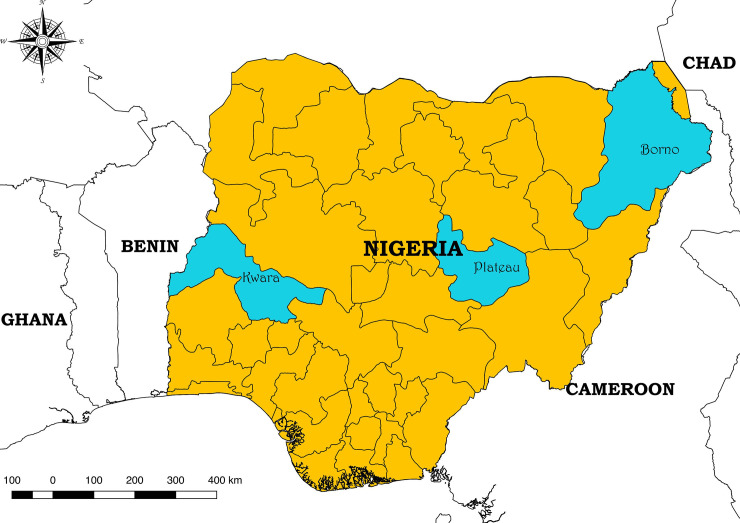
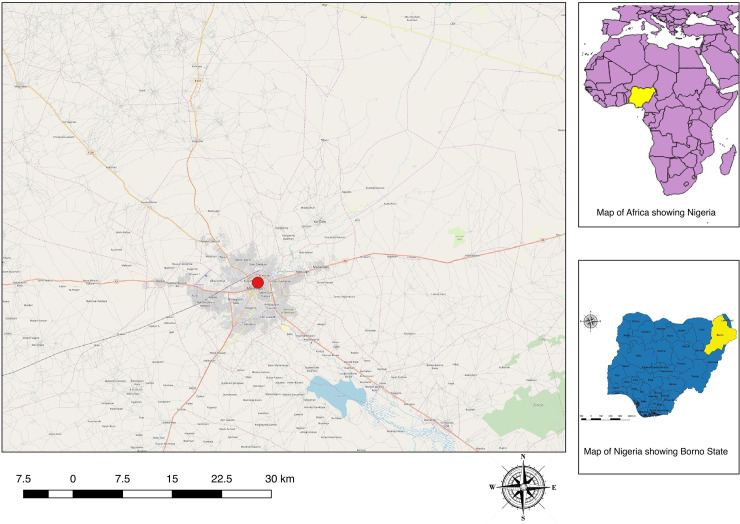
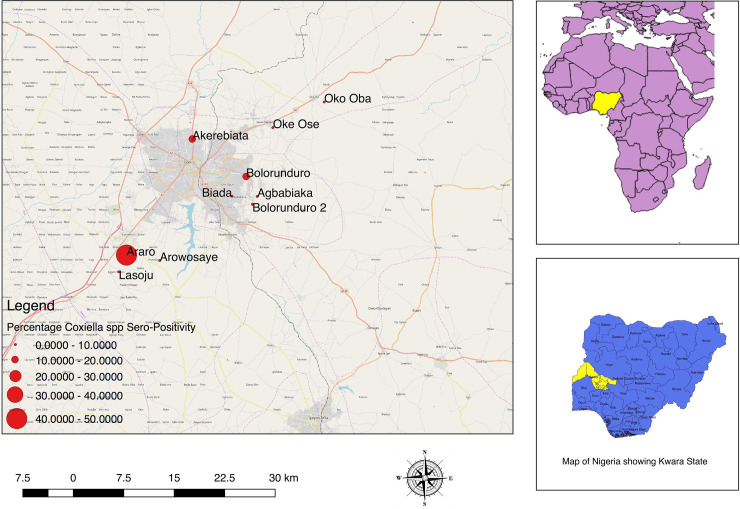
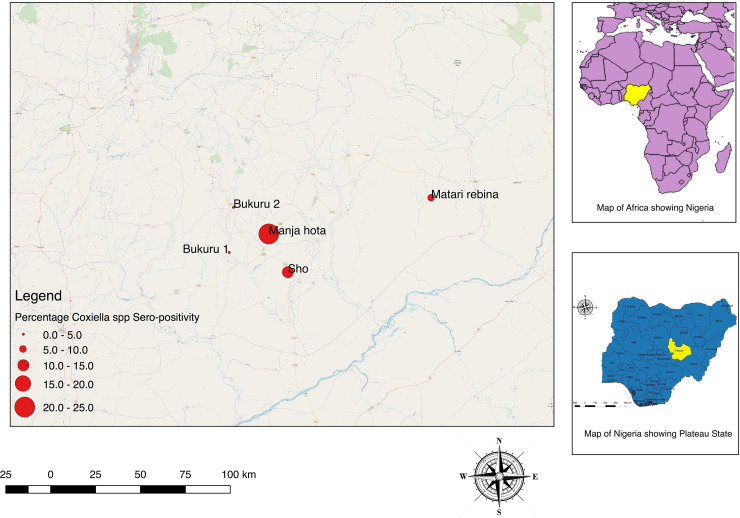
The persistent and highly transmissible Coxiella burnetii is a neglected infection that negatively affects reproductive parameters of livestock. It is also of zoonotic importance and has been reported to cause devastating human infections globally. Domestic ruminants represent the most frequent source of human infection. Data from Nigeria are very few and outdated. There is a significant gap in up-to-date information on the exposure, spatial distribution and risk factors of infection of this important disease. The exposure to C. burnetii was determined using sensitive serological assays in cattle and small ruminants. A total of 538 animals made up of 268 cattle and 270 small ruminants were sampled from three northern Nigerian states. The proportion of cattle sampled that were seropositive from the study locations were: Kwara 14/90 (15.6%; 95% CI: 8.8-24.7); Plateau 10/106 (9.43%; 95% CI: 4.6-16.7) and Borno 4/72 (5.56%; 95% CI: 1.5-13.6) states. Lower seroprevalence was recorded among the small ruminants sampled, with positives recorded from sheep and goat sampled from only Kwara state 6/184 (3.3%; 95% CI: 1.2-7.0); while none of the small ruminants sampled from Plateau were seropositive. The results of the bivariate analysis showed that none of the tested independent variables (village, age group, sex, breed of cattle, presence of ticks, reproductive status, and management system) were statistically significant factors associated with seropositivity of cattle for antibodies to C. burnetii. Stakeholders involved in animal husbandry should be duly educated on proper disposal of birth products as well as bodily fluids in order to reduce environmental contamination, persistence and human infection.
持续存在且高度传播的贝纳柯克斯体是一种被忽视的感染,会对家畜的繁殖参数产生负面影响。它也具有动物传染病的重要性,据报道,在全球范围内造成了破坏性的人类感染。家养反刍动物是人类感染的最常见来源。来自尼日利亚的数据非常少且已过时。关于这种重要疾病的接触、空间分布和感染危险因素的最新信息存在显著差距。使用敏感的血清学检测方法在牛和小反刍动物中确定了对 C. burnetii 的接触。从尼日利亚三个北部州抽取了 538 只动物,包括 268 头牛和 270 只小反刍动物。从研究地点抽取的牛的血清阳性比例分别为:夸拉州 14/90(15.6%;95%CI:8.8-24.7)、高原州 10/106(9.43%;95%CI:4.6-16.7)和博尔诺州 4/72(5.56%;95%CI:1.5-13.6)。抽取的小反刍动物的血清阳性率较低,仅从夸拉州抽取的绵羊和山羊中记录到阳性 6/184(3.3%;95%CI:1.2-7.0);而从高原州抽取的小反刍动物均未呈血清阳性。双变量分析的结果表明,所测试的独立变量(村庄、年龄组、性别、牛的品种、是否有蜱、繁殖状况和管理系统)均与牛针对 C. burnetii 的抗体血清阳性无关。参与畜牧业的利益相关者应接受有关正确处理分娩产品以及体液的适当教育,以减少环境污染、持久性和人类感染。