School of Laboratory Medicine, Chengdu Medical College, Chengdu, Sichuan, People's Republic of China.
Laboratory of Veterinary Drug Residue Prevention and Control Technology of Animal-derived Food, Chengdu Medical College, Chengdu, Sichuan, People's Republic of China.
BMC Complement Med Ther. 2020 Oct 19;20(1):318. doi: 10.1186/s12906-020-03114-z.
Multidrug-resistant pathogens are resistant to many antibiotics and associated with serious infections. Amomum tsaoko Crevost et Lemaire, Sanguisorba officinalis, Terminalia chebula Retz and Salvia miltiorrhiza Bge, are all used in Traditional Chinese Medicine (TCM) against multidrug-resistant pathogens, and the purpose of this study was to evaluate the antibacterial and anti-virulence activity of extracts derived from them.
The antibacterial activity of ethanol and aqueous extracts from these four plants was examined against several multi-drug resistant bacterial strains, and their anti-virulence potential (including quorum quenching activity, biofilm inhibition, and blocking production of virulence factor δ-toxin) was assessed against different S. aureus strains. The chemical composition of the most effective extract was determined by LC-FTMS.
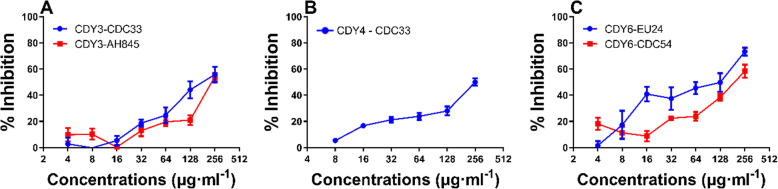
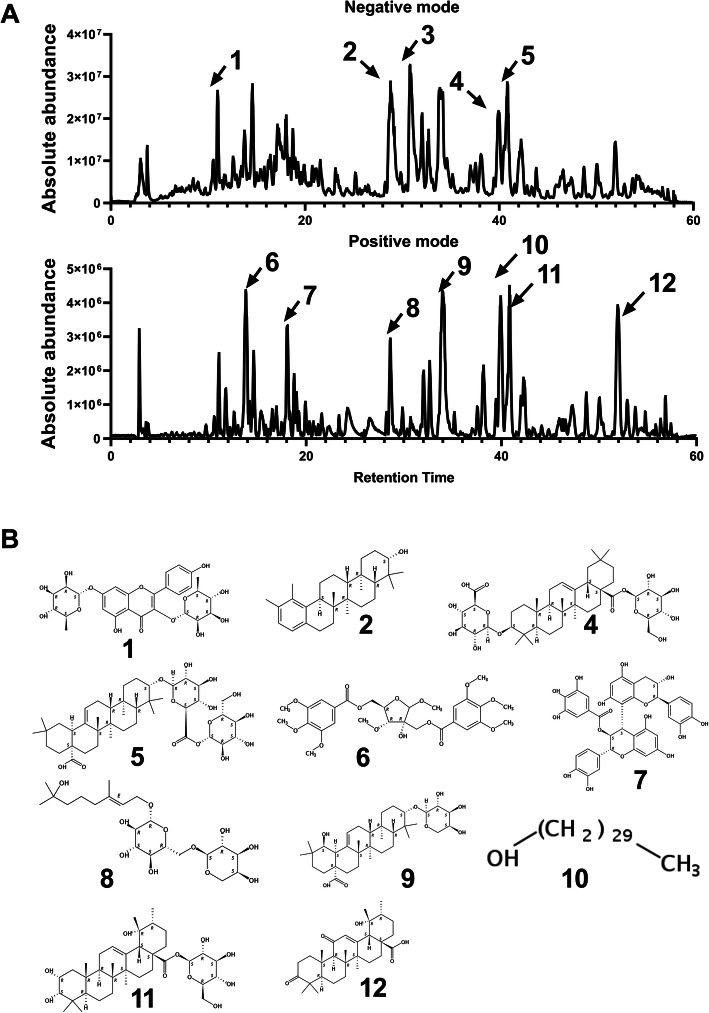
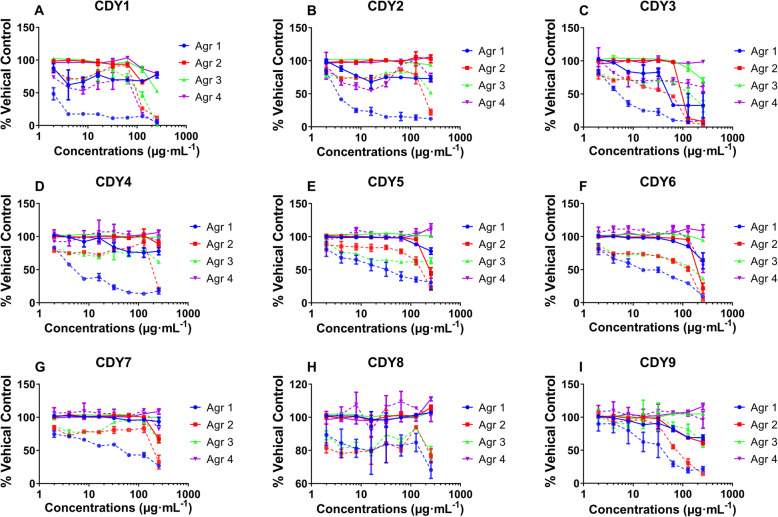
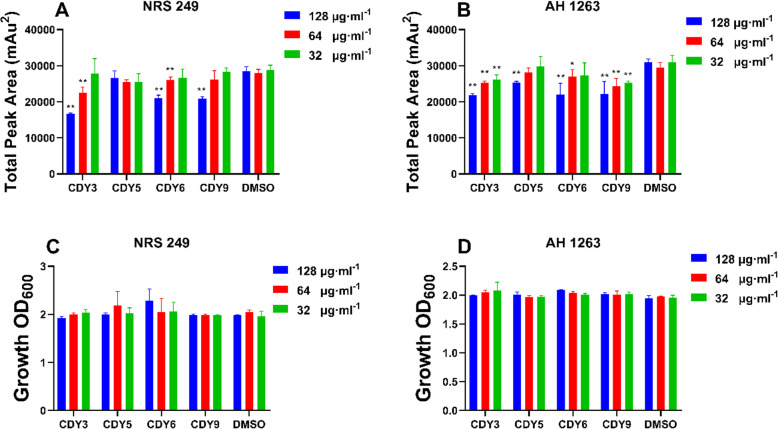
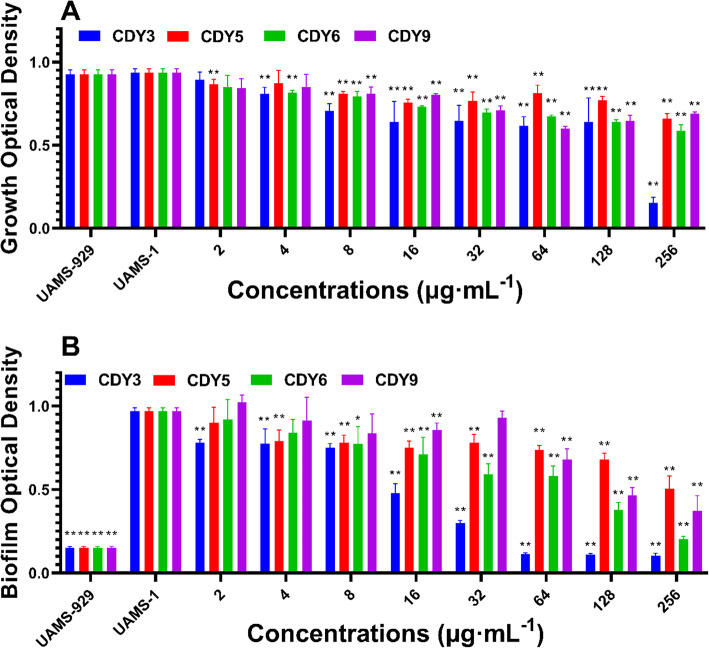
Only extracts from S. officinalis and A. tsaoko were shown to exhibit limited growth inhibition activity at a dose of 256 μg·mL-1. The S. officinalis ethanol extract, the ethanol and aqueous extract of A. tsaoko, and the aqueous extract of S. miltiorrhiza all demonstrated quorum quenching activity, but didn't significantly inhibit bacterial growth. The ethanol extract of S. officinalis inhibited bacterial toxin production and biofilm formation at low concentrations. Chemical composition analysis of the most effective extract of S. officinalis showed that it mainly contained saponins.
The most active extract tested in this study was the ethanol root extract of S. officinalis. It inhibited δ-toxin production and biofilm formation at low concentrations and saponins may be its key active components. While the four plants showed no direct antibacterial effects, their anti-virulence properties may be key to fighting bacterial infections.
多药耐药病原体对许多抗生素具有耐药性,并且与严重感染有关。草果、地榆、诃子和丹参均被用于中药(TCM)来对抗多药耐药病原体,本研究旨在评估它们的提取物的抗菌和抗毒活性。
研究检测了这四种植物的乙醇和水提取物对几种多药耐药细菌菌株的抗菌活性,以及它们对不同金黄色葡萄球菌菌株的潜在抗毒作用(包括群体感应淬灭活性、生物膜抑制和阻断毒力因子 δ-毒素的产生)。通过 LC-FTMS 确定最有效提取物的化学成分。
只有地榆和草果的提取物在 256μg·mL-1的剂量下显示出有限的生长抑制活性。地榆的乙醇提取物、草果的乙醇和水提取物以及丹参的水提取物均具有群体感应淬灭活性,但对细菌生长没有显著抑制作用。地榆的乙醇提取物在低浓度下抑制细菌毒素的产生和生物膜的形成。地榆乙醇提取物的化学成分分析表明,它主要含有皂苷。
在本研究中测试的最有效提取物是地榆的乙醇根提取物。它在低浓度下抑制 δ-毒素的产生和生物膜的形成,皂苷可能是其关键的活性成分。虽然这四种植物没有直接的抗菌作用,但它们的抗毒特性可能是对抗细菌感染的关键。