Department of Physiology & Obesity-mediated Disease Research Center, Keimyung University School of Medicine, Daegu, 42601, South Korea.
Department of Physiology & Obesity-mediated Disease Research Center, Keimyung University School of Medicine, Daegu, 42601, South Korea.
Redox Biol. 2020 Oct;37:101749. doi: 10.1016/j.redox.2020.101749. Epub 2020 Oct 10.
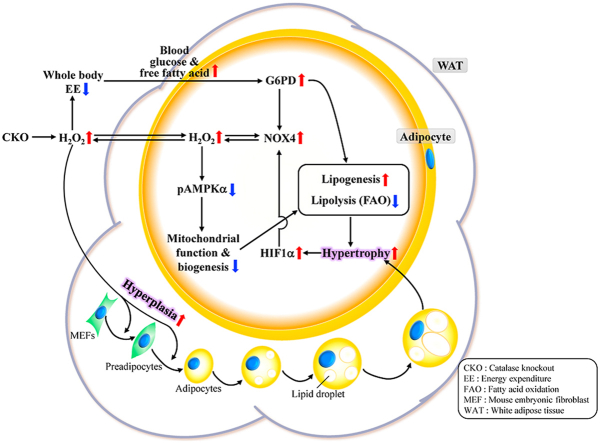
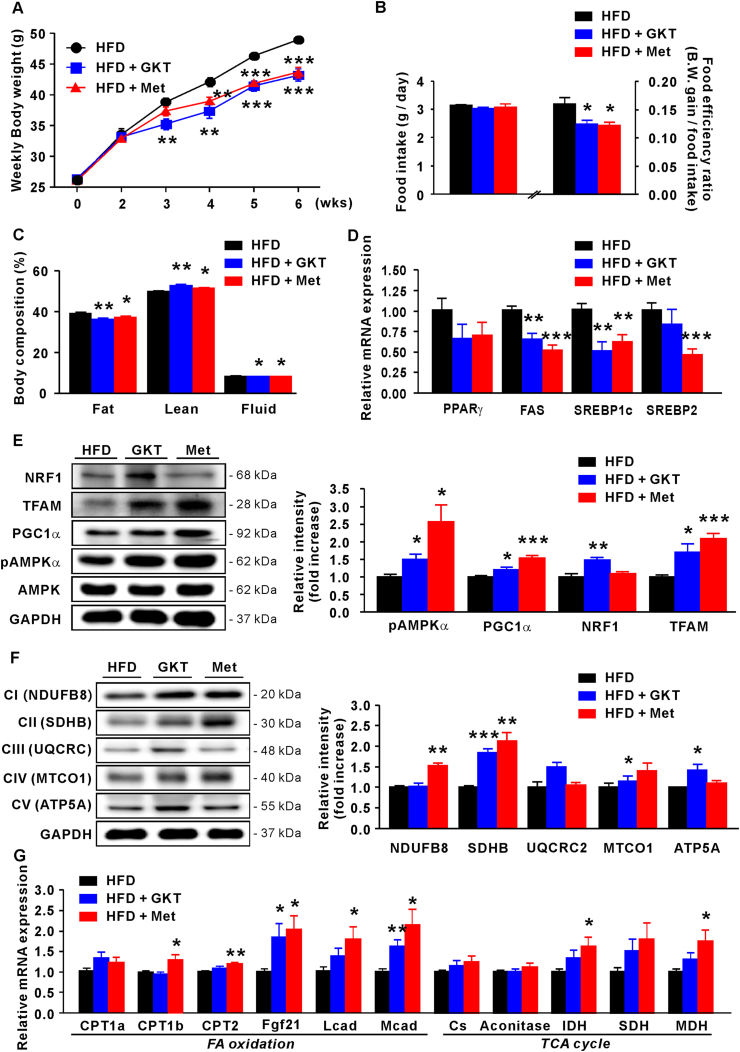
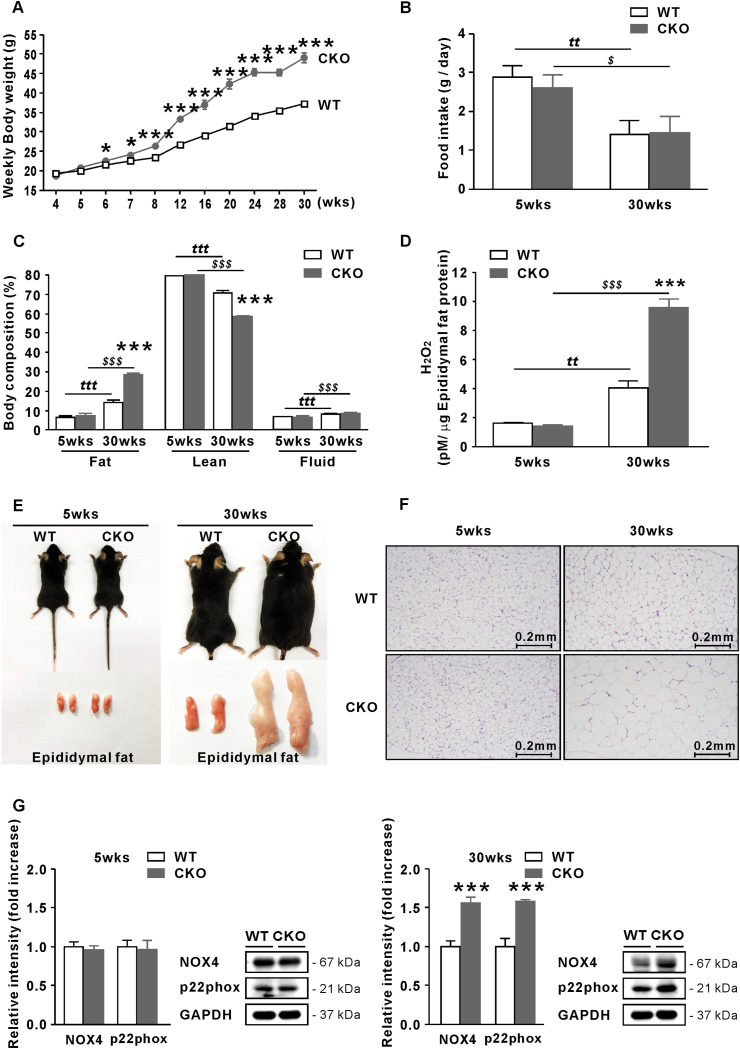
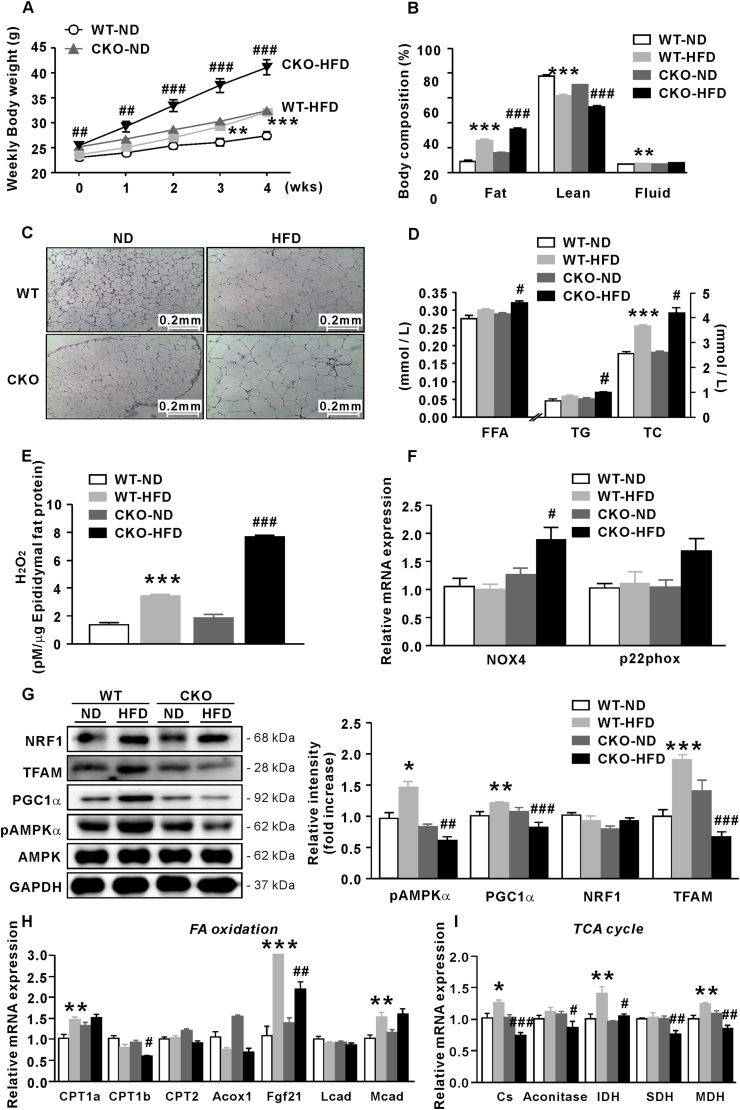
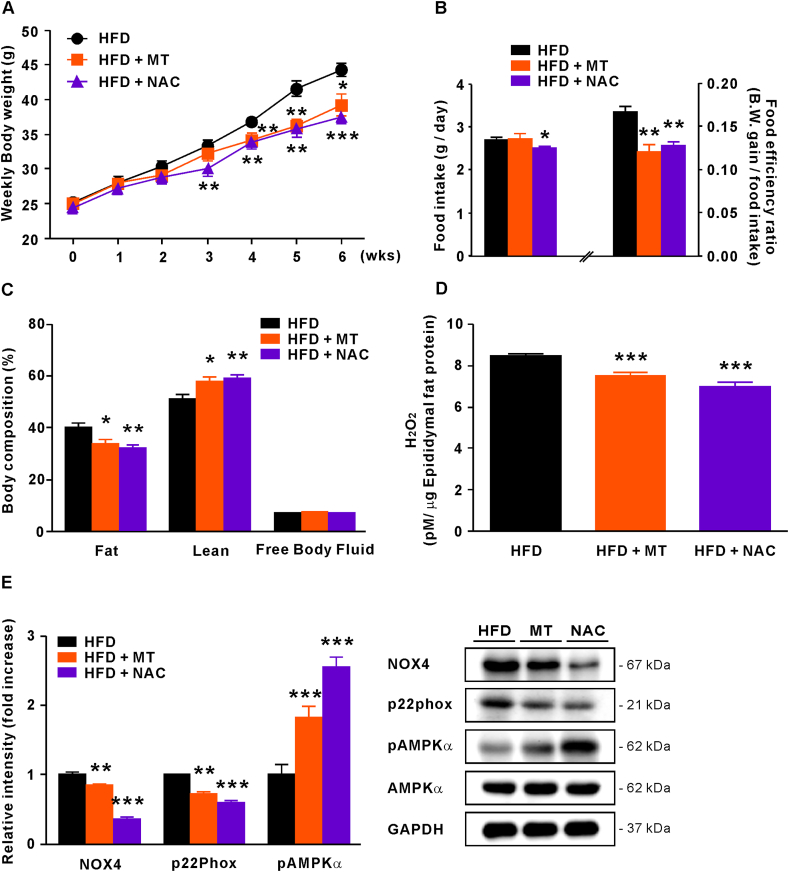
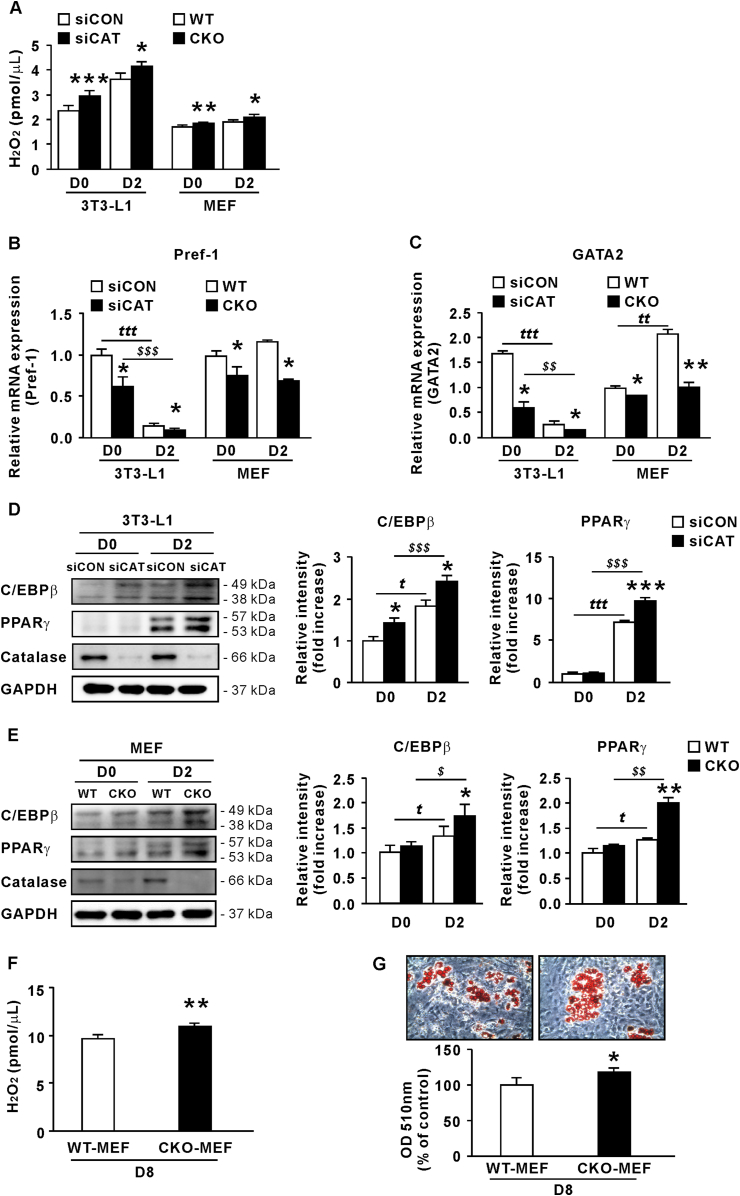
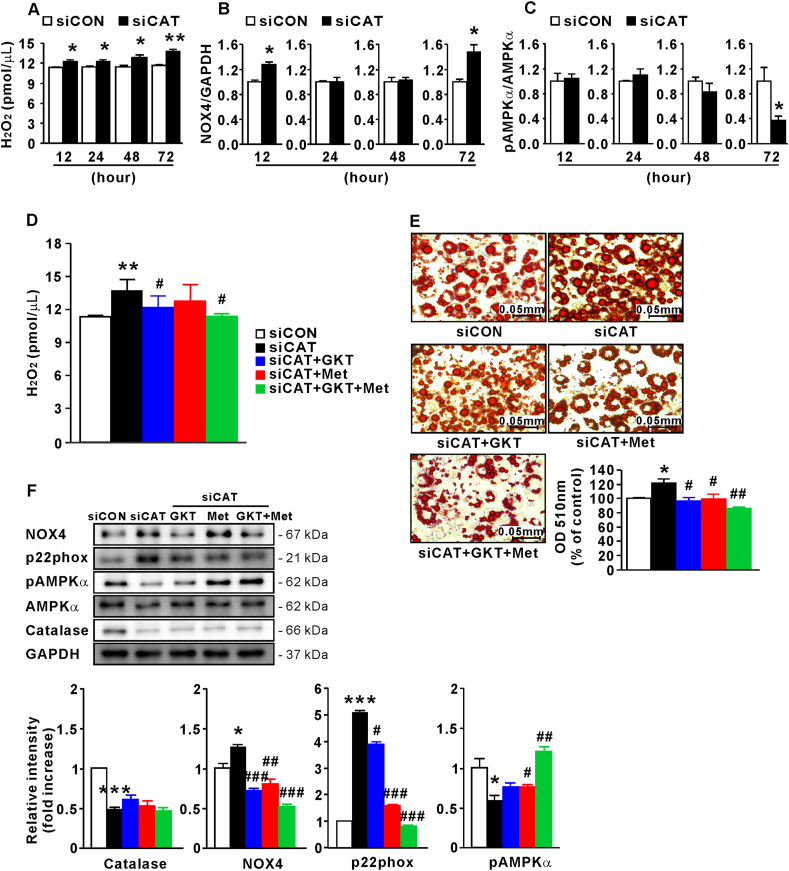
Obesity is regarded as an abnormal expansion and excessive accumulation of fat mass in white adipose tissue. The involvement of oxidative stress in the development of obesity is still unclear. Although mainly present in peroxisomes, catalase scavenges intracellular HO at toxic levels. Therefore, we used catalase-knockout (CKO) mice to elucidate the involvement of excessive HO in the development of obesity. CKO mice with C57BL/6J background gained more weight with higher body fat mass with age than age-matched wild-type (WT) mice fed with either chow or high-fat diets. This phenomenon was attenuated by concomitant treatment with the antioxidants, melatonin or N-acetyl cysteine. Moreover, CKO mouse embryonic fibroblasts (MEFs) appeared to differentiate to adipocytes more easily than WT MEFs, showing increased HO concentrations. Using 3T3-L1-derived adipocytes transfected with catalase-small interfering RNA, we confirmed that a more prominent lipogenesis occurred in catalase-deficient cells than in WT cells. Catalase-deficient adipocytes presented increased nicotinamide adenine dinucleotide phosphate oxidase 4 (NOX4) expression but decreased adenosine monophosphate-activated protein kinase (AMPK) expression. Treatment with a NOX4 inhibitor or AMPK activator rescued the propensity for obesity of CKO mice. These findings suggest that excessive HO and related oxidative stress increase body fat mass via both adipogenesis and lipogenesis. Manipulating NOX4 and AMPK in white adipocytes may be a therapeutic tool against obesity augmented by oxidative stress.
肥胖被认为是白色脂肪组织中脂肪质量的异常扩张和过度积累。氧化应激在肥胖发展中的作用尚不清楚。虽然过氧化氢酶主要存在于过氧化物酶体中,但它可以清除细胞内的 HO 达到毒性水平。因此,我们使用过氧化氢酶敲除(CKO)小鼠来阐明过量的 HO 在肥胖发展中的作用。与年龄匹配的、用标准饲料或高脂肪饮食喂养的野生型(WT)小鼠相比,具有 C57BL/6J 背景的 CKO 小鼠随着年龄的增长体重增加更多,体脂肪量更高。同时用抗氧化剂褪黑素或 N-乙酰半胱氨酸治疗可减轻这种现象。此外,与 WT MEFs 相比,CKO 小鼠胚胎成纤维细胞(MEFs)似乎更容易分化为脂肪细胞,HO 浓度增加。使用用过氧化氢酶小干扰 RNA 转染的 3T3-L1 衍生的脂肪细胞,我们证实了过氧化氢酶缺陷细胞的脂肪生成比 WT 细胞更明显。过氧化氢酶缺陷脂肪细胞中烟酰胺腺嘌呤二核苷酸磷酸氧化酶 4(NOX4)的表达增加,但腺苷单磷酸激活蛋白激酶(AMPK)的表达减少。用 NOX4 抑制剂或 AMPK 激活剂治疗可挽救 CKO 小鼠肥胖的倾向。这些发现表明,过量的 HO 和相关的氧化应激通过脂肪生成和脂肪生成增加体脂肪量。操纵白色脂肪细胞中的 NOX4 和 AMPK 可能是一种针对氧化应激增强的肥胖的治疗工具。