Słomka Artur, Mocan Tudor, Wang Bingduo, Nenu Iuliana, Urban Sabine K, Gonzales-Carmona Maria, Schmidt-Wolf Ingo G H, Lukacs-Kornek Veronika, Strassburg Christian P, Spârchez Zeno, Kornek Miroslaw
Department of Pathophysiology, Nicolaus Copernicus University in Toruń, Ludwik Rydygier Collegium Medicum in Bydgoszcz, 85-067 Bydgoszcz, Poland.
Octavian Fodor Institute for Gastroenterology and Hepatology, Iuliu Haţieganu, University of Medicine and Pharmacy, 400162 Cluj-Napoca, Romania.
Cancers (Basel). 2020 Oct 17;12(10):3019. doi: 10.3390/cancers12103019.
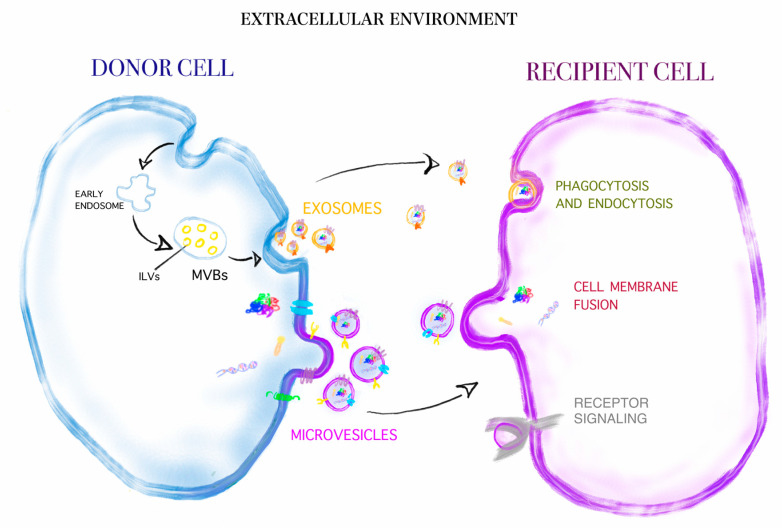
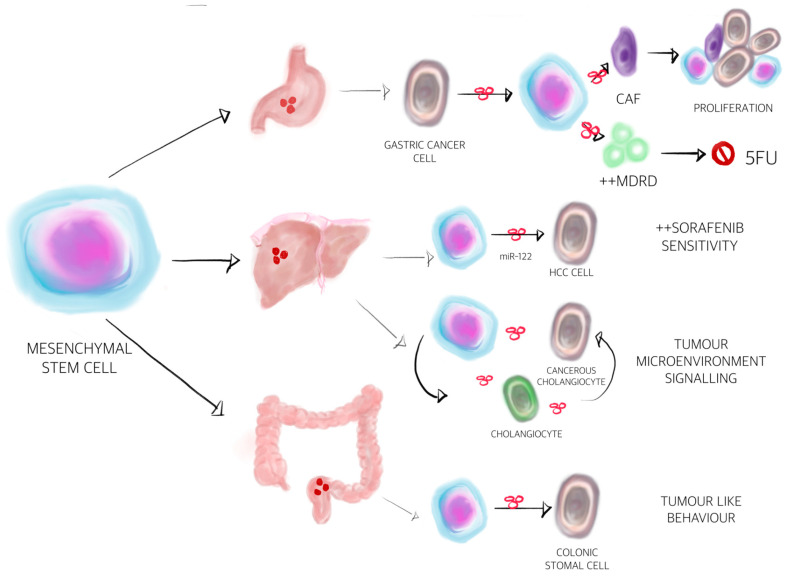
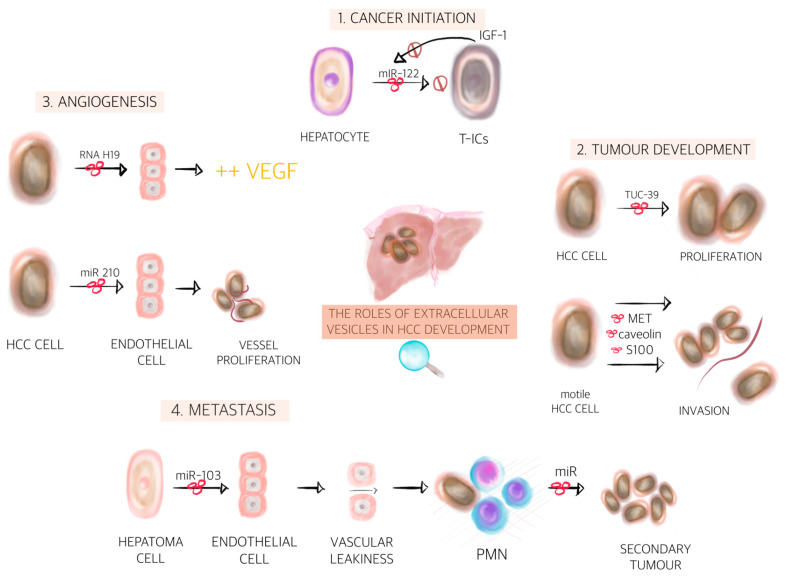
For more than a decade, extracellular vesicles (EVs) have been in focus of science. Once thought to be an efficient way to eliminate undesirable cell content, EVs are now well-accepted as being an important alternative to cytokines and chemokines in cell-to-cell communication route. With their cargos, mainly consisting of functional proteins, lipids and nucleic acids, they can activate signalling cascades and thus change the phenotype of recipient cells at local and systemic levels. Their substantial role as modulators of various physiological and pathological processes is acknowledged. Importantly, more and more evidence arises that EVs play a pivotal role in many stages of carcinogenesis. Via EV-mediated communication, tumour cells can manipulate cells from host immune system or from the tumour microenvironment, and, ultimately, they promote tumour progression and modulate host immunity towards tumour's favour. Additionally, the role of EVs in modulating resistance to pharmacological and radiological therapy of many cancer types has become evident lately. Our understanding of EV biology and their role in cancer promotion and drug resistance has evolved considerably in recent years. In this review, we specifically discuss the current knowledge on the association between EVs and gastrointestinal (GI) and liver cancers, including their potential for diagnosis and treatment.
十多年来,细胞外囊泡(EVs)一直是科学界的焦点。EVs曾被认为是清除细胞内不良成分的有效方式,如今在细胞间通讯途径中,它们作为细胞因子和趋化因子的重要替代物已被广泛接受。其携带的物质主要包括功能性蛋白质、脂质和核酸,能够激活信号级联反应,进而在局部和全身水平改变受体细胞的表型。它们作为各种生理和病理过程调节剂的重要作用已得到认可。重要的是,越来越多的证据表明,EVs在癌症发生的许多阶段都起着关键作用。通过EV介导的通讯,肿瘤细胞可以操控宿主免疫系统或肿瘤微环境中的细胞,最终促进肿瘤进展并调节宿主对肿瘤有利的免疫反应。此外,近年来EVs在调节多种癌症类型对药物和放射治疗的耐药性方面的作用也变得明显。近年来,我们对EV生物学及其在癌症促进和耐药性方面的作用的理解有了很大进展。在这篇综述中,我们专门讨论了目前关于EVs与胃肠道(GI)癌和肝癌之间关联的知识,包括它们在诊断和治疗方面的潜力。