Central Virology Laboratory, Ministry of Health, Chaim Sheba Medical Center, Ramat Gan 5265601, Israel.
Department of Epidemiology and Preventive Medicine, School of Public Health, Sackler Faculty of Medicine, Tel-Aviv University, Tel-Aviv 69978, Israel.
Viruses. 2020 Oct 16;12(10):1171. doi: 10.3390/v12101171.
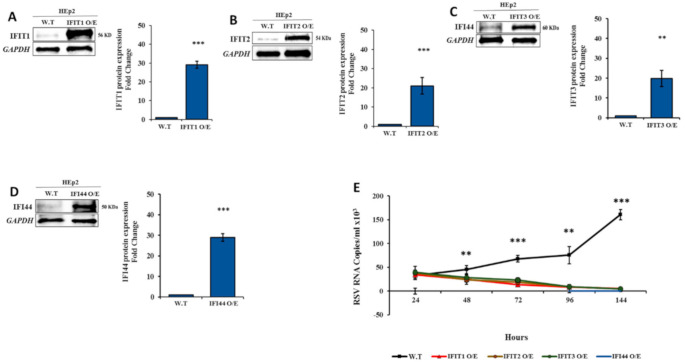
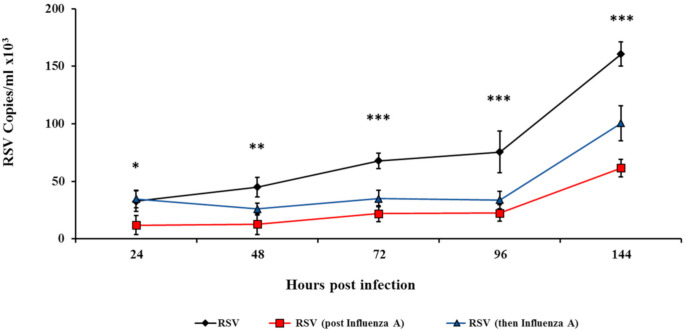
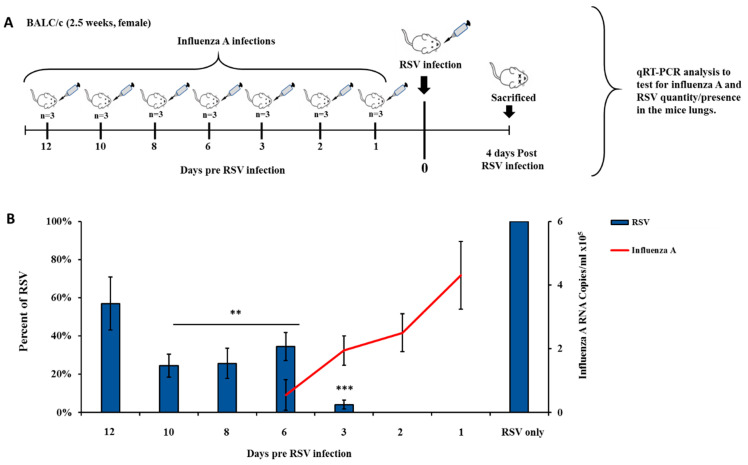
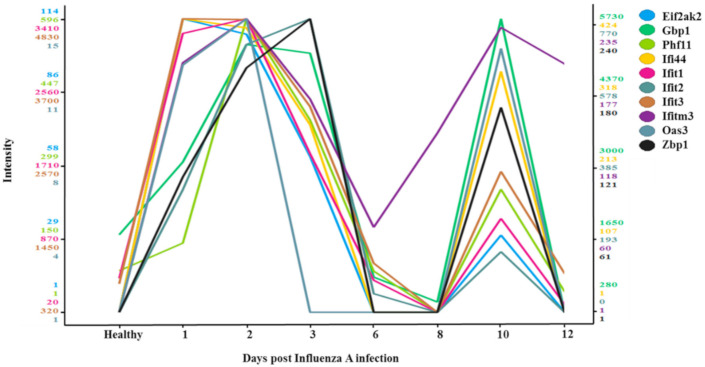
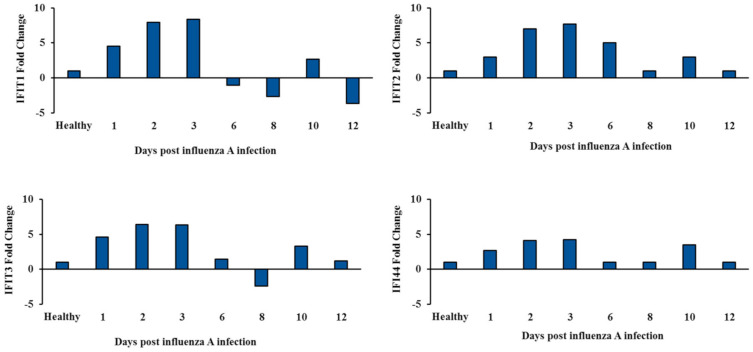
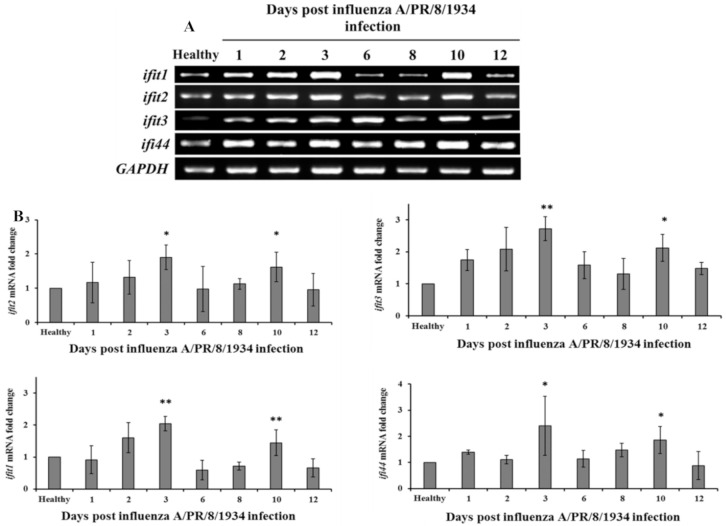
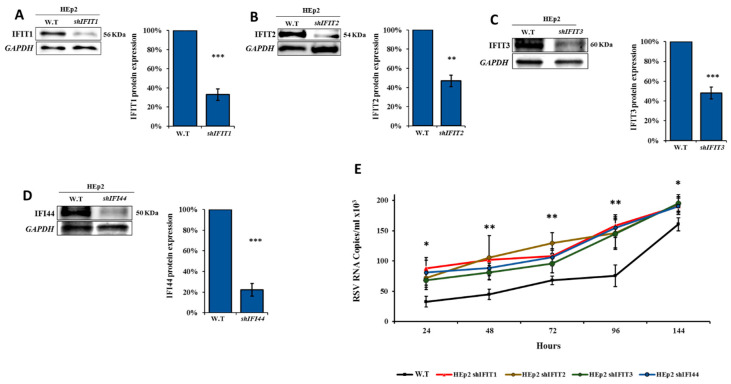
Influenza viruses and respiratory syncytial virus (RSV) are respiratory viruses that primarily circulate worldwide during the autumn and winter seasons. Seasonal surveillance has shown that RSV infection generally precedes influenza. However, in the last four winter seasons (2016-2020) an overlap of the morbidity peaks of both viruses was observed in Israel, and was paralleled by significantly lower RSV infection rates. To investigate whether the influenza A virus inhibits RSV, human cervical carcinoma (HEp2) cells or mice were co-infected with influenza A and RSV. Influenza A inhibited RSV growth, both in vitro and in vivo. Mass spectrometry analysis of mouse lungs infected with influenza A identified a two-wave pattern of protein expression upregulation, which included members of the interferon-induced protein with the tetratricopeptide (IFITs) family. Interestingly, in the second wave, influenza A viruses were no longer detectable in mouse lungs. In addition, knockdown and overexpression of IFITs in HEp2 cells affected RSV multiplicity. In conclusion, influenza A infection inhibits RSV infectivity via upregulation of IFIT proteins in a two-wave modality. Understanding the immune system involvement in the interaction between influenza A and RSV viruses will contribute to the development of future treatment strategies against these viruses.
流感病毒和呼吸道合胞病毒(RSV)是主要在秋季和冬季在全球传播的呼吸道病毒。季节性监测表明,RSV 感染通常先于流感。然而,在过去四个冬季(2016-2020 年),以色列观察到这两种病毒的发病率高峰重叠,同时 RSV 感染率显著降低。为了研究流感 A 病毒是否抑制 RSV,人类宫颈癌细胞(HEp2)或小鼠同时感染流感 A 和 RSV。流感 A 病毒在体外和体内均抑制 RSV 的生长。对感染流感 A 的小鼠肺部进行质谱分析,鉴定出干扰素诱导的四肽重复蛋白(IFITs)家族成员的两个波式蛋白表达上调。有趣的是,在第二波中,流感 A 病毒在小鼠肺部已不再可检测到。此外,HEp2 细胞中 IFITs 的敲低和过表达会影响 RSV 的复制量。总之,流感 A 感染通过 IFIT 蛋白的两波模式上调抑制 RSV 的感染力。了解免疫系统在流感 A 和 RSV 病毒相互作用中的参与情况,将有助于开发针对这些病毒的未来治疗策略。