Strathclyde Institute of Pharmacy and Biomedical Sciences, University of Strathclyde, Glasgow, United Kingdom
Faculty of Biological Sciences, Astbury Centre for Structural Molecular Biology, University of Leeds, Leeds, United Kingdom
mBio. 2020 Oct 20;11(5):e02642-20. doi: 10.1128/mBio.02642-20.
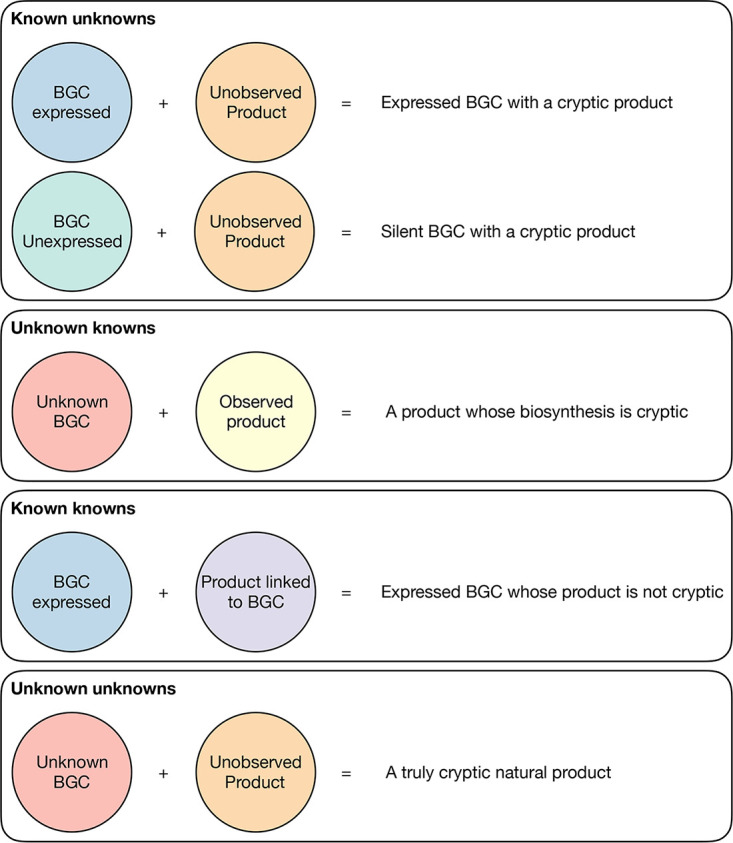
Microbial natural products, particularly those produced by filamentous , underpin the majority of clinically used antibiotics. Unfortunately, only a few new antibiotic classes have been discovered since the 1970s, which has exacerbated fears of a postapocalyptic world in which antibiotics have lost their utility. Excitingly, the genome sequencing revolution painted an entirely new picture, one in which an average strain of filamentous harbors 20 to 50 natural product biosynthetic pathways but expresses very few of these under laboratory conditions. Development of methodology to access this "hidden" biochemical diversity has the potential to usher in a second Golden Era of antibiotic discovery. The proliferation of genomic data has led to inconsistent use of "cryptic" and "silent" when referring to biosynthetic gene clusters identified by bioinformatic analysis. In this Perspective, we discuss this issue and propose to formalize the use of this terminology.
微生物天然产物,尤其是丝状真菌产生的天然产物,是大多数临床使用的抗生素的基础。不幸的是,自 20 世纪 70 年代以来,仅发现了少数几种新的抗生素类别,这加剧了人们对后抗生素时代的担忧,即抗生素失去了效用。令人兴奋的是,基因组测序革命描绘了一幅全新的图景,即在平均一株丝状真菌中,蕴藏着 20 到 50 种天然产物生物合成途径,但在实验室条件下,这些途径很少表达。开发获取这种“隐藏”生化多样性的方法有可能开创抗生素发现的第二个黄金时代。基因组数据的激增导致在提到通过生物信息学分析鉴定的生物合成基因簇时,“隐性”和“沉默”这两个术语的使用不一致。在本观点中,我们讨论了这个问题,并提出了正式使用这一术语的建议。