• 文献检索
  • 文档翻译
  • 深度研究
  • 学术资讯
  • Suppr Zotero 插件Zotero 插件
  • 邀请有礼
  • 套餐&价格
  • 历史记录
应用&插件
Suppr Zotero 插件Zotero 插件浏览器插件Mac 客户端Windows 客户端微信小程序
定价
高级版会员购买积分包购买API积分包
服务
文献检索文档翻译深度研究API 文档MCP 服务
关于我们
关于 Suppr公司介绍联系我们用户协议隐私条款
关注我们

Suppr 超能文献

核心技术专利:CN118964589B侵权必究
粤ICP备2023148730 号-1Suppr @ 2026

文献检索

告别复杂PubMed语法,用中文像聊天一样搜索,搜遍4000万医学文献。AI智能推荐,让科研检索更轻松。

立即免费搜索

文件翻译

保留排版,准确专业,支持PDF/Word/PPT等文件格式,支持 12+语言互译。

免费翻译文档

深度研究

AI帮你快速写综述,25分钟生成高质量综述,智能提取关键信息,辅助科研写作。

立即免费体验

利用惯性测量单元(IMU)生成的数据和机器学习来提高马的步态分类。

Improving gait classification in horses by using inertial measurement unit (IMU) generated data and machine learning.

机构信息

Department of Clinical Sciences, Faculty of Veterinary Medicine, Utrecht University, 3584CM, Utrecht, The Netherlands.

Division of Robotics, Perception and Learning, KTH Royal Institute of Technology, Stockholm, Sweden.

出版信息

Sci Rep. 2020 Oct 20;10(1):17785. doi: 10.1038/s41598-020-73215-9.

DOI:10.1038/s41598-020-73215-9
PMID:33082367
原文链接:https://pmc.ncbi.nlm.nih.gov/articles/PMC7576586/
Abstract

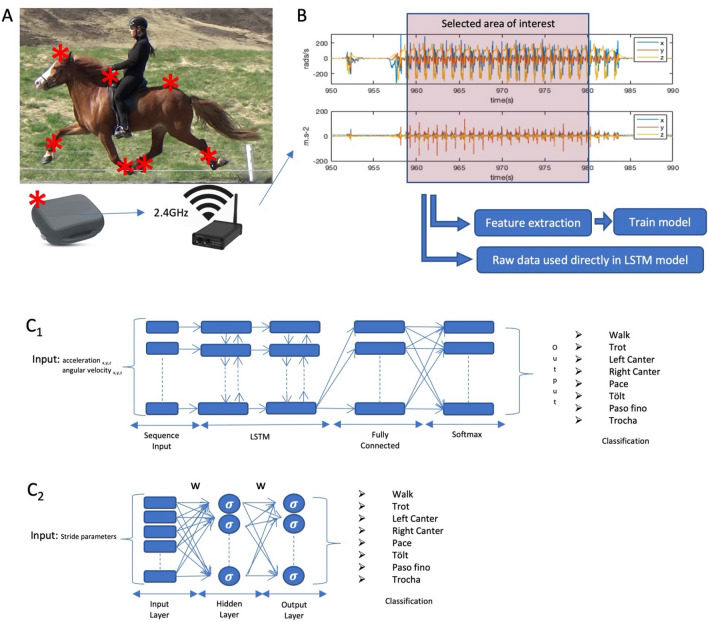
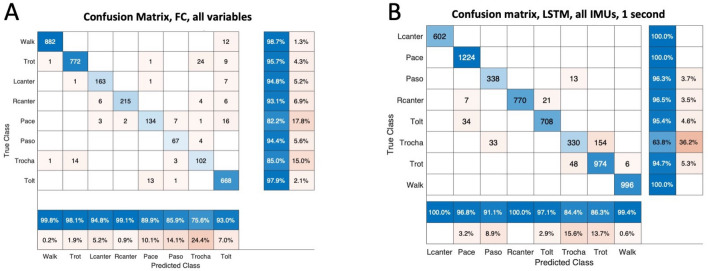
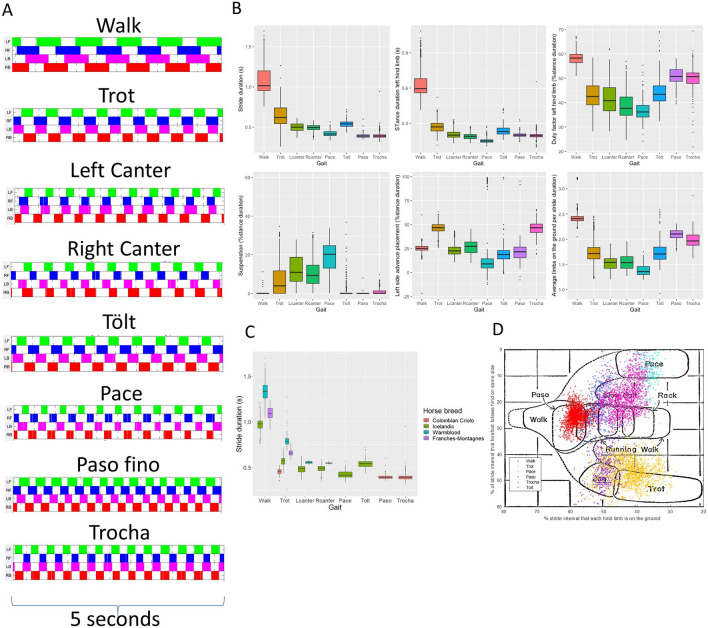
For centuries humans have been fascinated by the natural beauty of horses in motion and their different gaits. Gait classification (GC) is commonly performed through visual assessment and reliable, automated methods for real-time objective GC in horses are warranted. In this study, we used a full body network of wireless, high sampling-rate sensors combined with machine learning to fully automatically classify gait. Using data from 120 horses of four different domestic breeds, equipped with seven motion sensors, we included 7576 strides from eight different gaits. GC was trained using several machine-learning approaches, both from feature-extracted data and from raw sensor data. Our best GC model achieved 97% accuracy. Our technique facilitated accurate, GC that enables in-depth biomechanical studies and allows for highly accurate phenotyping of gait for genetic research and breeding. Our approach lends itself for potential use in other quadrupedal species without the need for developing gait/animal specific algorithms.

摘要

几个世纪以来,人类一直着迷于马在运动中的自然之美及其不同的步态。步态分类(GC)通常通过视觉评估进行,因此需要可靠的、自动化的实时客观 GC 方法。在这项研究中,我们使用了一个全身无线网络的无线、高采样率传感器,结合机器学习,实现了完全自动的步态分类。我们使用来自四个不同家马品种的 120 匹马的数据,配备了七个运动传感器,包括来自八种不同步态的 7576 步。GC 使用几种机器学习方法进行训练,包括从特征提取数据和原始传感器数据。我们最好的 GC 模型达到了 97%的准确率。我们的技术实现了准确的 GC,能够进行深入的生物力学研究,并允许对遗传研究和育种中的步态进行高度精确的表型分析。我们的方法可以应用于其他四足动物,而无需开发步态/动物特定的算法。
https://cdn.ncbi.nlm.nih.gov/pmc/blobs/691e/7576586/689034bb8593/41598_2020_73215_Fig3_HTML.jpg
https://cdn.ncbi.nlm.nih.gov/pmc/blobs/691e/7576586/e8e22b5848f3/41598_2020_73215_Fig1_HTML.jpg
https://cdn.ncbi.nlm.nih.gov/pmc/blobs/691e/7576586/c82f8659e594/41598_2020_73215_Fig2_HTML.jpg
https://cdn.ncbi.nlm.nih.gov/pmc/blobs/691e/7576586/689034bb8593/41598_2020_73215_Fig3_HTML.jpg
https://cdn.ncbi.nlm.nih.gov/pmc/blobs/691e/7576586/e8e22b5848f3/41598_2020_73215_Fig1_HTML.jpg
https://cdn.ncbi.nlm.nih.gov/pmc/blobs/691e/7576586/c82f8659e594/41598_2020_73215_Fig2_HTML.jpg
https://cdn.ncbi.nlm.nih.gov/pmc/blobs/691e/7576586/689034bb8593/41598_2020_73215_Fig3_HTML.jpg

相似文献

1
Improving gait classification in horses by using inertial measurement unit (IMU) generated data and machine learning.利用惯性测量单元(IMU)生成的数据和机器学习来提高马的步态分类。
Sci Rep. 2020 Oct 20;10(1):17785. doi: 10.1038/s41598-020-73215-9.
2
Using Different Combinations of Body-Mounted IMU Sensors to Estimate Speed of Horses-A Machine Learning Approach.使用不同组合的体戴式 IMU 传感器来估算马的速度——一种机器学习方法。
Sensors (Basel). 2021 Jan 26;21(3):798. doi: 10.3390/s21030798.
3
Assessment of repeatability of a wireless, inertial sensor-based lameness evaluation system for horses.基于无线惯性传感器的马匹跛行评估系统的重复性评估
Am J Vet Res. 2011 Sep;72(9):1156-63. doi: 10.2460/ajvr.72.9.1156.
4
Inertial Sensor Technologies-Their Role in Equine Gait Analysis, a Review.惯性传感器技术——在马步态分析中的作用,综述。
Sensors (Basel). 2023 Jul 11;23(14):6301. doi: 10.3390/s23146301.
5
An attempt to detect lameness in galloping horses by use of body-mounted inertial sensors.尝试通过使用安装在马身上的惯性传感器来检测飞奔马匹的跛行情况。
Am J Vet Res. 2016 Oct;77(10):1121-31. doi: 10.2460/ajvr.77.10.1121.
6
Detecting fatigue of sport horses with biomechanical gait features using inertial sensors.利用惯性传感器检测运动马的生物力学步态特征以判断其疲劳状态。
PLoS One. 2023 Apr 14;18(4):e0284554. doi: 10.1371/journal.pone.0284554. eCollection 2023.
7
Reliable and clinically applicable gait event classification using upper body motion in walking and trotting horses.使用行走和小跑马匹的上半身运动进行可靠且临床适用的步态事件分类。
J Biomech. 2021 Jan 4;114:110146. doi: 10.1016/j.jbiomech.2020.110146. Epub 2020 Nov 21.
8
Towards an Inertial Sensor-Based Wearable Feedback System for Patients after Total Hip Arthroplasty: Validity and Applicability for Gait Classification with Gait Kinematics-Based Features.基于惯性传感器的全髋关节置换术后患者可穿戴反馈系统:基于步态运动学特征的步态分类的有效性和适用性。
Sensors (Basel). 2019 Nov 16;19(22):5006. doi: 10.3390/s19225006.
9
Characterizing Bodyweight-Supported Treadmill Walking on Land and Underwater Using Foot-Worn Inertial Measurement Units and Machine Learning for Gait Event Detection.使用足部穿戴式惯性测量单元和机器学习对陆地和水下体重支撑式跑步机行走进行步态事件检测的特征描述。
Sensors (Basel). 2023 Sep 17;23(18):7945. doi: 10.3390/s23187945.
10
Use of an inertial measurement unit to assess the effect of forelimb lameness on three-dimensional hoof orientation in horses at a walk and trot.使用惯性测量单元评估前肢跛行对马在行走和小跑时三维蹄向的影响。
Am J Vet Res. 2014 Sep;75(9):800-8. doi: 10.2460/ajvr.75.9.800.

引用本文的文献

1
Variation in Four Horse Gait Categories Illustrated by Quantitative Analysis With ANALOC-E.使用ANALOC-E进行定量分析所展示的四种马步态类别的变化。
Vet Med Int. 2025 Aug 6;2025:4906015. doi: 10.1155/vmi/4906015. eCollection 2025.
2
eHealth literacy and cancer screening attitudes among chronic patients.慢性病患者的电子健康素养与癌症筛查态度
Sci Rep. 2025 May 29;15(1):18877. doi: 10.1038/s41598-025-03595-3.
3
Applications and Considerations of Artificial Intelligence in Veterinary Sciences: A Narrative Review.人工智能在兽医学中的应用与思考:一篇叙述性综述

本文引用的文献

1
A Review of Biomechanical Gait Classification with Reference to Collected Trot, Passage and Piaffe in Dressage Horses.关于盛装舞步马收集步、慢步和原地高级舞步的生物力学步态分类综述
Animals (Basel). 2019 Oct 3;9(10):763. doi: 10.3390/ani9100763.
2
Signatures of selection in the genome of Swedish warmblood horses selected for sport performance.瑞典温血马在运动表现方面的选择基因组中的特征。
BMC Genomics. 2019 Sep 18;20(1):717. doi: 10.1186/s12864-019-6079-1.
3
Research trends in equine movement analysis, future opportunities and potential barriers in the digital age: A scoping review from 1978 to 2018.
Vet Med Sci. 2025 May;11(3):e70315. doi: 10.1002/vms3.70315.
4
Discrimination of the Lame Limb in Horses Using a Machine Learning Method (Support Vector Machine) Based on Asymmetry Indices Measured by the EQUISYM System.基于EQUISYM系统测量的不对称指数,使用机器学习方法(支持向量机)对马的患肢进行鉴别。
Sensors (Basel). 2025 Feb 12;25(4):1095. doi: 10.3390/s25041095.
5
Applying Multi-Purpose Commercial Inertial Sensors for Monitoring Equine Locomotion in Equestrian Training.应用多功能商用惯性传感器监测马术训练中的马匹运动。
Sensors (Basel). 2024 Dec 21;24(24):8170. doi: 10.3390/s24248170.
6
Bayesian Recursive and Structural Equation Models to Infer Causal Links Among Gait Visual Scores on Campolina Horses.用于推断坎波拉马步态视觉评分之间因果关系的贝叶斯递归和结构方程模型。
J Anim Breed Genet. 2025 Sep;142(5):463-477. doi: 10.1111/jbg.12919. Epub 2024 Dec 19.
7
Supervised Machine Learning Techniques for Breeding Value Prediction in Horses: An Example Using Gait Visual Scores.用于马匹育种值预测的监督式机器学习技术:以步态视觉评分为例
Animals (Basel). 2024 Sep 20;14(18):2723. doi: 10.3390/ani14182723.
8
Inertial sensor data of horses from four breeds at walk and trot in hand on a straight line.四个品种马匹在直线上手牵慢步和快步时的惯性传感器数据。
Data Brief. 2024 Jul 22;55:110764. doi: 10.1016/j.dib.2024.110764. eCollection 2024 Aug.
9
Objective Assessment of Equine Locomotor Symmetry Using an Inertial Sensor System and Artificial Intelligence: A Comparative Study.使用惯性传感器系统和人工智能对马的运动对称性进行客观评估:一项比较研究。
Animals (Basel). 2024 Mar 16;14(6):921. doi: 10.3390/ani14060921.
10
Inertial Sensor Technologies-Their Role in Equine Gait Analysis, a Review.惯性传感器技术——在马步态分析中的作用,综述。
Sensors (Basel). 2023 Jul 11;23(14):6301. doi: 10.3390/s23146301.
马运动分析的研究趋势,数字时代的未来机遇和潜在障碍:1978 年至 2018 年的范围综述。
Equine Vet J. 2019 Nov;51(6):813-824. doi: 10.1111/evj.13076. Epub 2019 Feb 3.
4
Selection on the Colombian paso horse's gaits has produced kinematic differences partly explained by the DMRT3 gene.对哥伦比亚 Paso 马步态的选择产生了运动学差异,部分原因可以用 DMRT3 基因来解释。
PLoS One. 2018 Aug 17;13(8):e0202584. doi: 10.1371/journal.pone.0202584. eCollection 2018.
5
EquiMoves: A Wireless Networked Inertial Measurement System for Objective Examination of Horse Gait.EquiMoves:用于客观检查马步态的无线网络化惯性测量系统。
Sensors (Basel). 2018 Mar 13;18(3):850. doi: 10.3390/s18030850.
6
A simple method for equine kinematic gait event detection.一种用于马运动步态事件检测的简单方法。
Equine Vet J. 2017 Sep;49(5):688-691. doi: 10.1111/evj.12669. Epub 2017 Feb 28.
7
Validation of distal limb mounted inertial measurement unit sensors for stride detection in Warmblood horses at walk and trot.用于检测温血马行走和小跑时步幅的远端肢体安装惯性测量单元传感器的验证
Equine Vet J. 2017 Jul;49(4):545-551. doi: 10.1111/evj.12651. Epub 2016 Dec 13.
8
The origin of ambling horses.溜蹄马的起源。
Curr Biol. 2016 Aug 8;26(15):R697-R699. doi: 10.1016/j.cub.2016.07.001.
9
Accuracy and precision of equine gait event detection during walking with limb and trunk mounted inertial sensors.马在肢体和躯干安装惯性传感器行走时步态事件检测的准确性和精密度。
Sensors (Basel). 2012;12(6):8145-56. doi: 10.3390/s120608145. Epub 2012 Jun 12.
10
Mutations in DMRT3 affect locomotion in horses and spinal circuit function in mice.DMRT3 基因突变影响马的运动能力和小鼠的脊髓回路功能。
Nature. 2012 Aug 30;488(7413):642-6. doi: 10.1038/nature11399.