Lv Yan, Du Shengye, Huang Xin, Hao Cuifang
Clinical Medical College of Shandong University, Jinan, Shandong 250012, P.R. China.
Department of Gynecology and Reproductive Medicine, Jinan People's Hospital, Jinan, Shandong 271100, P.R. China.
Exp Ther Med. 2020 Dec;20(6):131. doi: 10.3892/etm.2020.9256. Epub 2020 Oct 2.
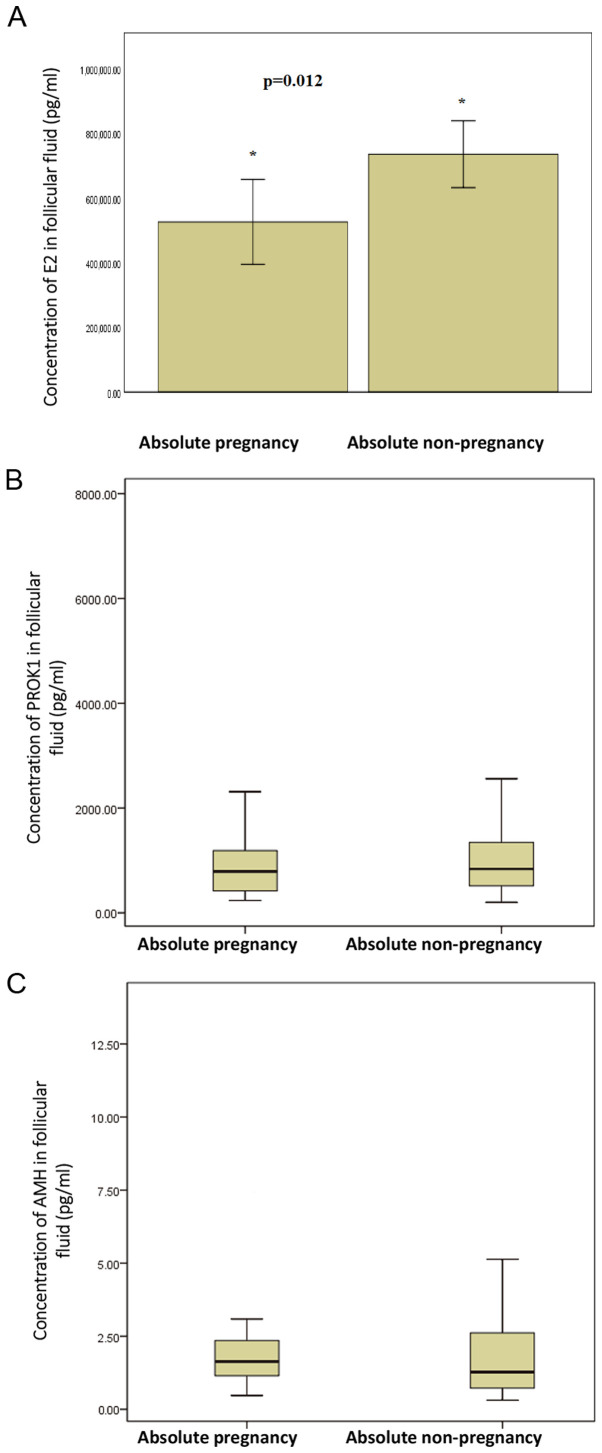
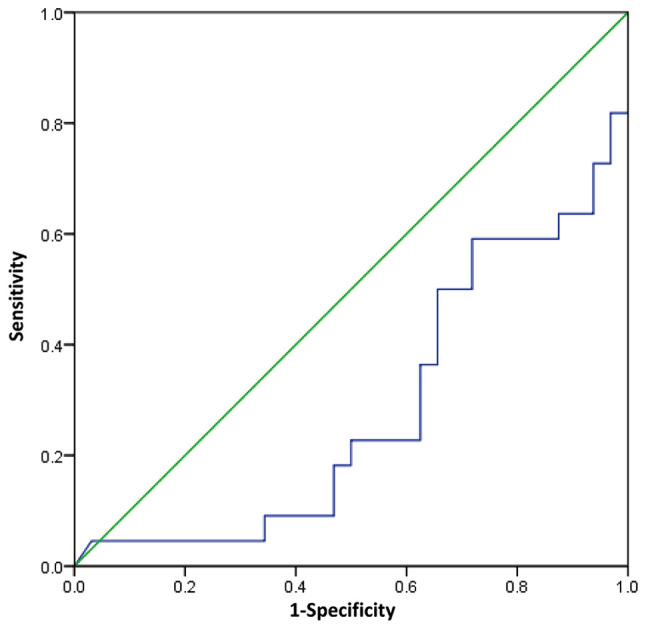
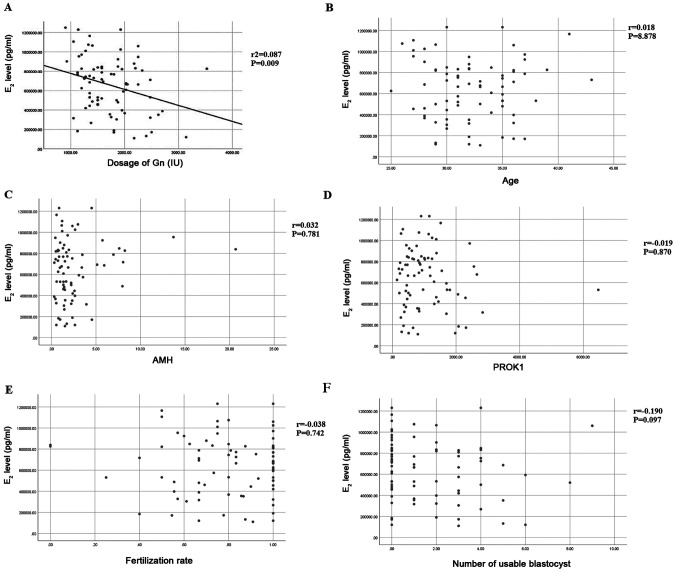
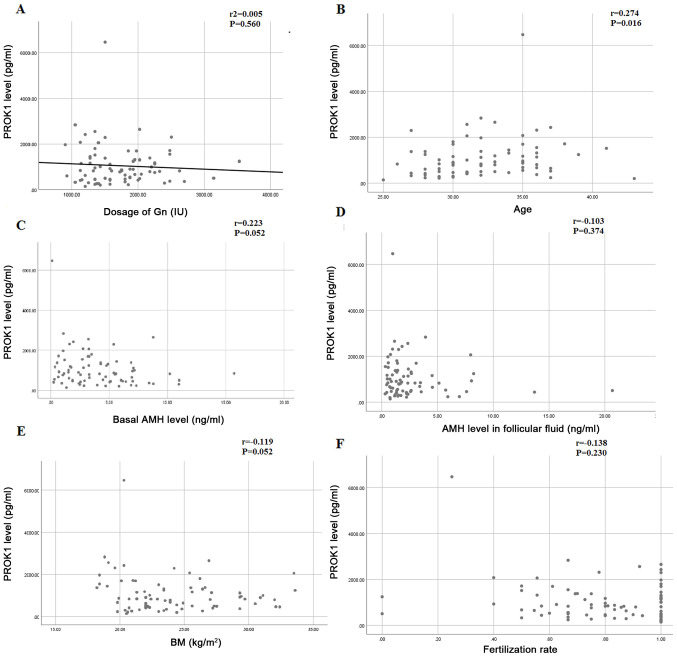
The present study is a clinical trial analyzing follicular fluid. The current study aimed to assess whether a correlation exists among estradiol (E2), anti-Mullerian hormone (AMH) and prokineticin 1 (PROK1) levels in the follicular fluid. A total of 81 infertile patients (53 with primary infertility and 28 with secondary infertility) who received routine fertilization (IVF) and embryo transfer (ET) or intracytoplasmic sperm injection at Yuhuangding Hospital (Yantai, China) were included in the present study. On the day of egg retrieval, follicular puncture and follicular fluid extraction were performed on patients using double lumen needles under the guidance of a vaginal ultrasound. In 77 cases, follicular fluid was collected from the follicle with the largest diameter. A total of 53 cases underwent ET and subsequent pregnancy outcomes were traced. Concentrations of E2, AMH and PROK1 in the single follicular fluid specimens were determined. The concentration of E2 in follicular fluid from the largest follicles in absolute pregnancy group was significantly lower than that in absolute non-pregnancy group. The concentrations of PROK1 and AMH in follicular fluid from the largest follicles in absolute pregnancy group were not significantly different from those in absolute non-pregnancy group. The concentration of E2 was associated with the dosage of gonadotropin, but was not associated with age, AMH and PROK1 levels in follicular fluid, fertilization rate or number of usable blastocysts. The area under curve revealed that E2 level in the follicular fluid exhibited a low predictive value for pregnancy outcome. The present study demonstrated that E2 level is a better predictor for the outcome of IVF-ET than AMH or PROK1 levels in the follicular fluid.
本研究是一项分析卵泡液的临床试验。当前研究旨在评估卵泡液中雌二醇(E2)、抗苗勒管激素(AMH)和促动力蛋白1(PROK1)水平之间是否存在相关性。本研究纳入了81例在烟台毓璜顶医院接受常规体外受精(IVF)和胚胎移植(ET)或卵胞浆内单精子注射的不孕患者(53例原发性不孕和28例继发性不孕)。在取卵当天,在阴道超声引导下使用双腔针为患者进行卵泡穿刺和卵泡液抽取。77例患者从直径最大的卵泡中收集卵泡液。共53例患者接受了胚胎移植,并追踪后续妊娠结局。测定单个卵泡液标本中E2、AMH和PROK1的浓度。绝对妊娠组最大卵泡的卵泡液中E2浓度显著低于绝对非妊娠组。绝对妊娠组最大卵泡的卵泡液中PROK1和AMH浓度与绝对非妊娠组无显著差异。E2浓度与促性腺激素剂量有关,但与年龄、卵泡液中AMH和PROK1水平、受精率或可用囊胚数量无关。曲线下面积显示,卵泡液中E2水平对妊娠结局的预测价值较低。本研究表明,在卵泡液中,E2水平比AMH或PROK1水平更能预测IVF-ET的结局。