Eglington Luke G, Pavlik Philip I
Institute for Intelligent Systems, University of Memphis, Memphis, TN USA.
NPJ Sci Learn. 2020 Oct 15;5:15. doi: 10.1038/s41539-020-00074-4. eCollection 2020.
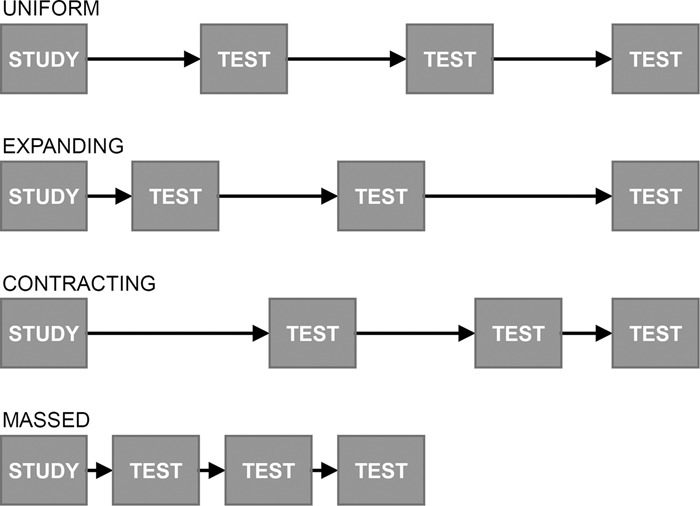
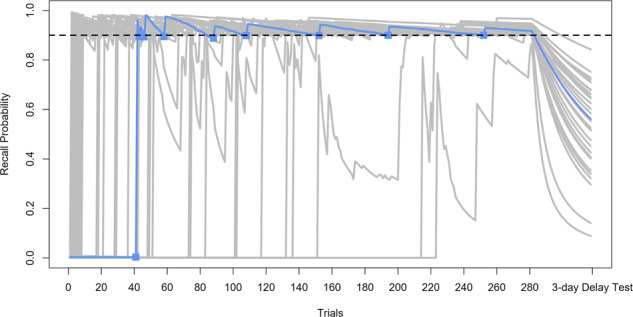
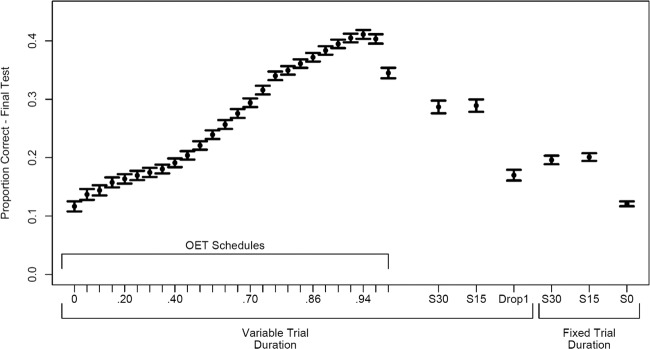
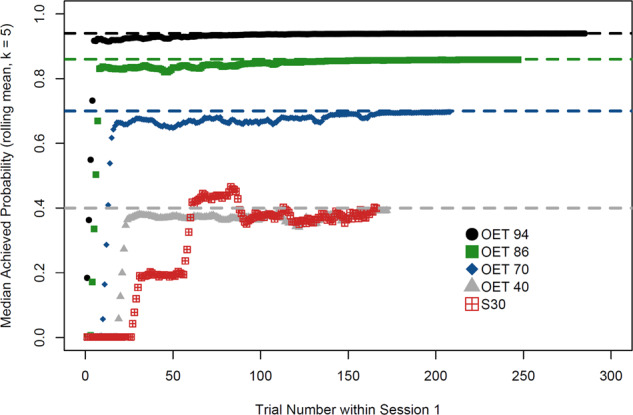
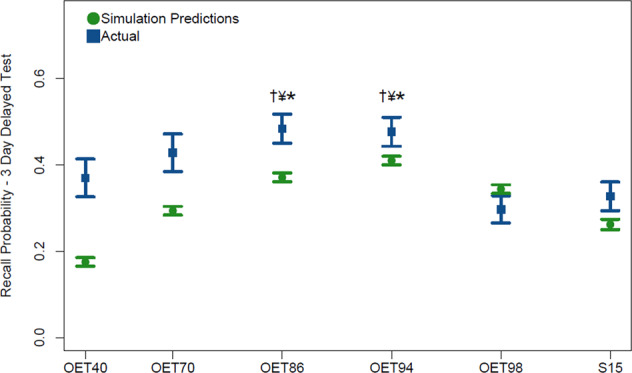
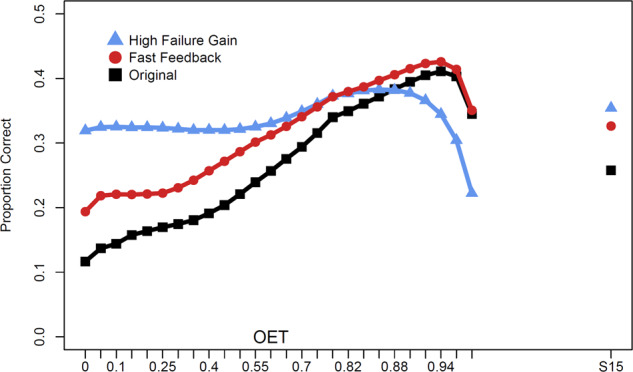
Decades of research has shown that spacing practice trials over time can improve later memory, but there are few concrete recommendations concerning how to optimally space practice. We show that existing recommendations are inherently suboptimal due to their insensitivity to time costs and individual- and item-level differences. We introduce an alternative approach that optimally schedules practice with a computational model of spacing in tandem with microeconomic principles. We simulated conventional spacing schedules and our adaptive model-based approach. Simulations indicated that practicing according to microeconomic principles of resulted in substantially better memory retention than alternatives. The simulation results provided quantitative estimates of optimal difficulty that differed markedly from prior recommendations but still supported a desirable difficulty framework. Experimental results supported simulation predictions, with up to 40% more items recalled in conditions where practice was scheduled optimally according to the model of practice. Our approach can be readily implemented in online educational systems that adaptively schedule practice and has significant implications for millions of students currently learning with educational technology.
数十年的研究表明,随着时间推移分散练习试验可以改善后期记忆,但关于如何以最佳方式安排练习,具体建议却很少。我们表明,现有建议本质上是次优的,因为它们对时间成本以及个体和项目层面的差异不敏感。我们引入了一种替代方法,该方法结合微观经济原理,利用一种计算间隔模型来优化练习安排。我们模拟了传统的间隔安排和基于模型的自适应方法。模拟结果表明,根据微观经济原理进行练习比其他方法能显著提高记忆保持效果。模拟结果提供了最佳难度的定量估计,这与先前的建议有显著差异,但仍支持一个理想的难度框架。实验结果支持了模拟预测,在根据练习模型进行最佳安排的条件下,回忆的项目数量比其他条件多多达40%。我们的方法可以很容易地在自适应安排练习的在线教育系统中实施,并且对目前使用教育技术学习的数百万学生具有重大意义。