Institute of Laboratory Medicine, the German Center for Lung Research (DZL) and the Universities of Giessen and Marburg Lung Center (UGMLC), Philipps University Marburg, 35039 Marburg, Germany.
Institute of Tumor Immunology, Clinic for Hematology, Oncology and Immunology, Center for Tumor Biology and Immunology, Philipps University Marburg, 35039 Marburg, Germany.
Nutrients. 2020 Oct 19;12(10):3193. doi: 10.3390/nu12103193.
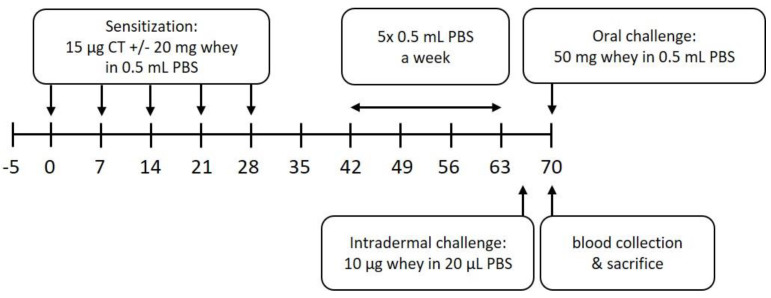
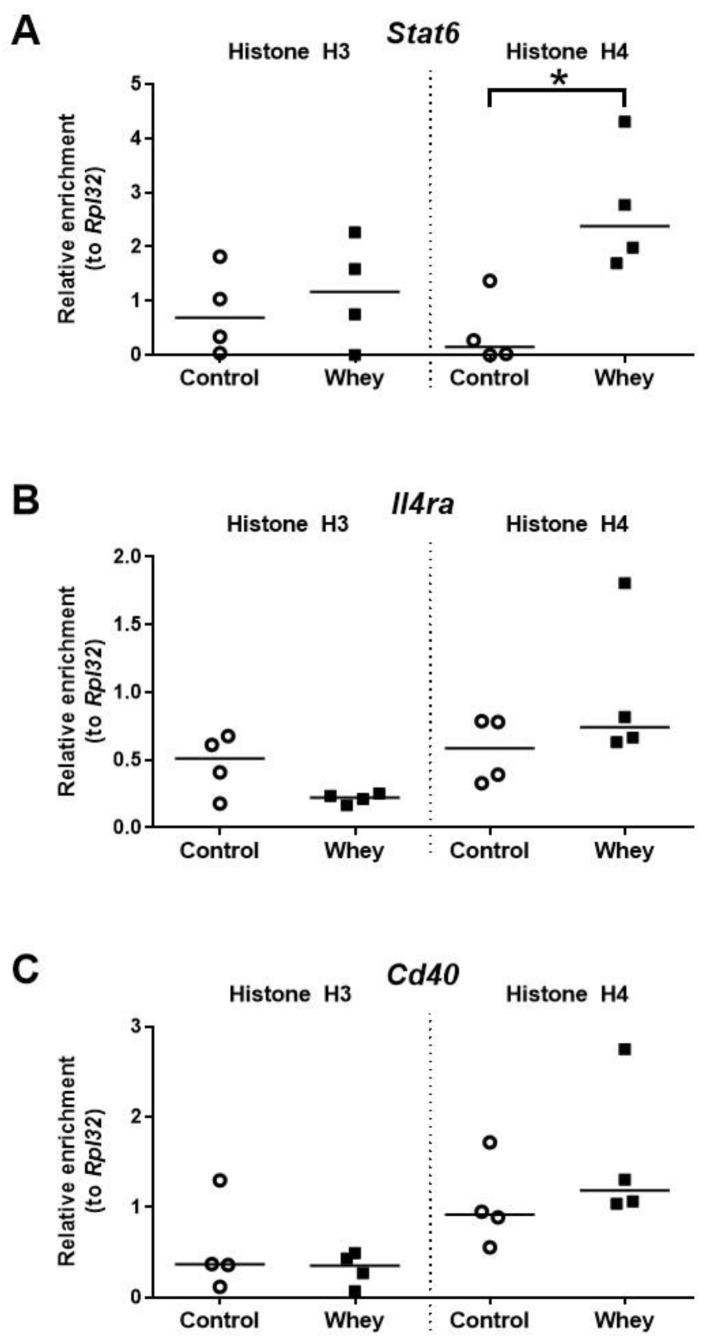
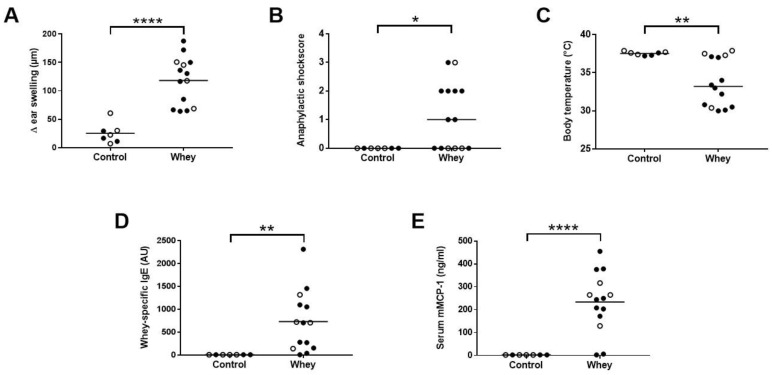
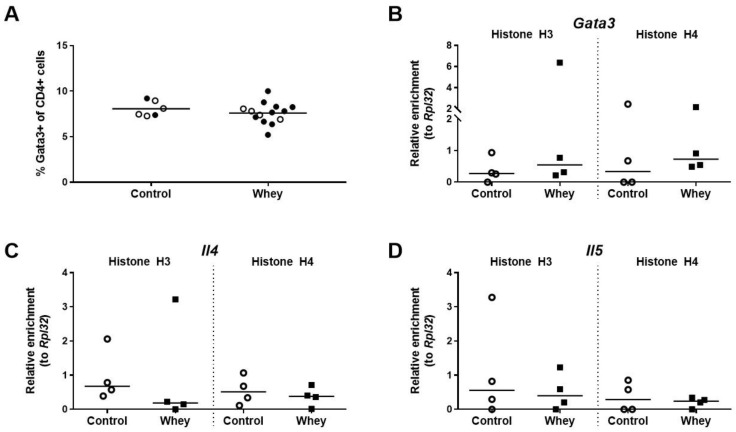
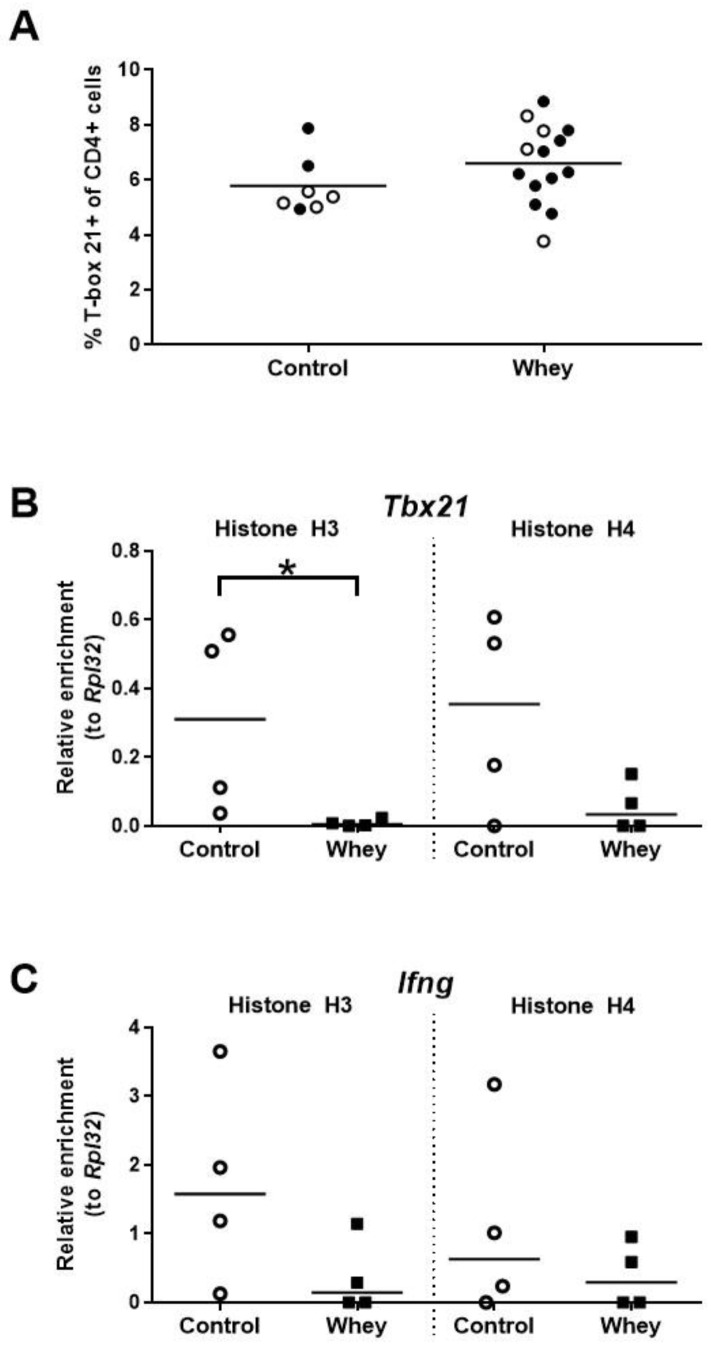
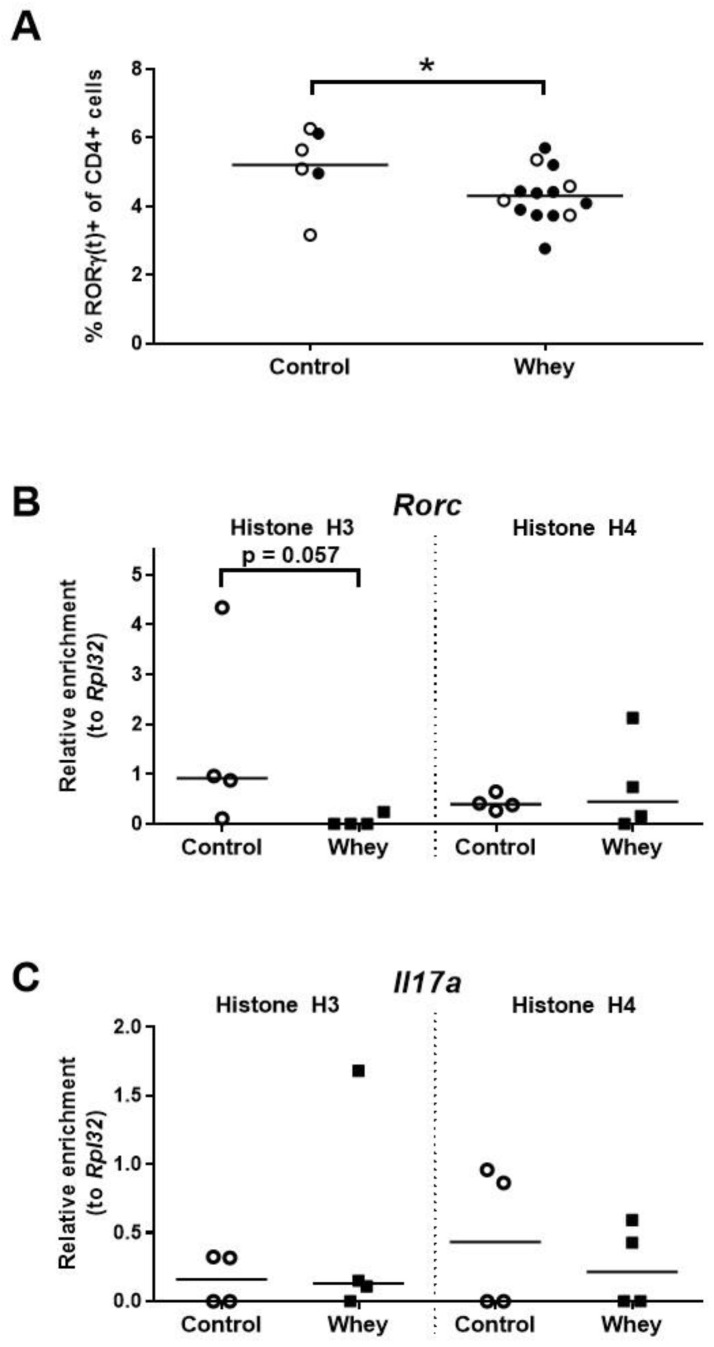
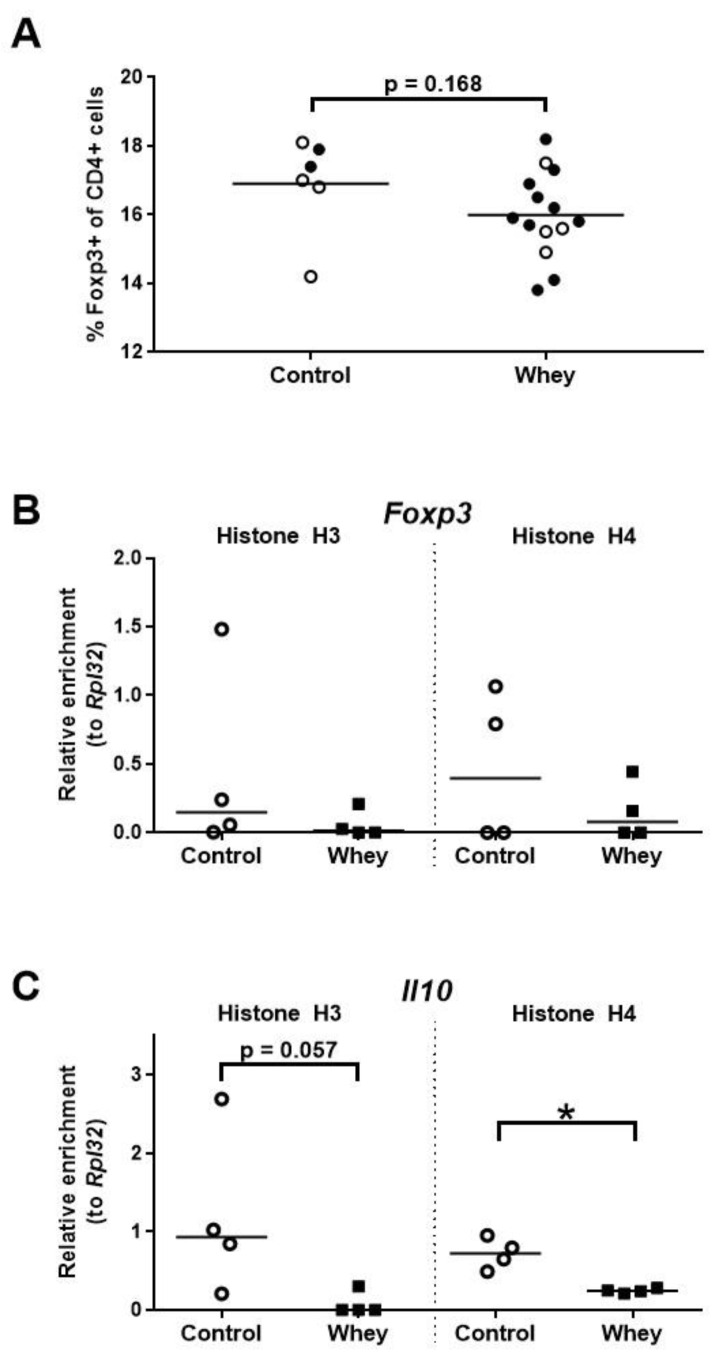
Immunoglobulin E (IgE)-mediated allergy against cow's milk protein fractions such as whey is one of the most common food-related allergic disorders of early childhood. Histone acetylation is an important epigenetic mechanism, shown to be involved in the pathogenesis of allergies. However, its role in food allergy remains unknown. IgE-mediated cow's milk allergy was successfully induced in a mouse model, as demonstrated by acute allergic symptoms, whey-specific IgE in serum, and the activation of mast cells upon a challenge with whey protein. The elicited allergic response coincided with reduced percentages of regulatory T (Treg) and T helper 17 (Th17) cells, matching decreased levels of H3 and/or H4 histone acetylation at pivotal Treg and Th17 loci, an epigenetic status favoring lower gene expression. In addition, histone acetylation levels at the crucial T helper 1 (Th1) loci were decreased, most probably preceding the expected reduction in Th1 cells after inducing an allergic response. No changes were observed for T helper 2 cells. However, increased histone acetylation levels, promoting gene expression, were observed at the signal transducer and activator of transcription 6 () gene, a proallergic B cell locus, which was in line with the presence of whey-specific IgE. In conclusion, the observed histone acetylation changes are pathobiologically in line with the successful induction of cow's milk allergy, to which they might have also contributed mechanistically.
免疫球蛋白 E(IgE)介导的对乳清等牛乳蛋白的过敏反应是儿童早期最常见的食物相关过敏疾病之一。组蛋白乙酰化是一种重要的表观遗传机制,已被证明与过敏的发病机制有关。然而,其在食物过敏中的作用尚不清楚。我们成功地在小鼠模型中诱导了 IgE 介导的牛乳过敏,表现为急性过敏症状、血清中乳清特异性 IgE 以及乳清蛋白激发后肥大细胞的激活。诱发的过敏反应与调节性 T(Treg)和辅助性 T 细胞 17(Th17)细胞的比例降低有关,与关键的 Treg 和 Th17 基因座的 H3 和/或 H4 组蛋白乙酰化水平降低相吻合,这种表观遗传状态有利于降低基因表达。此外,关键的辅助性 T 细胞 1(Th1)基因座的组蛋白乙酰化水平降低,很可能在诱导过敏反应后导致 Th1 细胞数量减少之前就已经降低。辅助性 T 细胞 2(Th2)细胞没有观察到变化。然而,在信号转导和转录激活因子 6(STAT6)基因(一个促过敏 B 细胞基因座)中观察到组蛋白乙酰化水平升高,促进基因表达,这与乳清特异性 IgE 的存在相一致。总之,观察到的组蛋白乙酰化变化与牛乳过敏的成功诱导在病理生物学上是一致的,它们可能在机制上也起到了作用。