Division of Gastroenterology, Department of Medicine, University of California San Francisco, San Francisco, CA, USA.
Zuckerberg San Francisco General Hospital and Trauma Center, San Francisco, CA, USA.
Sci Rep. 2020 Oct 21;10(1):17980. doi: 10.1038/s41598-020-74599-4.
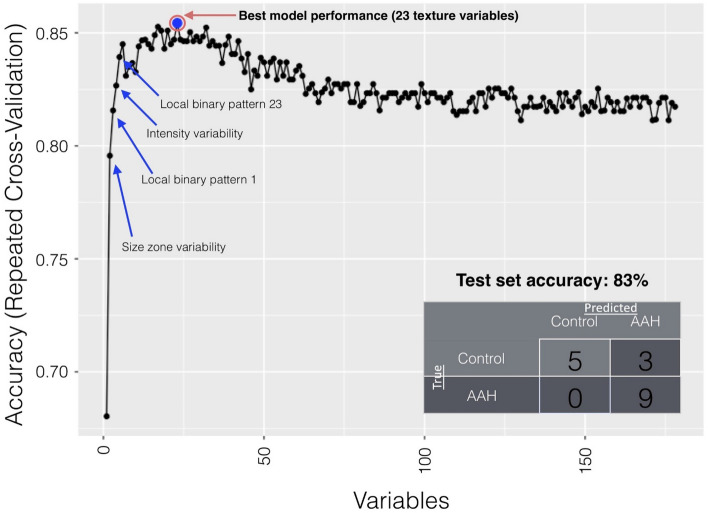
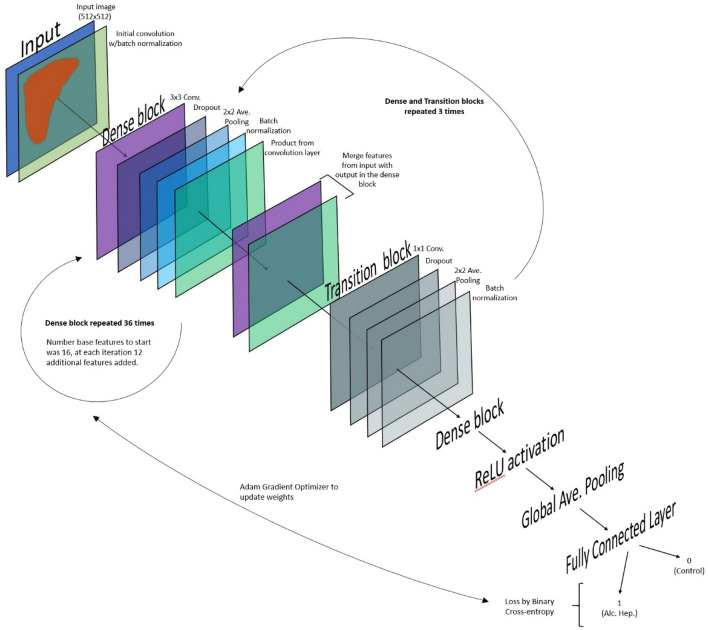
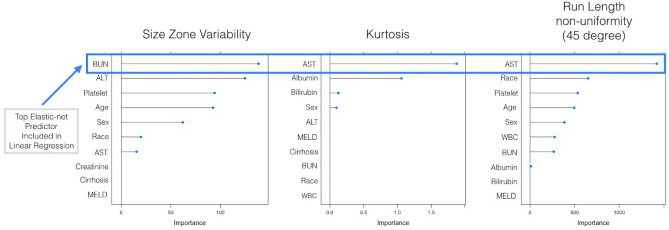
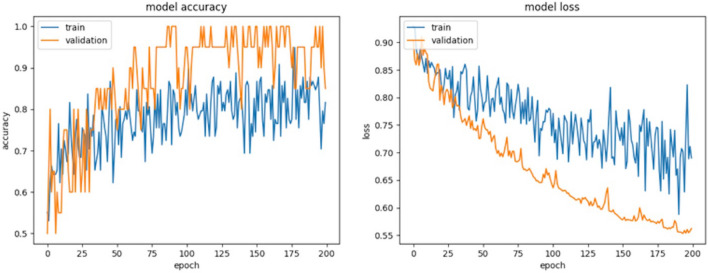
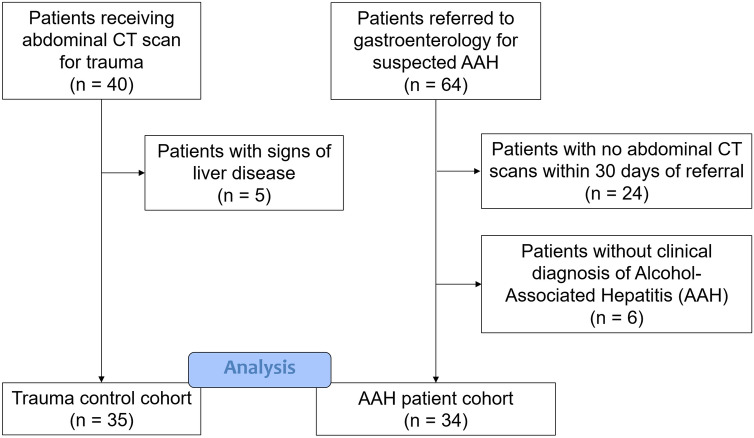
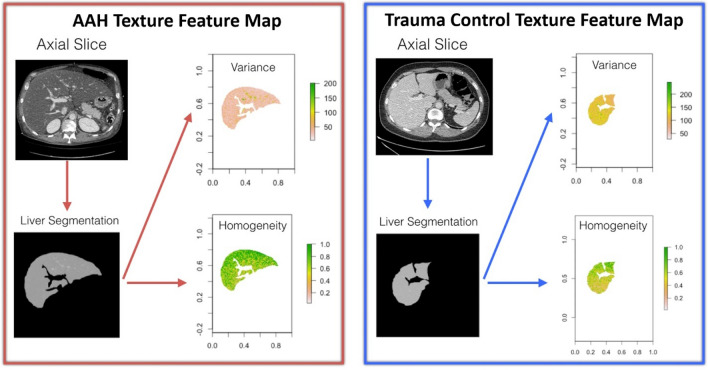
The aim of this study was to use texture analysis to establish quantitative CT-based imaging features to predict clinical severity in patients with acute alcohol-associated hepatitis (AAH). A secondary aim was to compare the performance of texture analysis to deep learning. In this study, mathematical texture features were extracted from CT slices of the liver for 34 patients with a diagnosis of AAH and 35 control patients. Recursive feature elimination using random forest (RFE-RF) was used to identify the best combination of features to distinguish AAH from controls. These features were subsequently used as predictors to determine associated clinical values. To compare machine learning with deep learning approaches, a 2D dense convolutional neural network (CNN) was implemented and trained for the classification task of AAH. RFE-RF identified 23 top features used to classify AAH images, and the subsequent model demonstrated an accuracy of 82.4% in the test set. The deep learning CNN demonstrated an accuracy of 70% in the test set. We show that texture features of the liver are unique in AAH and are candidate quantitative biomarkers that can be used in prospective studies to predict the severity and outcomes of patients with AAH.
本研究旨在利用纹理分析建立基于 CT 的定量成像特征,以预测急性酒精相关性肝炎(AAH)患者的临床严重程度。次要目标是比较纹理分析与深度学习的性能。在这项研究中,从 34 名 AAH 诊断患者和 35 名对照患者的肝脏 CT 切片中提取了数学纹理特征。使用随机森林(RFE-RF)进行递归特征消除,以确定区分 AAH 与对照组的最佳特征组合。这些特征随后被用作预测因子,以确定相关的临床值。为了比较机器学习与深度学习方法,实现并训练了二维密集卷积神经网络(CNN)来进行 AAH 的分类任务。RFE-RF 确定了 23 个用于分类 AAH 图像的顶级特征,随后的模型在测试集中的准确率为 82.4%。深度学习 CNN 在测试集中的准确率为 70%。我们表明,肝脏的纹理特征在 AAH 中是独特的,是候选的定量生物标志物,可用于前瞻性研究来预测 AAH 患者的严重程度和结局。