Centre for Craniofacial and Regenerative Biology, King's College London, London SE1 9RT, UK.
Great Ormond Street Institute of Child Health, University College London, London WC1N 1EH, UK.
Development. 2020 Dec 14;147(23):dev194654. doi: 10.1242/dev.194654.
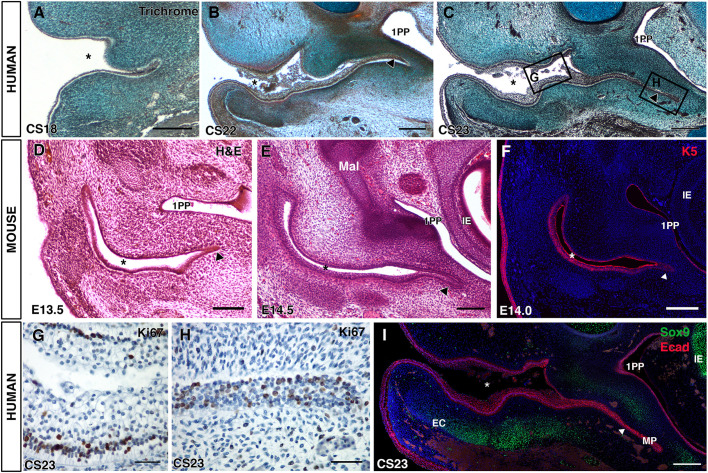
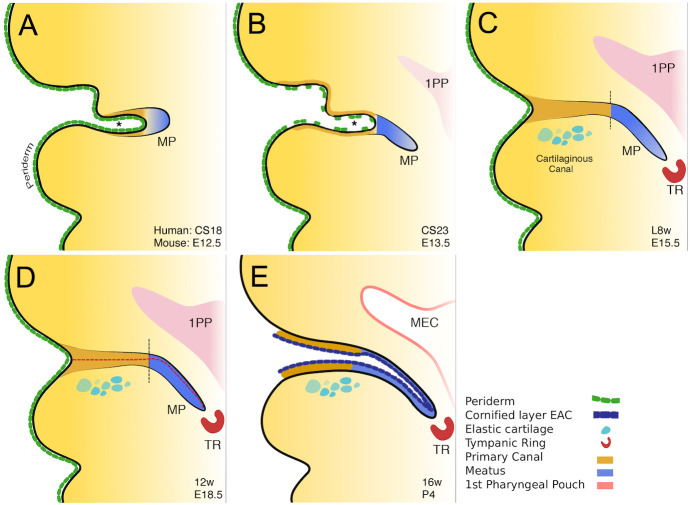
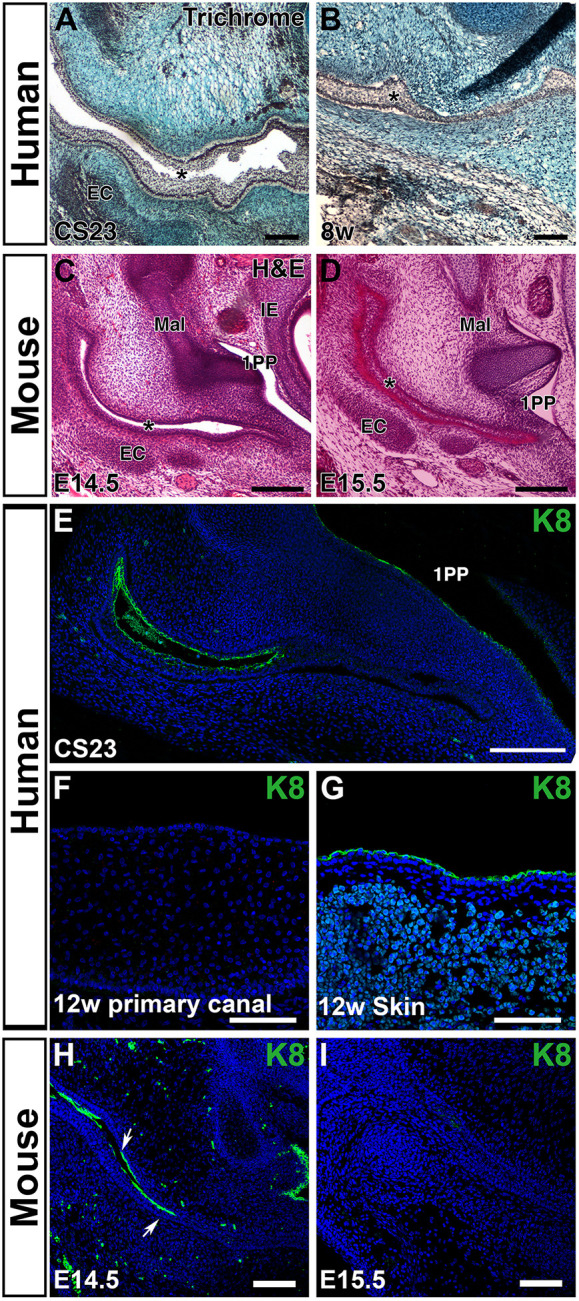
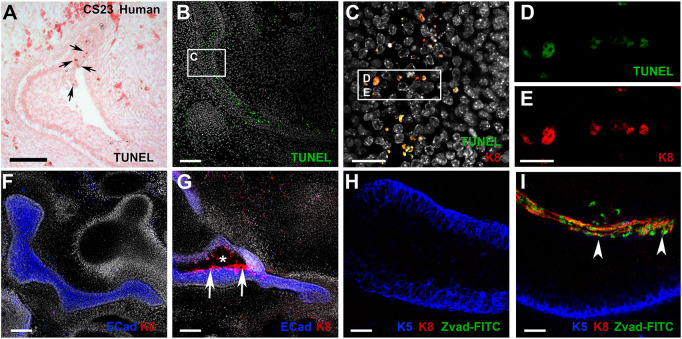
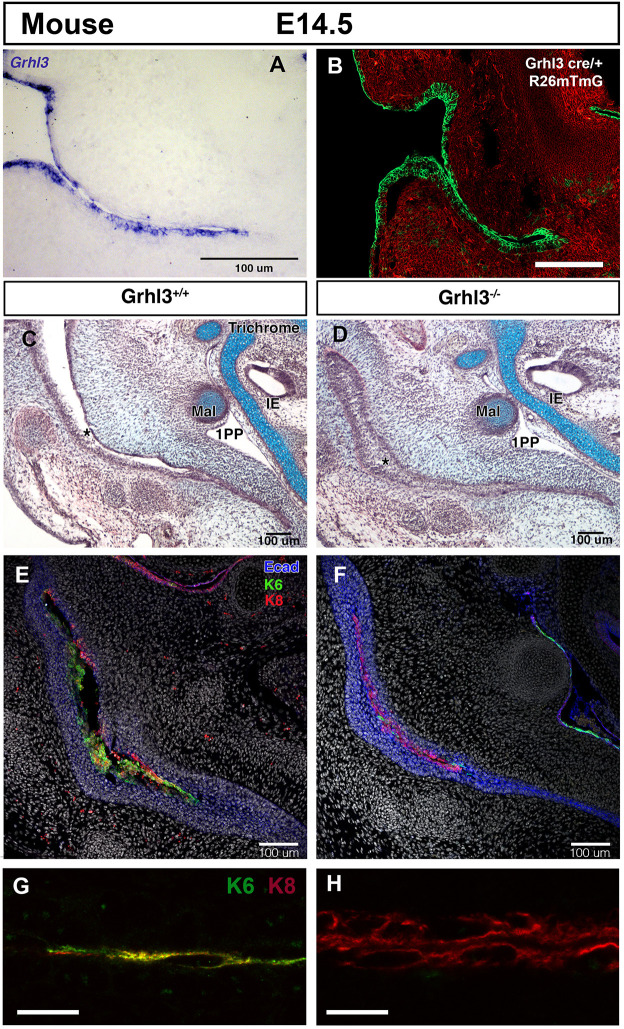
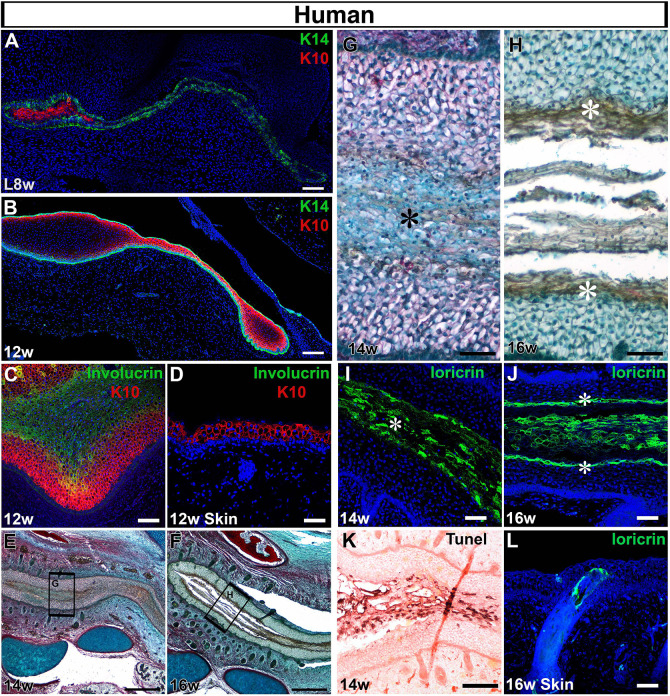
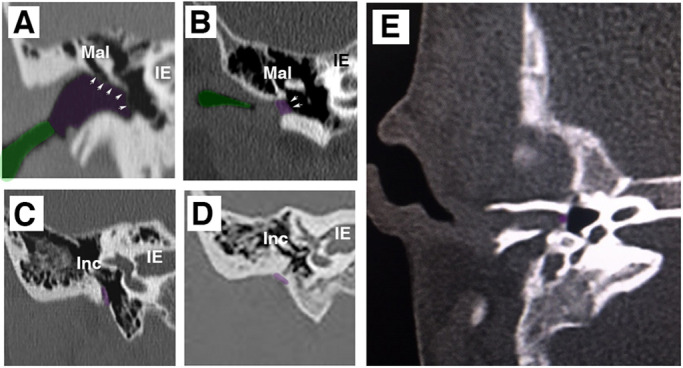
Defects in ear canal development can cause severe hearing loss as sound waves fail to reach the middle ear. Here, we reveal new mechanisms that control human canal development and highlight for the first time the complex system of canal closure and reopening. These processes can be perturbed in mutant mice and in explant culture, mimicking the defects associated with canal atresia. The more superficial part of the canal forms from an open primary canal that closes and then reopens. In contrast, the deeper part of the canal forms from an extending solid meatal plate that opens later. Closure and fusion of the primary canal was linked to loss of periderm, with failure in periderm formation in mutant mice associated with premature closure of the canal. Conversely, inhibition of cell death in the periderm resulted in an arrest of closure. Once closed, re-opening of the canal occurred in a wave, triggered by terminal differentiation of the epithelium. Understanding these complex processes involved in canal development sheds light on the underlying causes of canal atresia.
耳道发育缺陷会导致严重的听力损失,因为声波无法到达中耳。在这里,我们揭示了控制人类耳道发育的新机制,并首次强调了耳道封闭和再开放的复杂系统。这些过程在突变小鼠和外植体培养中受到干扰,模拟了与耳道闭锁相关的缺陷。耳道的较浅部分由一个开放的初级耳道形成,该耳道先关闭然后再打开。相比之下,耳道的较深部分由一个延伸的实心耳道板形成,该耳道板稍后打开。初级耳道的闭合和融合与表皮的丧失有关,在 突变小鼠中,表皮形成失败与耳道过早闭合有关。相反,表皮细胞死亡的抑制导致闭合停止。一旦关闭,耳道再开放是一个波状过程,由上皮的终末分化触发。了解这些参与耳道发育的复杂过程,为了解耳道闭锁的根本原因提供了线索。