Pavan Cristina, Escolano-Casado Guillermo, Bellomo Chiara, Cananà Stefania, Tomatis Maura, Leinardi Riccardo, Mino Lorenzo, Turci Francesco
Department of Chemistry, University of Turin, Turin, Italy.
"G. Scansetti" Interdepartmental Centre for Studies on Asbestos and Other Toxic Particulates, University of Turin, Turin, Italy.
Front Chem. 2023 Jan 16;10:1092221. doi: 10.3389/fchem.2022.1092221. eCollection 2022.
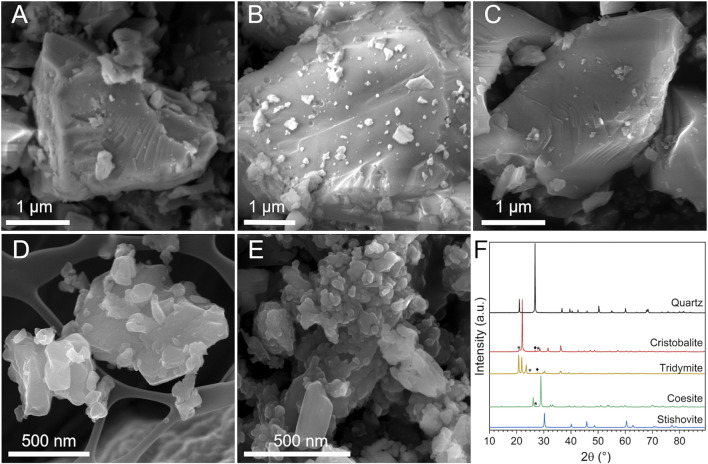
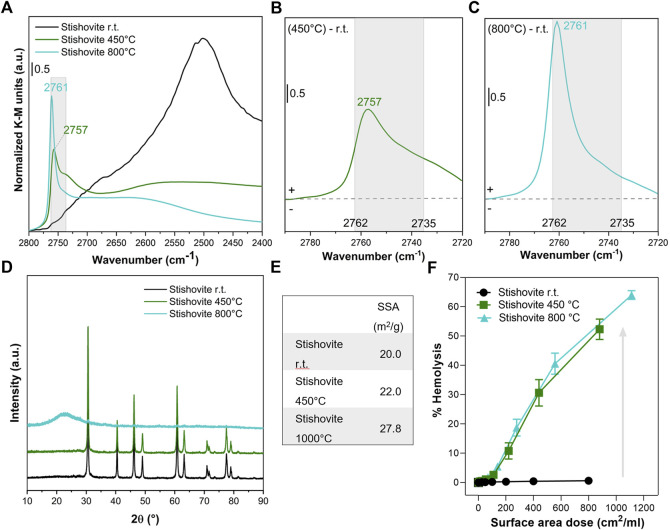
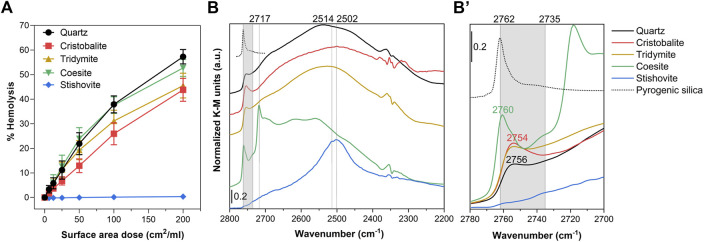
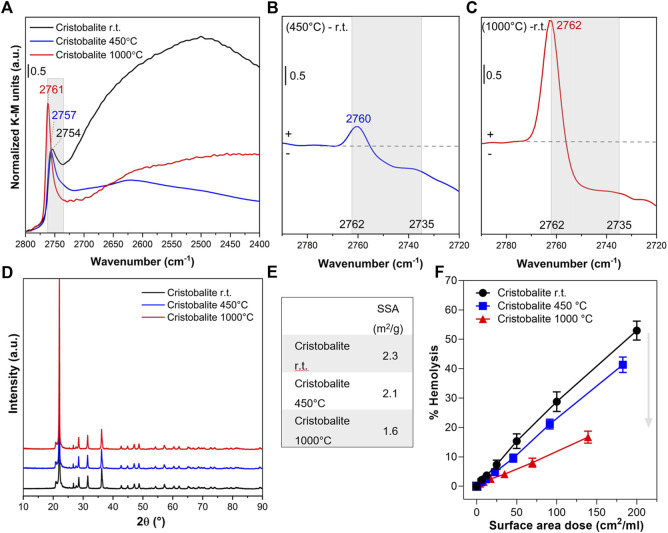
Crystalline silica (CS) is a well-known hazardous material that causes severe diseases including silicosis, lung cancer, and autoimmune diseases. However, the hazard associated to crystalline silica is extremely variable and depends on some specific characteristics, including crystal structure and surface chemistry. The crystalline silica polymorphs share the SiO stoichiometry and differentiate for crystal structure. The different crystal lattices in turn expose differently ordered hydroxyl groups at the crystal surface, i.e., the silanols. The nearly free silanols (NFS), a specific population of weakly interacting silanols, have been recently advanced as the key surface feature that governs recognition mechanisms between quartz and cell membrane, initiating toxicity. We showed here that the nearly free silanols occur on the other crystalline silica polymorphs and take part in the molecular interactions with biomembranes. A set of crystalline silica polymorphs, including quartz, cristobalite, tridymite, coesite, and stishovite, was physico-chemically characterized and the membranolytic activity was assessed using red blood cells as model membranes. Infrared spectroscopy in highly controlled conditions was used to profile the surface silanol topochemistry and the occurrence of surface nearly free silanols on crystalline silica polymorphs. All crystalline silica polymorphs, but stishovite were membranolytic. Notably, pristine stishovite did not exhibited surface nearly free silanols. The topochemistry of surface silanols was modulated by thermal treatments, and we showed that the occurrence of nearly free silanols paralleled the membranolytic activity for the crystalline silica polymorphs. These results provide a comprehensive understanding of the structure-activity relationship between nearly free silanols and membranolytic activity of crystalline silica polymorphs, offering a possible clue for interpreting the molecular mechanisms associated with silica hazard and bio-minero-chemical interfacial phenomena, including prebiotic chemistry.
结晶二氧化硅(CS)是一种众所周知的有害物质,可导致包括矽肺、肺癌和自身免疫性疾病在内的严重疾病。然而,与结晶二氧化硅相关的危害差异极大,且取决于一些特定特性,包括晶体结构和表面化学性质。结晶二氧化硅多晶型物具有相同的SiO化学计量比,但晶体结构不同。不同的晶格又会在晶体表面暴露出有序程度不同的羟基,即硅醇。最近,近乎自由的硅醇(NFS),一种特定群体的弱相互作用硅醇,被认为是控制石英与细胞膜之间识别机制并引发毒性的关键表面特征。我们在此表明,近乎自由的硅醇也存在于其他结晶二氧化硅多晶型物中,并参与与生物膜的分子相互作用。对包括石英、方石英、鳞石英、柯石英和斯石英在内的一组结晶二氧化硅多晶型物进行了物理化学表征,并以红细胞作为模型膜评估了其膜溶解活性。在高度可控的条件下,利用红外光谱对结晶二氧化硅多晶型物表面硅醇的拓扑化学和表面近乎自由的硅醇的存在情况进行了分析。除斯石英外,所有结晶二氧化硅多晶型物都具有膜溶解活性。值得注意的是,原始斯石英未表现出表面近乎自由的硅醇。通过热处理调节了表面硅醇的拓扑化学,并且我们表明,近乎自由的硅醇的存在与结晶二氧化硅多晶型物的膜溶解活性平行。这些结果全面理解了近乎自由的硅醇与结晶二氧化硅多晶型物的膜溶解活性之间的构效关系,为解释与二氧化硅危害以及生物-矿物-化学界面现象(包括益生元化学)相关的分子机制提供了可能的线索。