Kaikini Aakruti A, Dhodi Divya, Muke Suraj, Peshattiwar Vaibhavi, Bagle Sneha, Korde Aruna, Sarnaik Jayula, Kadwad Vijay, Sachdev Satbir, Sathaye Sadhana
Department of Pharmaceutical Sciences and Technology, Institute of Chemical Technology, Mumbai, Maharashtra, India.
Radiopharmaceuticals Programme, Board of Radiation & Isotope Technology (BRIT), Navi Mumbai, Maharashtra, India.
J Pharm Bioallied Sci. 2020 Jul-Sep;12(3):295-307. doi: 10.4103/jpbs.JPBS_239_19. Epub 2020 Jul 18.
Diabetes mellitus and its complications, such as nephropathy, represent a global burden. Recent research focuses on developing drugs that specifically target the pathogenesis of diabetic nephropathy rather than merely treating hyperglycemia. Rodent models of animal disease are integral in drug discovery and represent an obligatory regulatory requirement.
The aim of this study was to develop and standardize rat models of type 1 and type 2 diabetic nephropathy, resembling characteristics of human clinical condition.
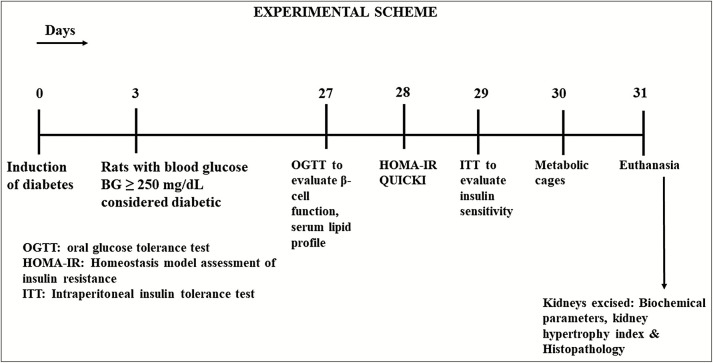
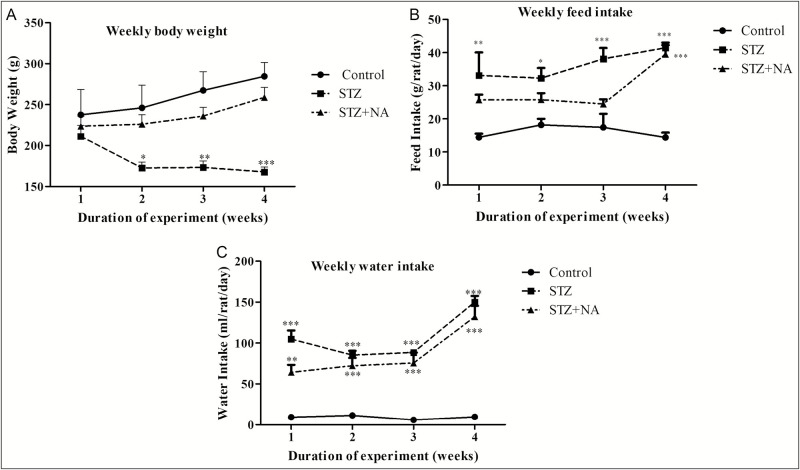
Rats were administered streptozotocin (STZ) 50 mg/kg intraperitoneally (i.p.), and STZ 50 mg/kg i.p. + nicotinamide (NA) 110 mg/kg i.p., for induction of type 1 diabetes mellitus (T1DM) and type 2 diabetes mellitus (T2DM), respectively. Metabolic parameters (body weight, feed and water intake, blood glucose, serum insulin, oral glucose tolerance test, intraperitoneal insulin tolerance test, and indices of insulin sensitivity) were evaluated to characterize the symptoms of T1DM and T2DM. Renal damage was confirmed by the estimation of renal function biomarkers, kidney antioxidant status, kidney hypertrophy index, and histopathology.
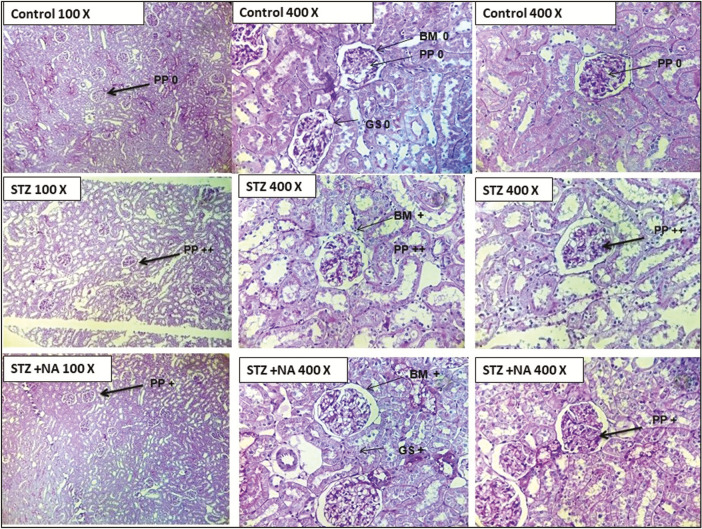
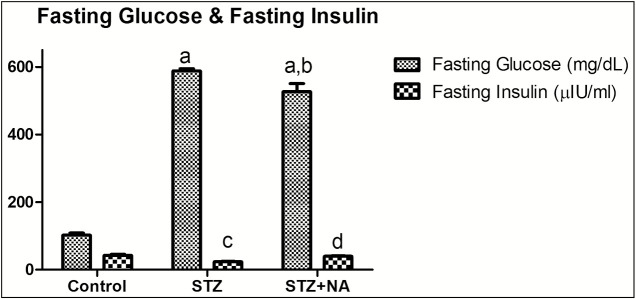
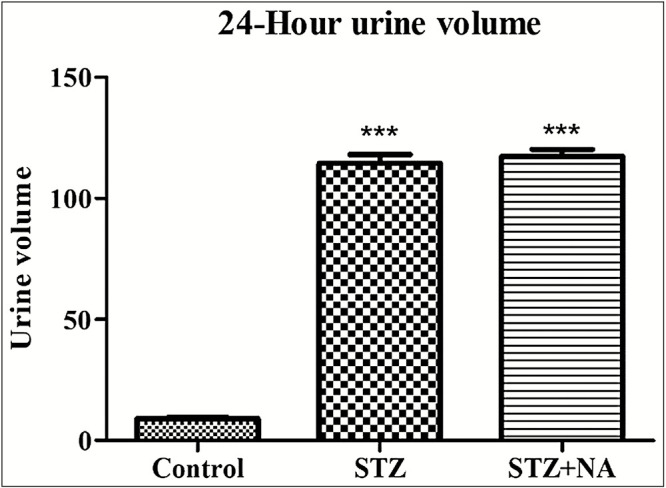
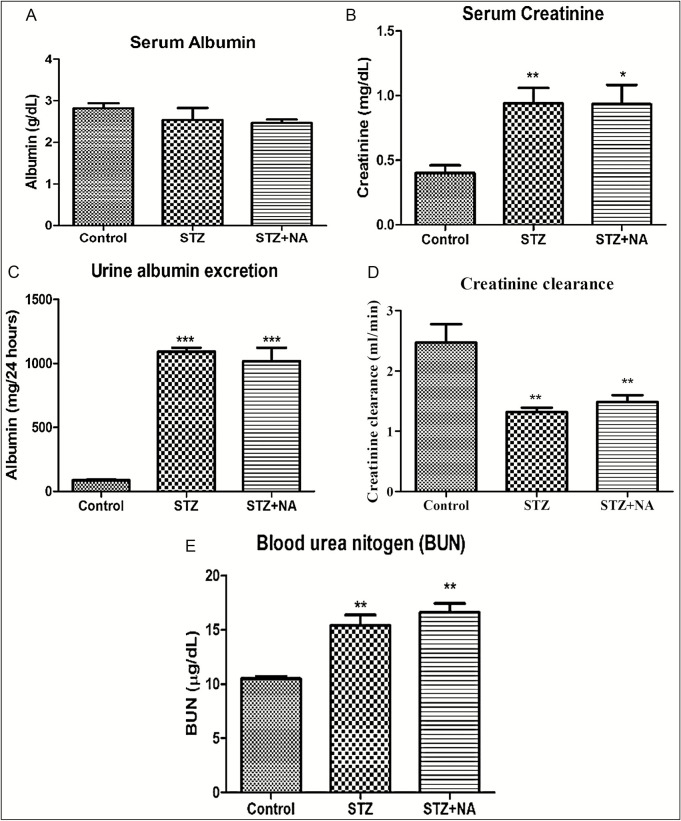
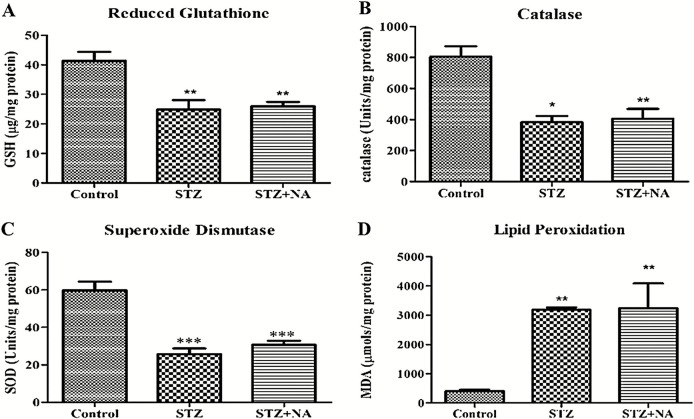
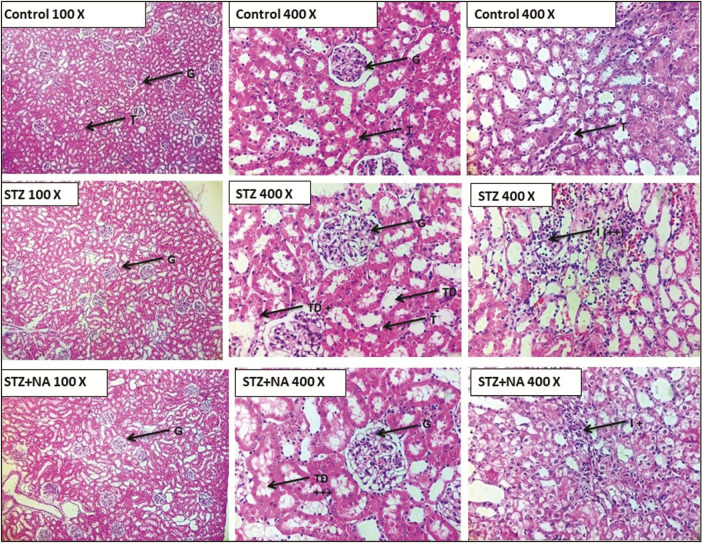
STZ and STZ + NA administration increased blood glucose levels significantly. Metabolic parameters indicated that administration of STZ resulted in clinical features of human T1DM, whereas STZ + NA rats resembled human T2DM. STZ- and STZ + NA-treated rats developed diabetic nephropathy in 4 weeks, indicated by altered levels of renal function markers, increased kidney hypertrophy index, increased renal oxidative stress, and altered tissue architecture. The study proposes reproducible and cost-effective rat models for both T1DM- and T2DM-induced diabetic nephropathy characterized by stable metabolic features and typical renal lesions.
糖尿病及其并发症,如肾病,是一项全球性负担。近期研究聚焦于研发专门针对糖尿病肾病发病机制的药物,而非仅仅治疗高血糖。动物疾病的啮齿动物模型在药物研发中不可或缺,也是一项强制性的监管要求。
本研究的目的是建立并标准化1型和2型糖尿病肾病大鼠模型,使其具有人类临床病症的特征。
分别给大鼠腹腔注射50mg/kg链脲佐菌素(STZ)以及50mg/kg STZ + 110mg/kg烟酰胺(NA),以诱导1型糖尿病(T1DM)和2型糖尿病(T2DM)。评估代谢参数(体重、饲料和水摄入量、血糖、血清胰岛素、口服葡萄糖耐量试验、腹腔胰岛素耐量试验以及胰岛素敏感性指标)以表征T1DM和T2DM的症状。通过评估肾功能生物标志物、肾脏抗氧化状态、肾脏肥大指数和组织病理学来确认肾脏损伤。
注射STZ和STZ + NA后血糖水平显著升高。代谢参数表明,注射STZ导致出现人类T1DM的临床特征,而注射STZ + NA的大鼠类似人类T2DM。注射STZ和STZ + NA的大鼠在4周内出现糖尿病肾病,表现为肾功能标志物水平改变、肾脏肥大指数增加、肾脏氧化应激增加以及组织结构改变。该研究提出了适用于T1DM和T2DM诱导的糖尿病肾病的可重复且经济高效的大鼠模型,其特征为稳定的代谢特征和典型的肾脏病变。