Yu Peng, Liu Ming, Zhang Baoli, Yu Ying, Su Enyong, Xie Shiyao, Zhang Lei, Yang Xue, Jiang Hong, Chen Ruizhen, Zou Yunzeng, Ge Junbo
Department of Endocrinology and Metabolism, Fudan Institute of Metabolic Diseases, Zhongshan Hospital, Fudan University, Shanghai, China.
Department of General Practice, Zhongshan Hospital, Shanghai Medical College of Fudan University, Shanghai, China.
Cell Death Discov. 2020 Oct 20;6:106. doi: 10.1038/s41420-020-00340-9. eCollection 2020.
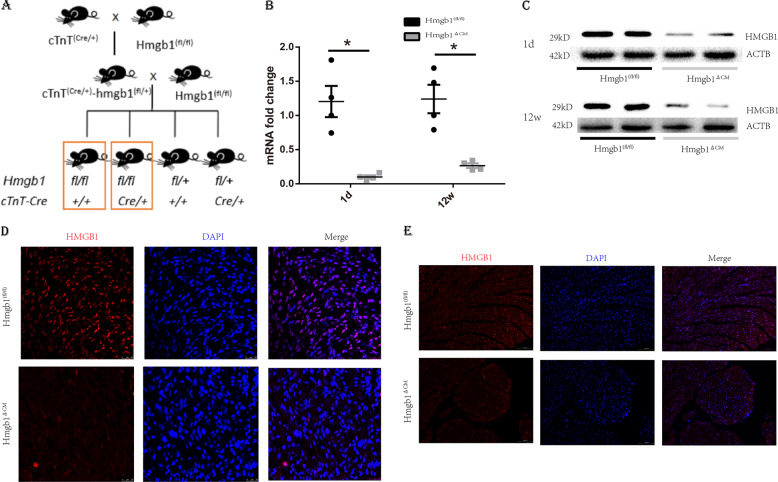
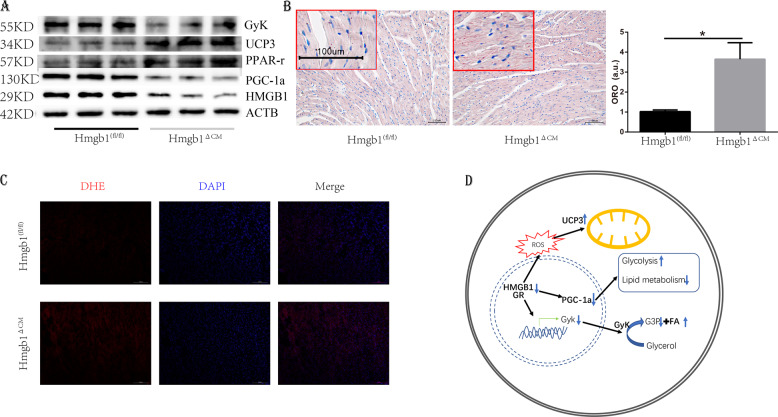
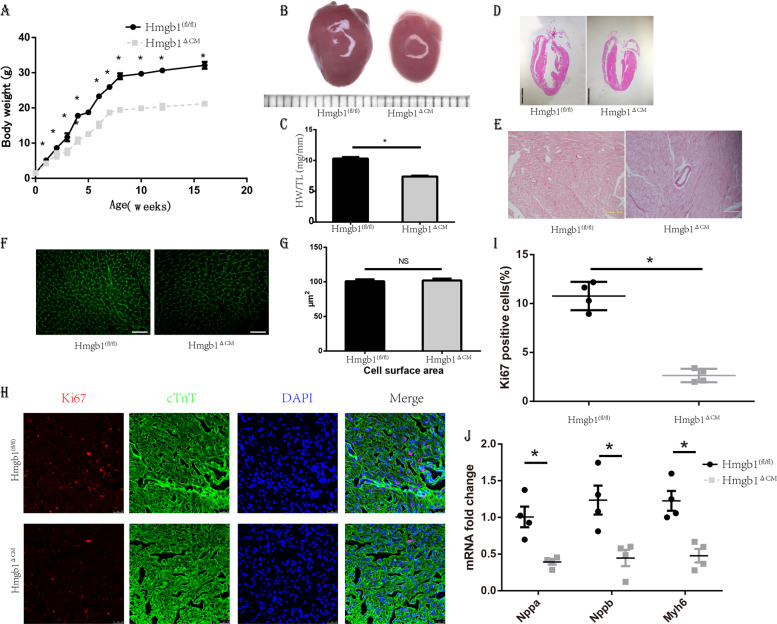
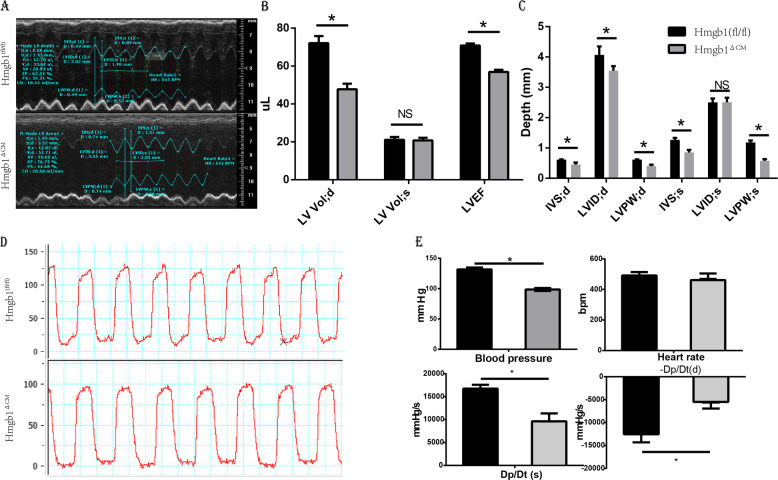
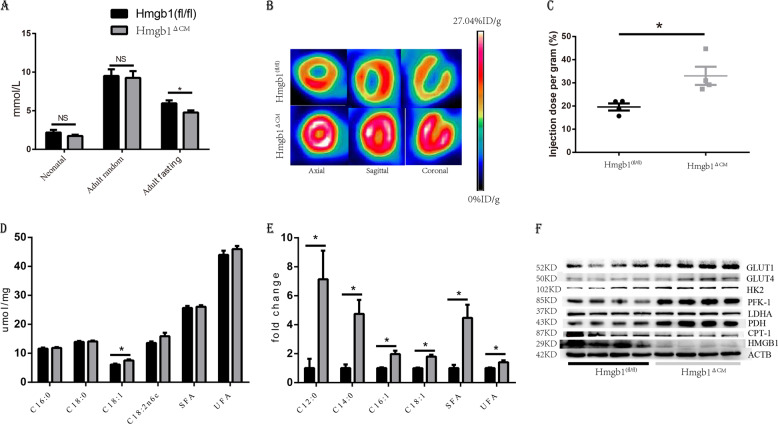
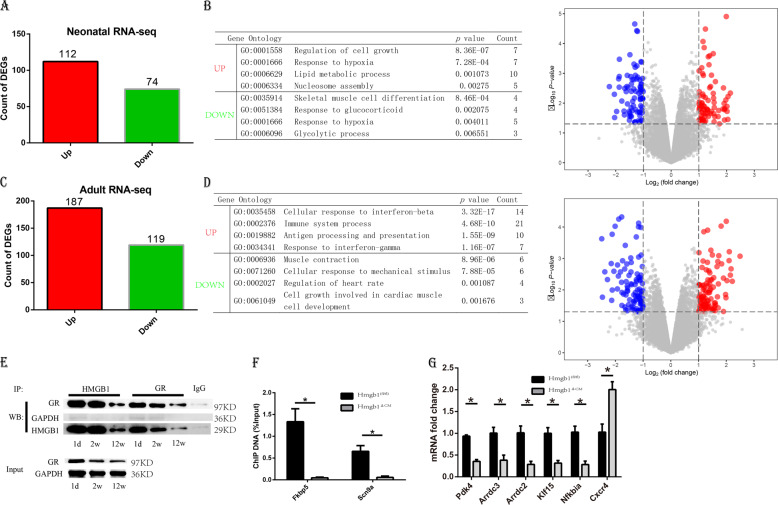
Cardiac growth and remodelling are key biological processes influencing the physiological performance of the heart, and a previous study showed a critical role for intracellular HMGB1 in vitro. However, the in vivo study, which used conditional Hmgb1 ablation, did not show a significant effect on cellular or organic function. We have demonstrated the extracellular effect of HMGB1 as a pro-inflammatory molecule on cardiac remodelling. In this study, we found that HMGB1 deletion by cTnT-Cre in mouse hearts altered glucocorticoid receptor (GR) function and glycolipid metabolism, eventually leading to growth retardation, small heart and heart failure. The subcellular morphology did not show a significant change caused by HMGB1 knockout. The heart showed significant elevation of glycolysis, free fatty acid deposition and related enzyme changes. Transcriptomic analysis revealed a list of differentially expressed genes that coincide with glucocorticoid receptor function in neonatal mice and a significant increase in inflammatory genes in adult mice. Cardiac HMGB1 knockout led to a series of changes in PGC-1α, UCP3 and GyK, which were the cause of metabolic changes and further impacted cardiac function. Ckmm-Cre Hmgb1 mice did not show a specific phenotype, which was consistent with the reported negative result of cardiomyocyte-specific Hmgb1 deletion via MHC-Cre. We concluded that HMGB1 plays essential roles in maintaining normal cardiac growth, and different phenotype from cardiac-specific HMGB1-deficient mice may be caused by the cross with mice of different Cre strains.
心脏生长和重塑是影响心脏生理功能的关键生物学过程,先前的一项研究在体外显示了细胞内高迁移率族蛋白B1(HMGB1)的关键作用。然而,使用条件性Hmgb1基因敲除的体内研究并未显示对细胞或器官功能有显著影响。我们已经证明了HMGB1作为一种促炎分子在心脏重塑中的细胞外作用。在本研究中,我们发现通过心肌肌钙蛋白T(cTnT)-Cre在小鼠心脏中敲除HMGB1会改变糖皮质激素受体(GR)功能和糖脂代谢,最终导致生长迟缓、心脏变小和心力衰竭。亚细胞形态未显示由HMGB1基因敲除引起的显著变化。心脏显示糖酵解、游离脂肪酸沉积和相关酶变化显著升高。转录组分析揭示了一系列差异表达基因,这些基因在新生小鼠中与糖皮质激素受体功能一致,在成年小鼠中炎症基因显著增加。心脏HMGB1基因敲除导致过氧化物酶体增殖物激活受体γ共激活因子1α(PGC-1α)、解偶联蛋白3(UCP3)和糖原磷酸化酶(GyK)发生一系列变化,这是代谢变化的原因,并进一步影响心脏功能。肌酸激酶同工酶M(Ckmm)-Cre Hmgb1小鼠未显示特定表型,这与通过肌球蛋白重链(MHC)-Cre进行心肌细胞特异性Hmgb1基因敲除的报道阴性结果一致。我们得出结论,HMGB1在维持正常心脏生长中起重要作用,与心脏特异性HMGB1缺陷小鼠不同的表型可能是由于与不同Cre品系的小鼠杂交所致。