NanoScience Technology Center, University of Central Florida, 12424 Research Parkway, Suite 400, Orlando, FL 32826, USA.
Department of Materials Science & Engineering, University of Central Florida, 12760 Pegasus Dr., Orlando, FL 32816, USA.
Biosensors (Basel). 2020 Oct 22;10(11):152. doi: 10.3390/bios10110152.
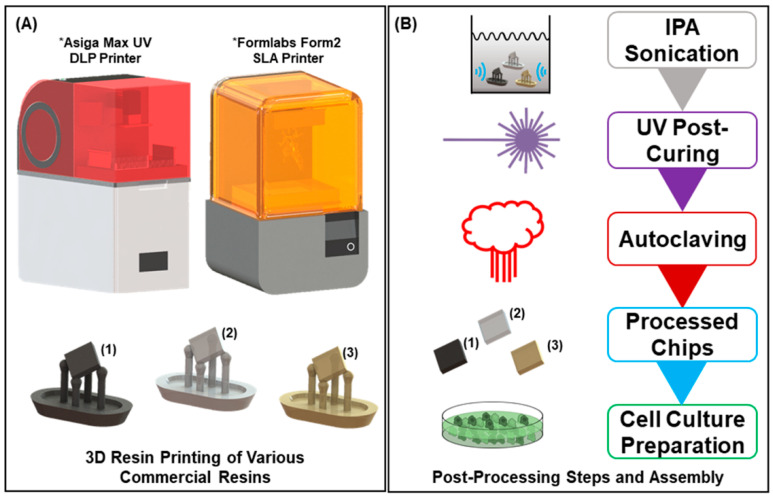
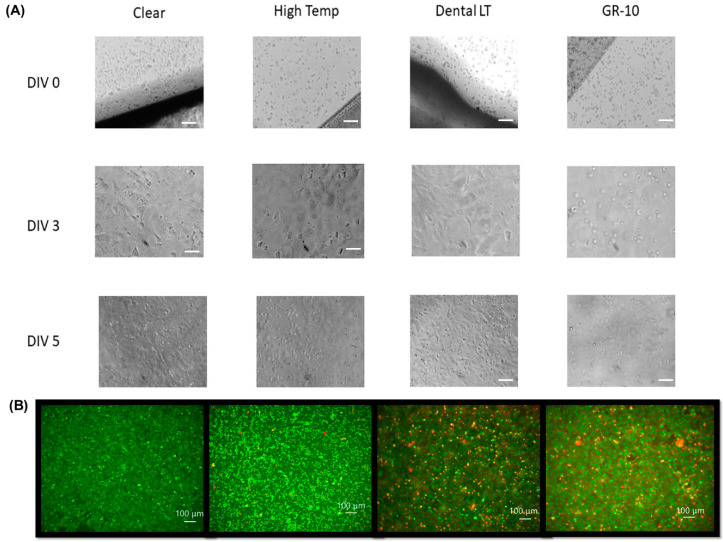
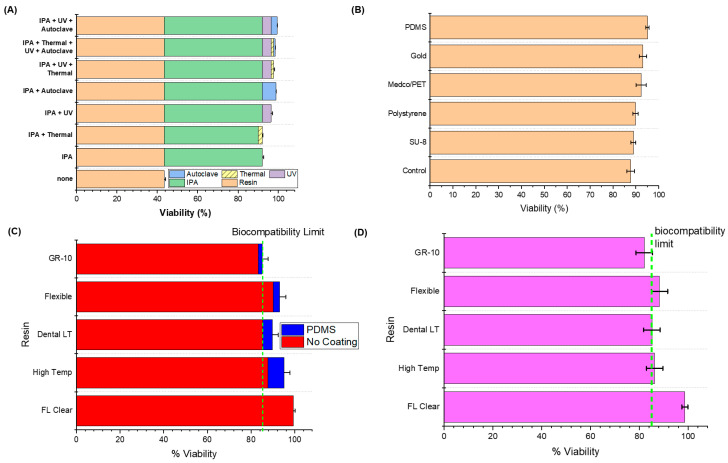
The widespread adaptation of 3D printing in the microfluidic, bioelectronic, and Bio-MEMS communities has been stifled by the lack of investigation into the biocompatibility of commercially available printer resins. By introducing an in-depth post-printing treatment of these resins, their biocompatibility can be dramatically improved up to that of a standard cell culture vessel (99.99%). Additionally, encapsulating resins that are less biocompatible with materials that are common constituents in biosensors further enhances the biocompatibility of the material. This investigation provides a clear pathway toward developing fully functional and biocompatible 3D printed biosensor devices, especially for interfacing with electrogenic cells, utilizing benchtop-based microfabrication, and post-processing techniques.
3D 打印在微流控、生物电子和生物-MEMS 领域的广泛应用受到商业打印机树脂缺乏生物相容性研究的阻碍。通过对这些树脂进行深入的后打印处理,可以将其生物相容性显著提高到标准细胞培养容器的水平(99.99%)。此外,将与生物传感器常见成分不相容的树脂封装在材料中,进一步提高了材料的生物相容性。本研究为开发功能齐全且生物相容的 3D 打印生物传感器设备提供了明确的途径,特别是对于与发电细胞接口的设备,该方法利用了基于桌面的微制造和后处理技术。