Kundu Avra, Nattoo Crystal, Fremgen Sarah, Springer Sandra, Ausaf Tariq, Rajaraman Swaminathan
NanoScience Technology Center (NSTC), University of Central Florida Research I, Office 237, 4353 Scorpius Street Orlando FL 32816-0120 USA
Department of Electrical and Computer Engineering, University of Miami Coral Gables FL 33146 USA.
RSC Adv. 2019 Mar 18;9(16):8949-8963. doi: 10.1039/c8ra09116a. eCollection 2019 Mar 15.
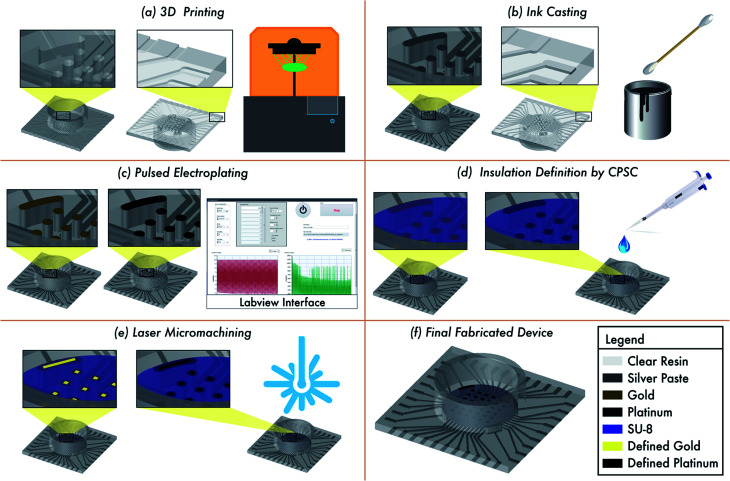
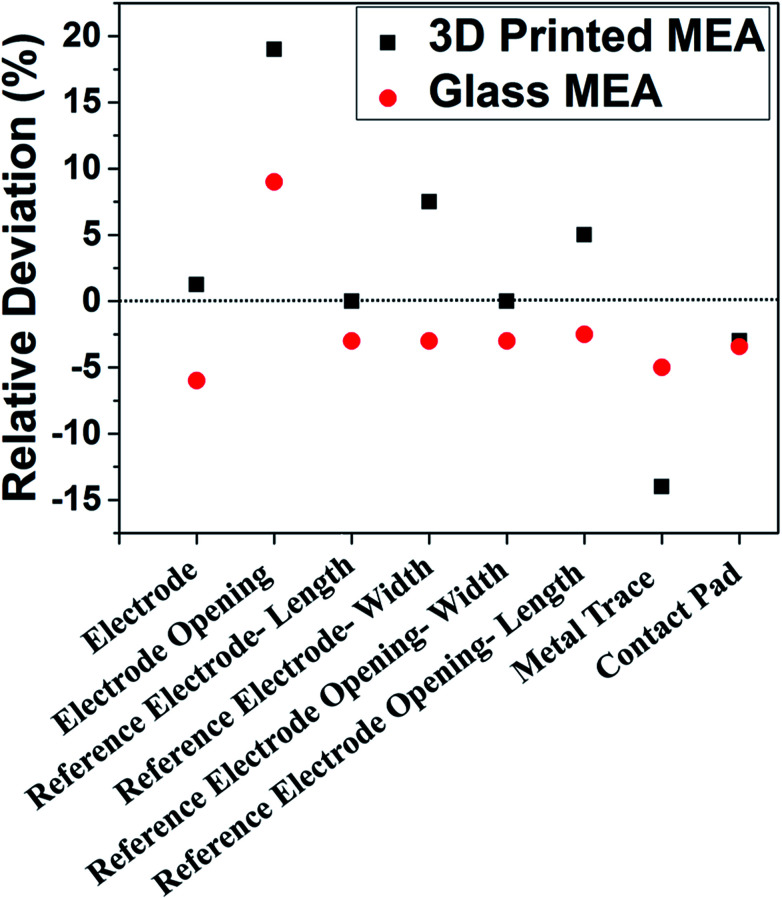
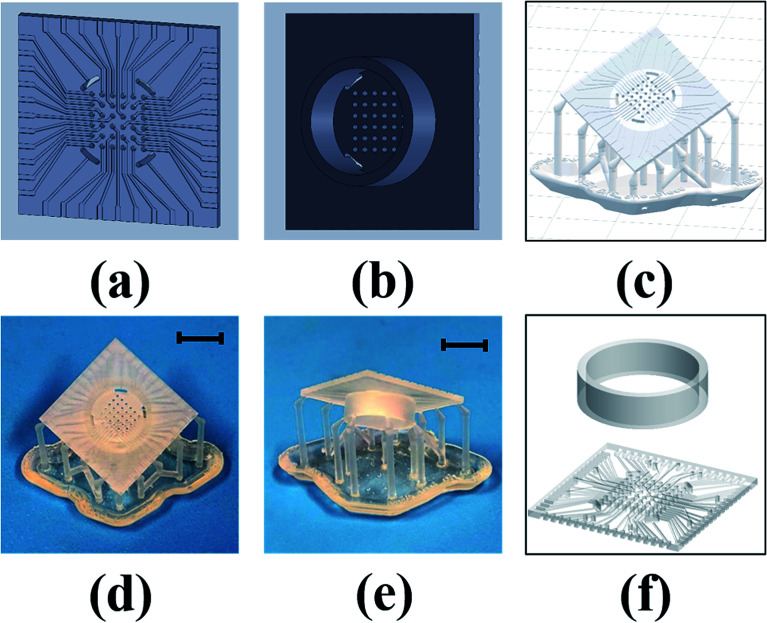
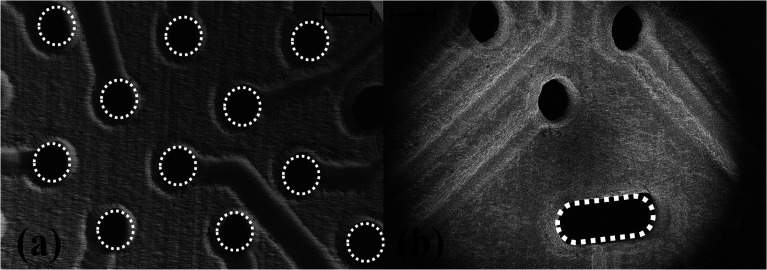
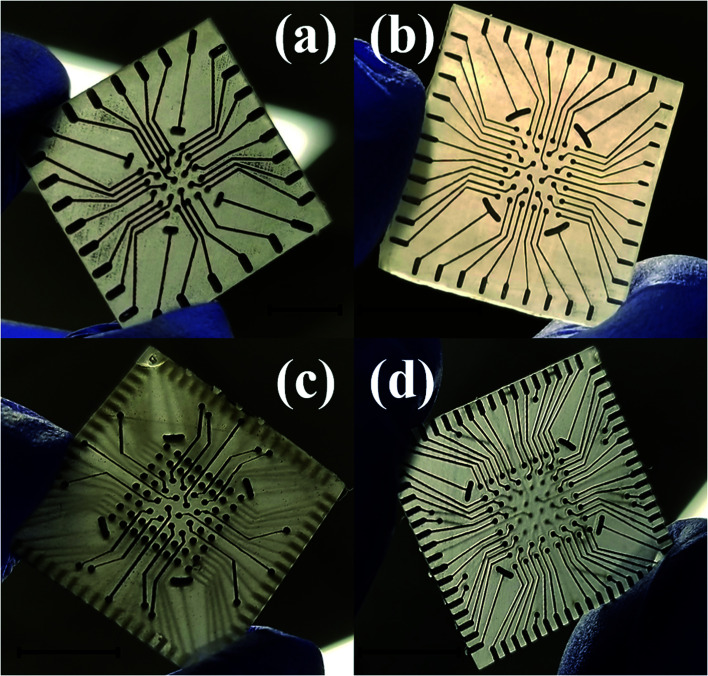
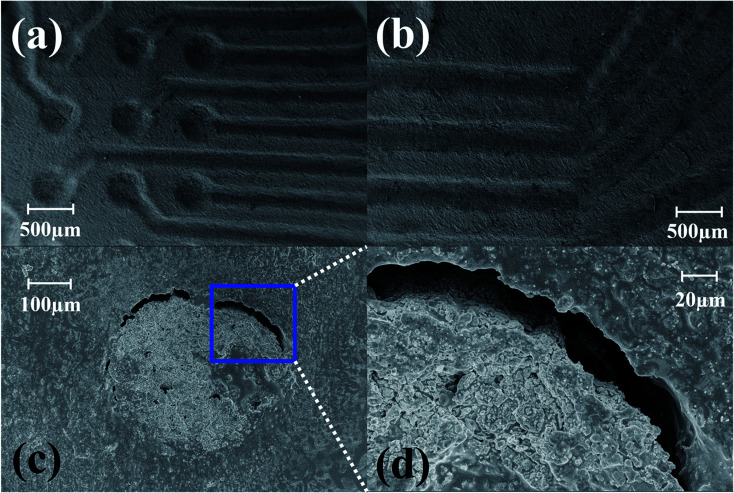
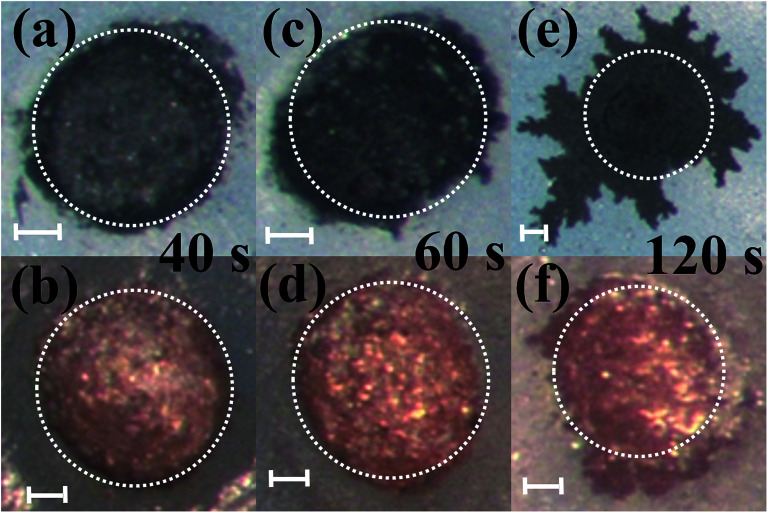
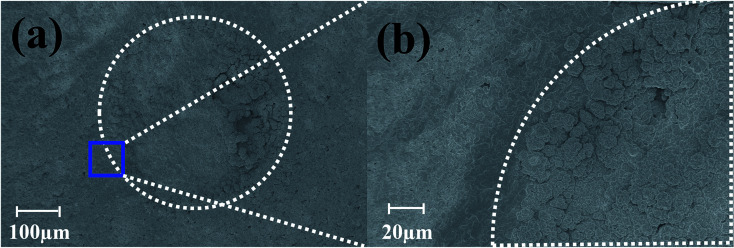
Conventional two-dimensional microelectrode arrays (2D MEAs) in the market involve long manufacturing timeframes, have cleanroom requirements, and need to be assembled from multiple parts to obtain the final packaged device. For MEAs to be "used and tossed", manufacturing has to be moved from the cleanroom to makerspaces. In order to enable makerspace fabricated MEAs comparable to conventional MEAs, the microfabrication processes must be optimized to have similar electrical properties along with biocompatibility and number of recording sites. This work presents a makerspace microfabricated 2D MEA having electrode densities up to a commercially popular 8 × 8 array, all fabricated under four days. Additive manufacturing-based realization of the MEA devices provides immense flexibility in terms of meeting distinct design requirements. A unique non-planar MEA having meso-scale electrodes on the top side of a chip transitioning to traces onto the bottom side through electrical vias is presented in this work. This allows for (a) monolithic integration of a culture well for devices having up to a 6 × 6 MEA array, (b) selective electroplating of the meso-scale electrodes (500 μm diameter) defined by silver ink casting followed by pulsed electroplating of gold or platinum without any masking procedure, (c) casting of a uniform and planar insulation layer a novel process of confined precision spin coating (CPSC) of SU-8 which acts as a biocompatible insulation atop the meso-scale electrodes; and (d) selective laser micromachining to define the 50 μm × 50 μm microelectrodes. For an 8 × 8 array, the culture well and MEA chip framework are 3D printed as two separate parts and sealed together with a biocompatible epoxy as in commercially available MEAs. The fabricated MEAs have an average 1 kHz impedance of 36.8 kΩ/16 kΩ with a double layer capacitance of 400 nF cm/520 nF cm for nano-porous platinum/nano-gold which is comparable to the state-of-art commercially available 2D MEAs. Additionally, it was found out that our 3D printing-based process compares very favorably with traditional glass MEAs in terms of design to device while representing a dramatic reduction in cost, timeline for fabrication, reduction in the number of steps and the need for sophisticated microfabrication and packaging equipment.
市面上传统的二维微电极阵列(2D MEA)制造时间长,有洁净室要求,且需由多个部件组装才能得到最终的封装器件。对于一次性使用的MEA,制造必须从洁净室转移到创客空间。为了使在创客空间制造的MEA能与传统MEA相媲美,必须优化微制造工艺,使其具有相似的电学性能以及生物相容性和记录位点数量。本文介绍了一种在创客空间微制造的2D MEA,其电极密度高达商业上常用的8×8阵列,且全部在四天内制造完成。基于增材制造实现MEA器件在满足不同设计要求方面提供了极大的灵活性。本文展示了一种独特的非平面MEA,芯片顶部有中尺度电极,通过电通孔过渡到底部的线路。这使得(a)对于具有高达6×6 MEA阵列的器件,能实现培养池的单片集成;(b)通过银墨铸造定义中尺度电极(直径500μm)后,对金或铂进行脉冲电镀选择性电镀中尺度电极,无需任何掩膜工艺;(c)铸造均匀且平面的绝缘层——一种新型的SU - 8受限精密旋涂(CPSC)工艺,该绝缘层在中尺度电极顶部起到生物相容性绝缘作用;以及(d)通过选择性激光微加工来定义50μm×50μm的微电极。对于8×8阵列,培养池和MEA芯片框架作为两个单独的部件进行3D打印,并像市售MEA一样用生物相容性环氧树脂密封在一起。制造的MEA对于纳米多孔铂/纳米金,平均1 kHz阻抗为36.8 kΩ/16 kΩ,双层电容为400 nF/cm/520 nF/cm,与市面上最先进的2D MEA相当。此外,研究发现,我们基于3D打印的工艺在从设计到器件方面与传统玻璃MEA相比具有很大优势,同时成本大幅降低、制造时间缩短、步骤数量减少,且无需复杂的微制造和封装设备。