The Czech Academy of Sciences, Institute of Botany, Průhonice, Czech Republic.
Department of Agricultural Sciences, University of Helsinki, Helsinki, Finland.
PLoS One. 2020 Oct 27;15(10):e0241206. doi: 10.1371/journal.pone.0241206. eCollection 2020.
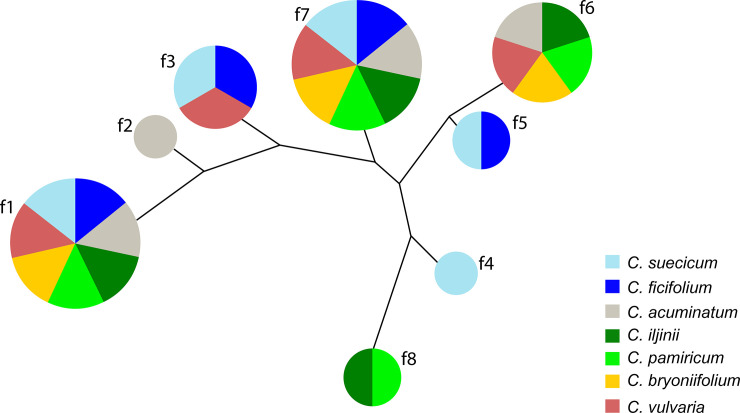
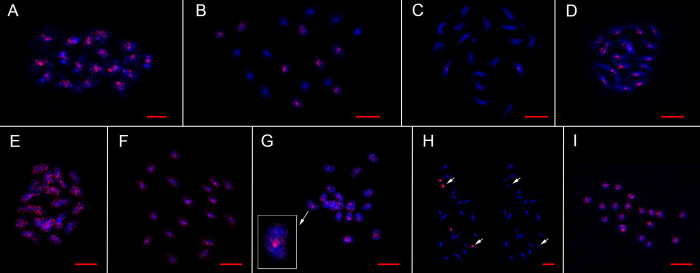
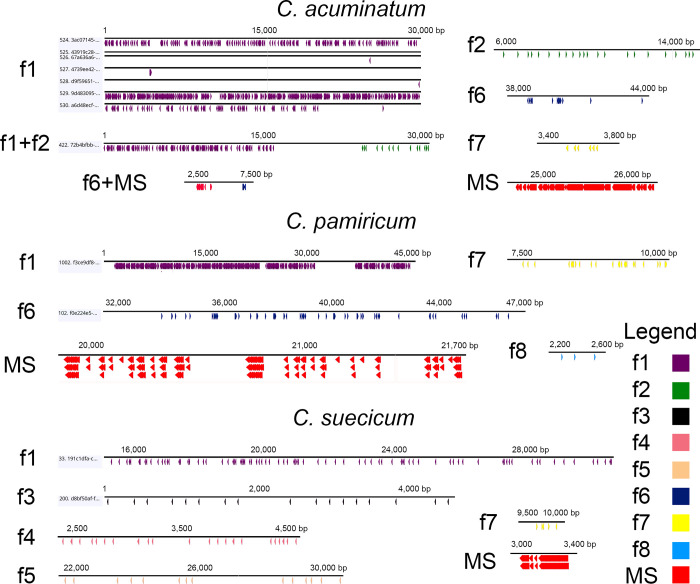
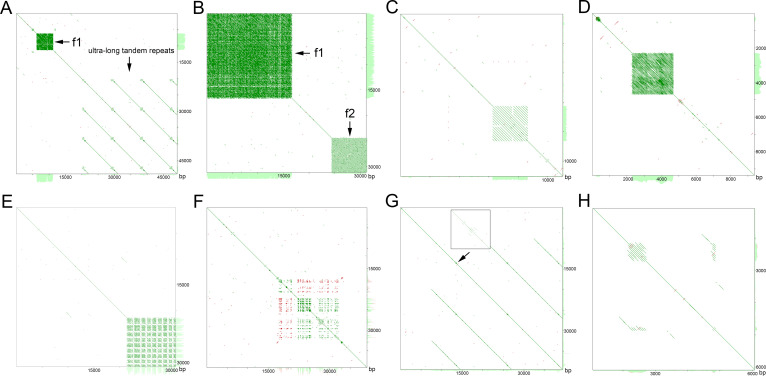
Satellite DNA (satDNA) is one of the major fractions of the eukaryotic nuclear genome. Highly variable satDNA is involved in various genome functions, and a clear link between satellites and phenotypes exists in a wide range of organisms. However, little is known about the origin and temporal dynamics of satDNA. The "library hypothesis" indicates that the rapid evolutionary changes experienced by satDNAs are mostly quantitative. Although this hypothesis has received some confirmation, a number of its aspects are still controversial. A recently developed next-generation sequencing (NGS) method allows the determination of the satDNA landscape and could shed light on unresolved issues. Here, we explore low-coverage NGS data to infer satDNA evolution in the phylogenetic context of the diploid species of the Chenopodium album aggregate. The application of the Illumina read assembly algorithm in combination with Oxford Nanopore sequencing and fluorescent in situ hybridization allowed the estimation of eight satDNA families within the studied group, six of which were newly described. The obtained set of satDNA families of different origins can be divided into several categories, namely group-specific, lineage-specific and species-specific. In the process of evolution, satDNA families can be transmitted vertically and can be eliminated over time. Moreover, transposable element-derived satDNA families may appear repeatedly in the satellitome, creating an illusion of family conservation. Thus, the obtained data refute the "library hypothesis", rather than confirming it, and in our opinion, it is more appropriate to speak about "the library of the mechanisms of origin".
卫星 DNA(satDNA)是真核生物核基因组的主要组成部分之一。高度可变的 satDNA 参与了各种基因组功能,并且在广泛的生物中存在卫星 DNA 与表型之间的明确联系。然而,关于 satDNA 的起源和时间动态变化知之甚少。“文库假说”表明,satDNA 经历的快速进化变化主要是定量的。尽管这一假说得到了一些证实,但它的一些方面仍然存在争议。最近开发的下一代测序(NGS)方法可以确定 satDNA 景观,并为解决未决问题提供线索。在这里,我们在拟南芥属二倍体物种的系统发育背景下,利用低覆盖率 NGS 数据来推断 satDNA 的进化。Illumina 读取组装算法与牛津纳米孔测序和荧光原位杂交相结合的应用,使得我们可以在研究群体中估计出 8 个 satDNA 家族,其中 6 个是新描述的。从不同起源获得的一组 satDNA 家族可以分为几类,即群体特异性、谱系特异性和物种特异性。在进化过程中,satDNA 家族可以垂直传递,并且随着时间的推移可以被消除。此外,转座元件衍生的 satDNA 家族可能会在卫星体中反复出现,造成家族保守性的假象。因此,获得的数据反驳了“文库假说”,而不是证实了它,在我们看来,更恰当的说法是“起源机制的文库”。