Department of Chemical Engineering, Northeastern University, Boston, MA, 02115, USA.
Wenzhou Institute for Biomaterials and Engineering, Wenzhou, 325001, China.
Sci Rep. 2020 Oct 27;10(1):18370. doi: 10.1038/s41598-020-75196-1.
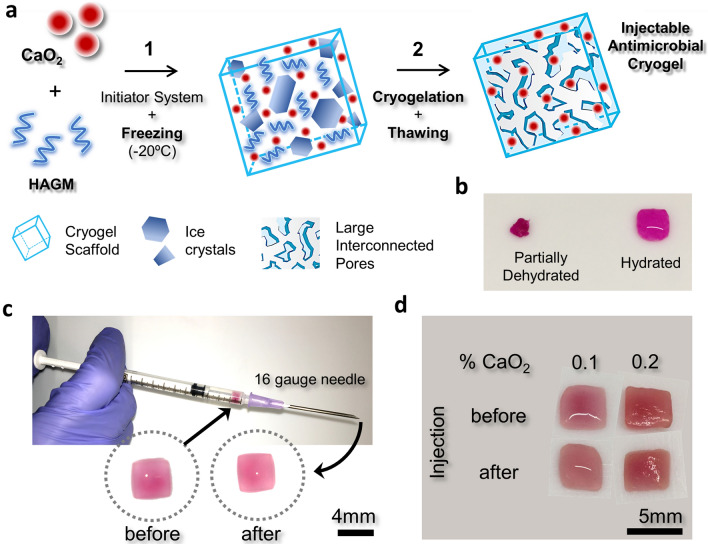
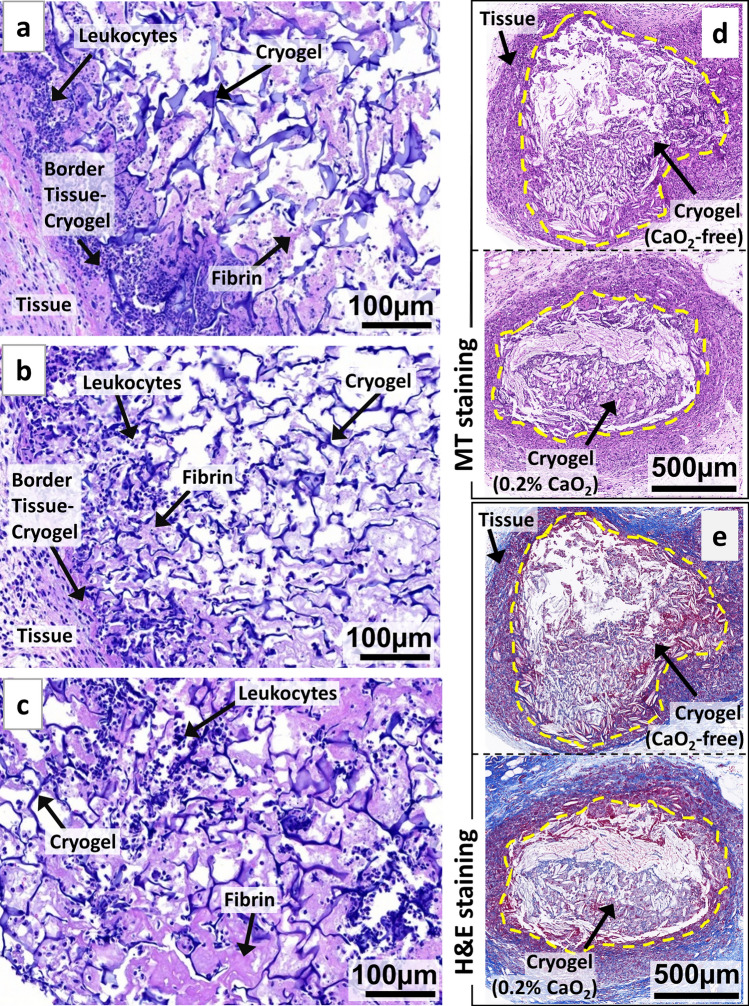
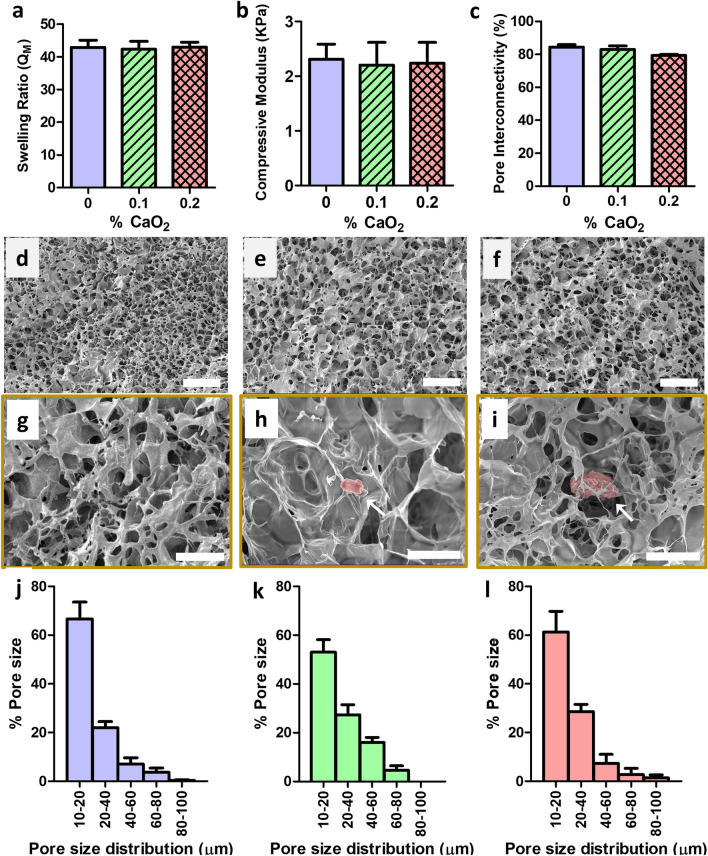
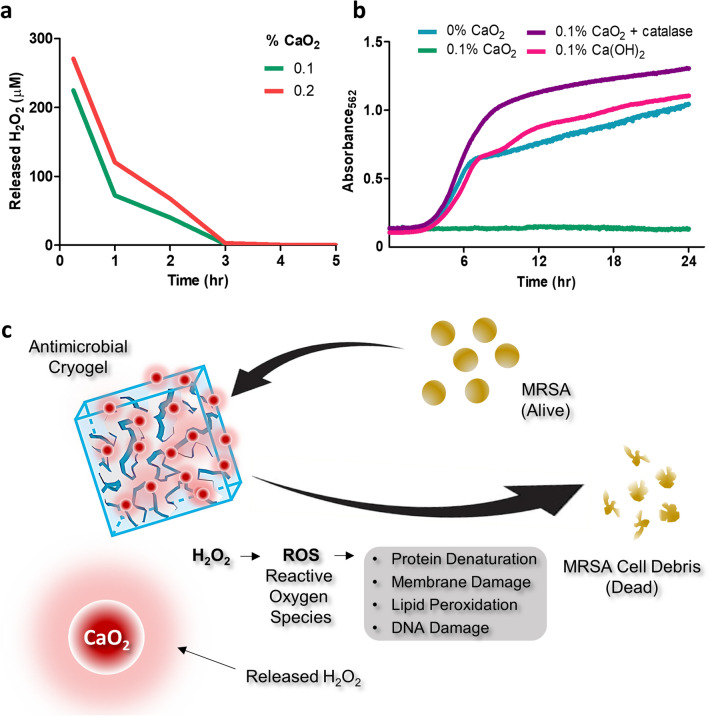
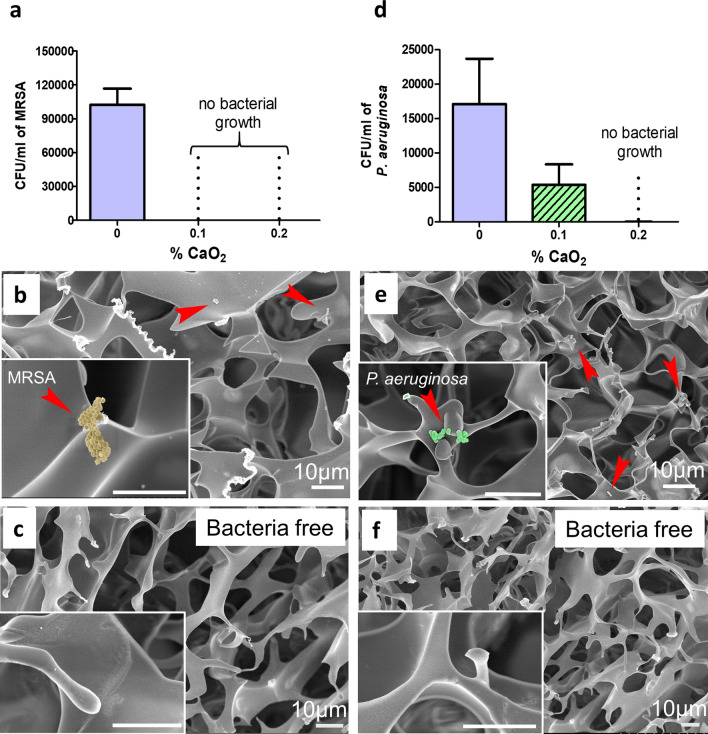
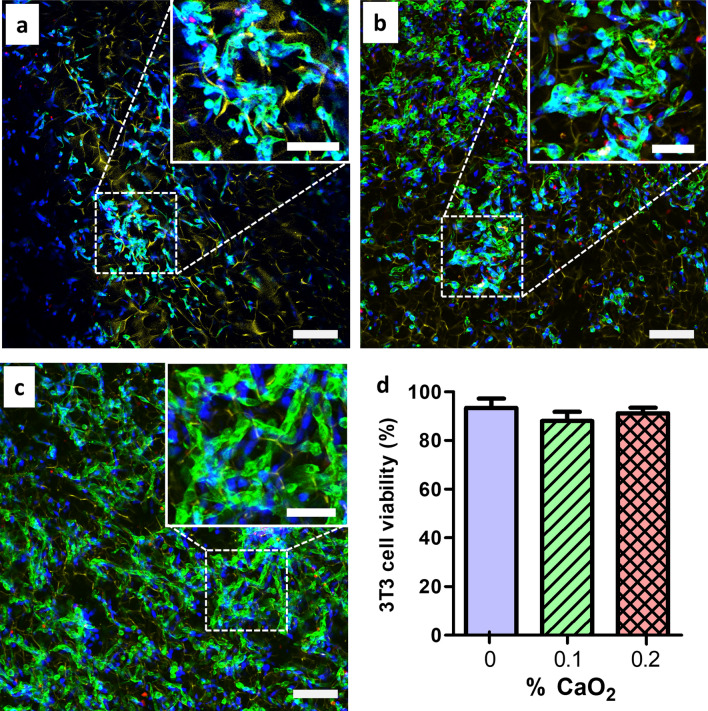
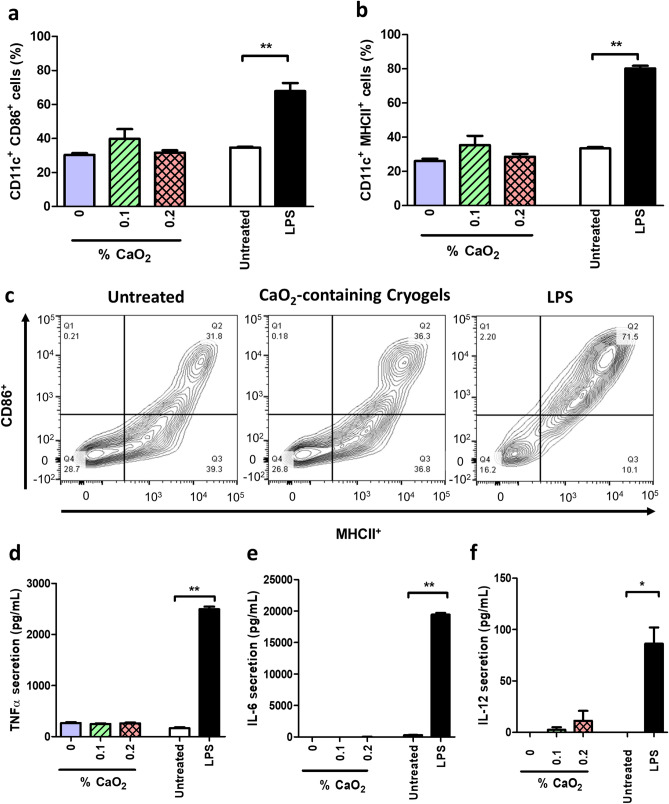
Porous three-dimensional hydrogel scaffolds have an exquisite ability to promote tissue repair. However, because of their high water content and invasive nature during surgical implantation, hydrogels are at an increased risk of bacterial infection. Recently, we have developed elastic biomimetic cryogels, an advanced type of polymeric hydrogel, that are syringe-deliverable through hypodermic needles. These needle-injectable cryogels have unique properties, including large and interconnected pores, mechanical robustness, and shape-memory. Like hydrogels, cryogels are also susceptible to colonization by microbial pathogens. To that end, our minimally invasive cryogels have been engineered to address this challenge. Specifically, we hybridized the cryogels with calcium peroxide microparticles to controllably produce bactericidal hydrogen peroxide. Our novel microcomposite cryogels exhibit antimicrobial properties and inhibit antibiotic-resistant bacteria (MRSA and Pseudomonas aeruginosa), the most common cause of biomaterial implant failure in modern medicine. Moreover, the cryogels showed negligible cytotoxicity toward murine fibroblasts and prevented activation of primary bone marrow-derived dendritic cells ex vivo. Finally, in vivo data suggested tissue integration, biodegradation, and minimal host inflammatory responses when the antimicrobial cryogels, even when purposely contaminated with bacteria, were subcutaneously injected in mice. Collectively, these needle-injectable microcomposite cryogels show great promise for biomedical applications, especially in tissue engineering and regenerative medicine.
多孔三维水凝胶支架具有促进组织修复的卓越能力。然而,由于其高含水量和在手术植入过程中的侵入性,水凝胶更容易受到细菌感染。最近,我们开发了弹性仿生冷冻凝胶,这是一种先进的聚合物水凝胶,可以通过皮下注射针进行注射。这些可通过注射针注射的冷冻凝胶具有独特的特性,包括大而相互连通的孔、机械强度和形状记忆。与水凝胶一样,冷冻凝胶也容易被微生物病原体定植。为此,我们对微创冷冻凝胶进行了工程改造以应对这一挑战。具体来说,我们将冷冻凝胶与过氧化钙微颗粒杂交,以可控的方式产生杀菌性过氧化氢。我们的新型微复合冷冻凝胶具有抗菌性能,可以抑制抗生素耐药菌(MRSA 和铜绿假单胞菌),这是现代医学中生物材料植入失败的最常见原因。此外,冷冻凝胶对鼠成纤维细胞的细胞毒性可忽略不计,并可防止原代骨髓来源树突状细胞的体外激活。最后,体内数据表明,当将具有抗菌作用的冷冻凝胶(即使故意污染有细菌)皮下注射到小鼠体内时,可实现组织整合、生物降解和最小的宿主炎症反应。总之,这些可通过注射针注射的微复合冷冻凝胶在生物医学应用方面具有广阔的前景,特别是在组织工程和再生医学方面。