Bogomoletz Institute of Physiology, National Academy of Sciences of Ukraine, Kiev, 01024, Ukraine.
Department of Anesthesia, Critical Care and Pain Medicine, Massachusetts General Hospital, Boston, MA, 02114, USA.
Acta Pharmacol Sin. 2020 Dec;41(12):1539-1546. doi: 10.1038/s41401-020-00554-8. Epub 2020 Oct 27.
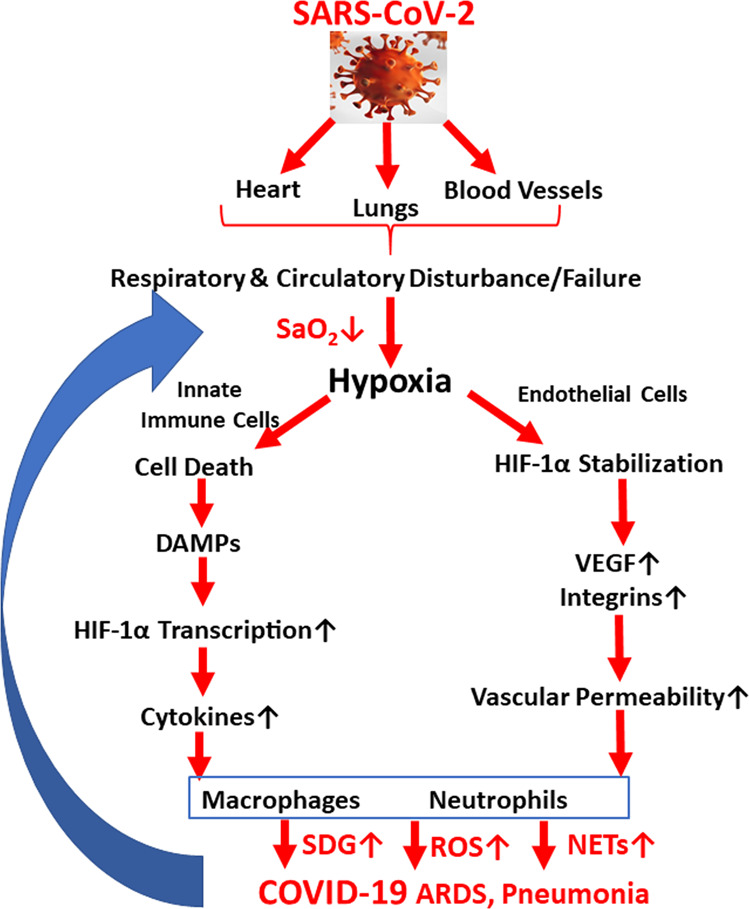
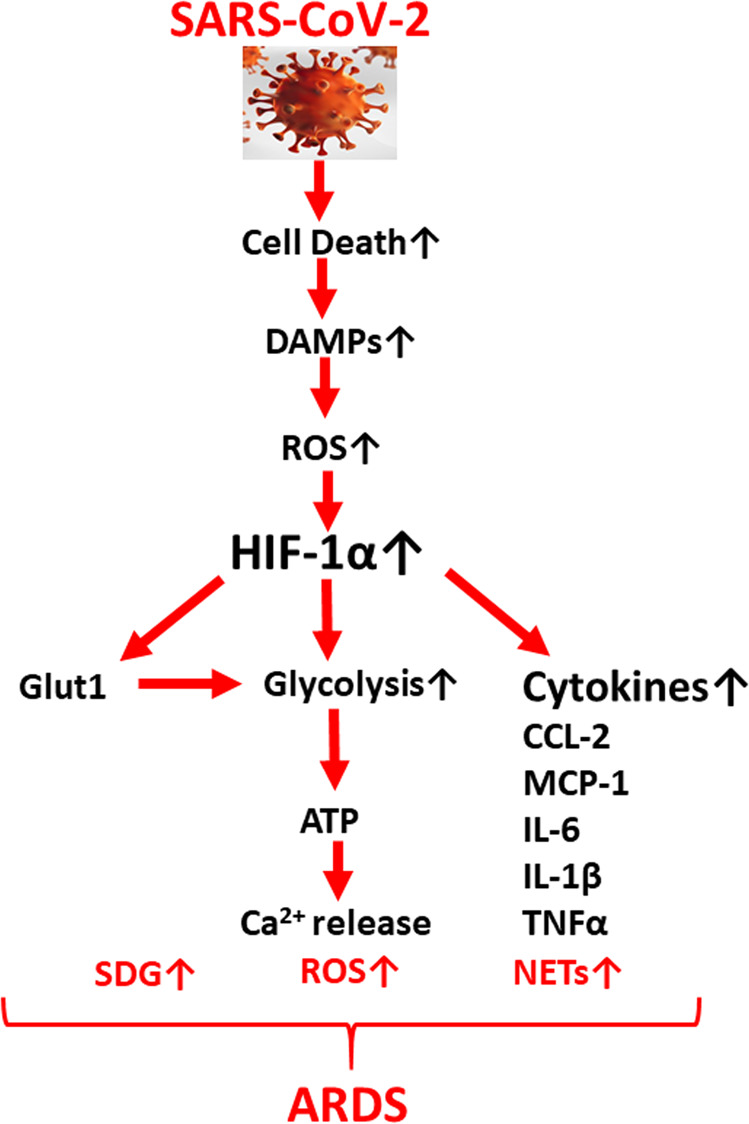
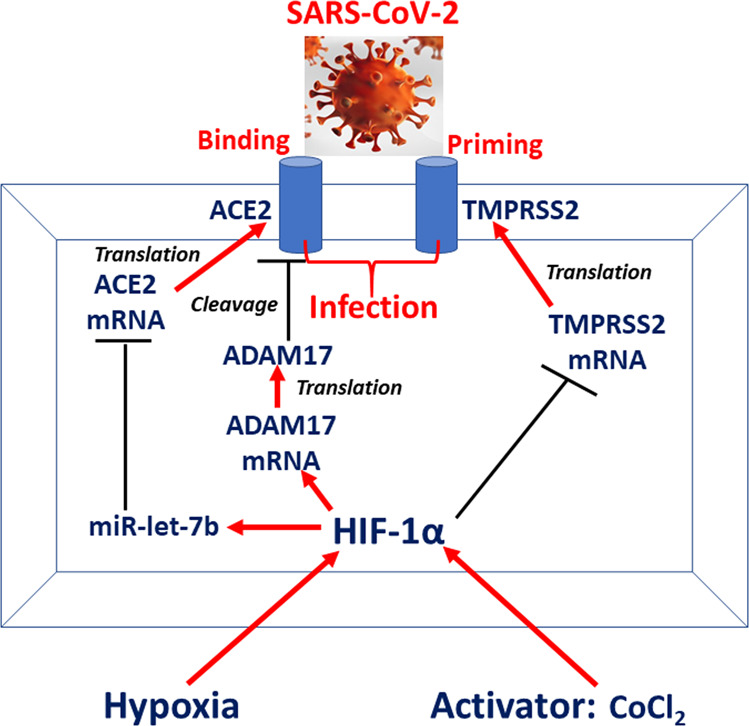
The pandemic of coronavirus disease 2019 (COVID-19) and its pathogen, severe acute respiratory syndrome coronavirus 2 (SARS-CoV-2) have become the greatest current threat to global public health. The highly infectious SARS-CoV-2 virus primarily attacks pulmonary tissues and impairs gas exchange leading to acute respiratory distress syndrome (ARDS) and systemic hypoxia. The current pharmacotherapies for COVID-19 largely rely on supportive and anti-thrombi treatment and the repurposing of antimalarial and antiviral drugs such as hydroxychloroquine and remdesivir. For a better mechanistic understanding of COVID-19, our present review focuses on its primary pathophysiologic features: hypoxia and cytokine storm, which are a prelude to multiple organ failure and lethality. We discussed a possible link between the activation of hypoxia inducible factor 1α (HIF-1α) and cell entry of SARS-CoV-2, since HIF-1α is shown to suppress the angiotensin-converting enzyme 2 (ACE2) receptor and transmembrane protease serine 2 (TMPRSS2) and upregulate disintegrin and metalloproteinase domain-containing protein 17 (ADAM17). In addition, the protein targets of HIF-1α are involved with the activation of pro-inflammatory cytokine expression and the subsequent inflammatory process. Furthermore, we hypothesized a potential utility of so-called "hypoxic conditioning" to activate HIF-1α-induced cytoprotective signaling for reduction of illness severity and improvement of vital organ function in patients with COVID-19. Taken together, we would propose further investigations into the hypoxia-related molecular mechanisms, from which novel targeted therapies can be developed for the improved management of COVID-19.
2019 年冠状病毒病(COVID-19)大流行及其病原体,严重急性呼吸综合征冠状病毒 2(SARS-CoV-2),已成为当前对全球公共卫生的最大威胁。传染性极强的 SARS-CoV-2 病毒主要攻击肺部组织并损害气体交换,导致急性呼吸窘迫综合征(ARDS)和全身缺氧。目前 COVID-19 的药物治疗主要依赖于支持和抗血栓治疗,以及抗疟疾和抗病毒药物(如羟氯喹和瑞德西韦)的重新利用。为了更好地了解 COVID-19 的发病机制,我们目前的综述重点关注其主要的病理生理特征:缺氧和细胞因子风暴,这是多器官衰竭和致死性的前奏。我们讨论了缺氧诱导因子 1α(HIF-1α)的激活与 SARS-CoV-2 细胞进入之间可能存在的联系,因为 HIF-1α 被证明可以抑制血管紧张素转化酶 2(ACE2)受体和跨膜蛋白酶丝氨酸 2(TMPRSS2),上调解整合素金属蛋白酶域蛋白 17(ADAM17)。此外,HIF-1α 的蛋白靶标与促炎细胞因子表达的激活和随后的炎症过程有关。此外,我们假设所谓的“缺氧预处理”可能具有一定的作用,可以激活 HIF-1α 诱导的细胞保护信号,减轻 COVID-19 患者的疾病严重程度并改善重要器官功能。总之,我们建议进一步研究与缺氧相关的分子机制,从中可以开发出针对 COVID-19 的新型靶向治疗方法。