Zhou Xueling, Lu Wenhao, Wang You, Li Jiani, Luo Yong
Department of Neurology, The First Affiliated Hospital of Chongqing Medical University, Chongqing 400016, China.
Laboratory Research Center, The First Affiliated Hospital of Chongqing Medical University, Chongqing 400016, China.
Evid Based Complement Alternat Med. 2020 Oct 13;2020:6980398. doi: 10.1155/2020/6980398. eCollection 2020.
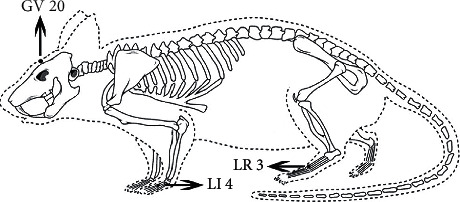
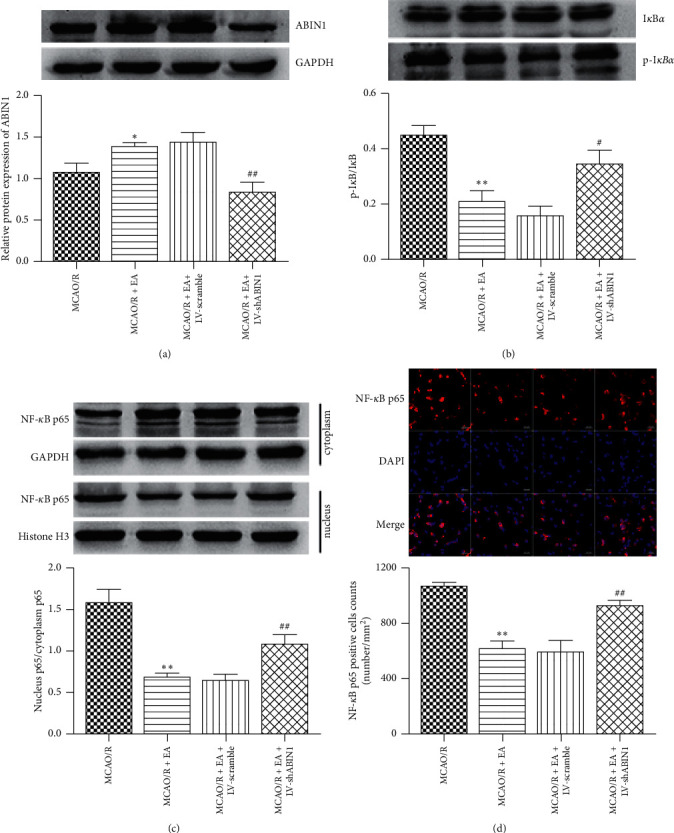
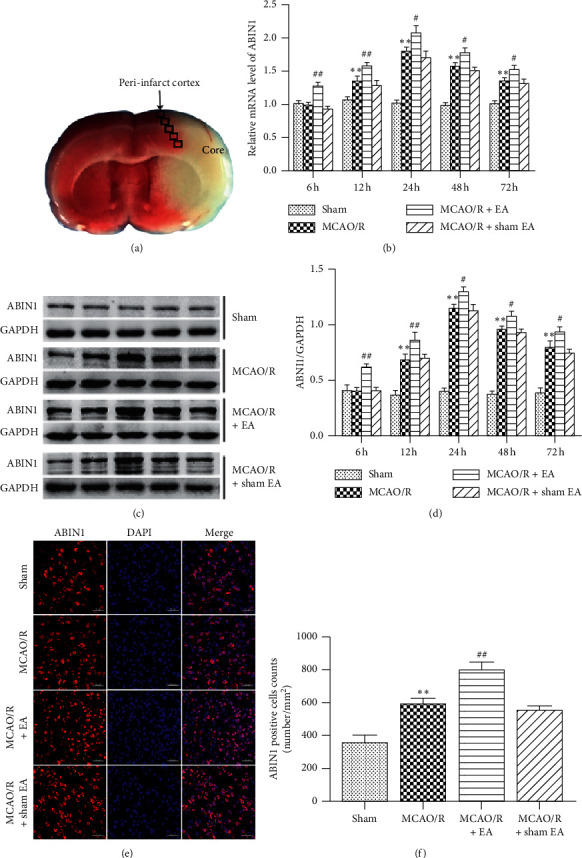
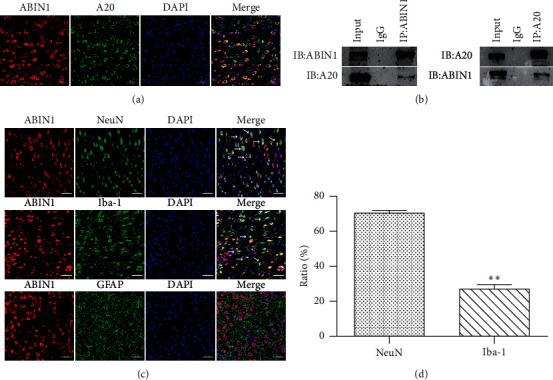
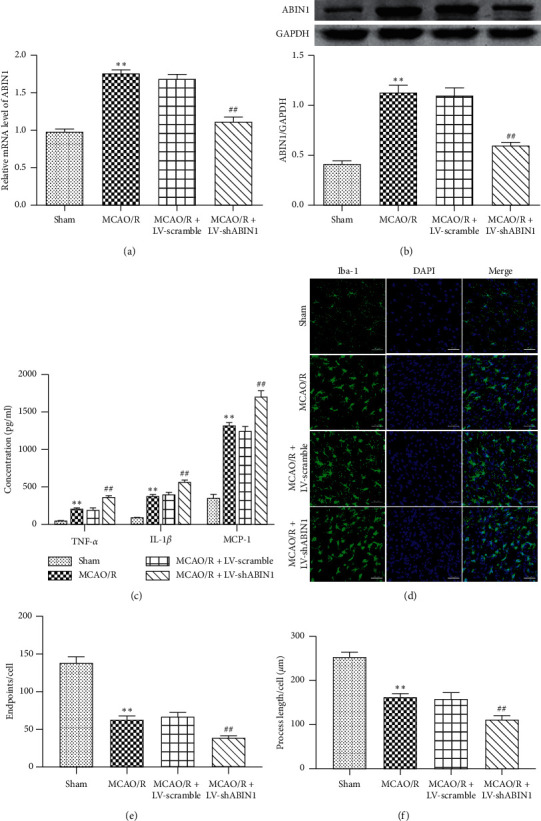
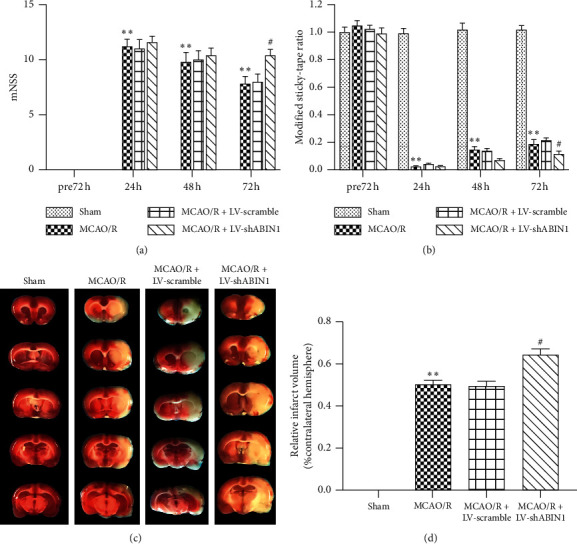
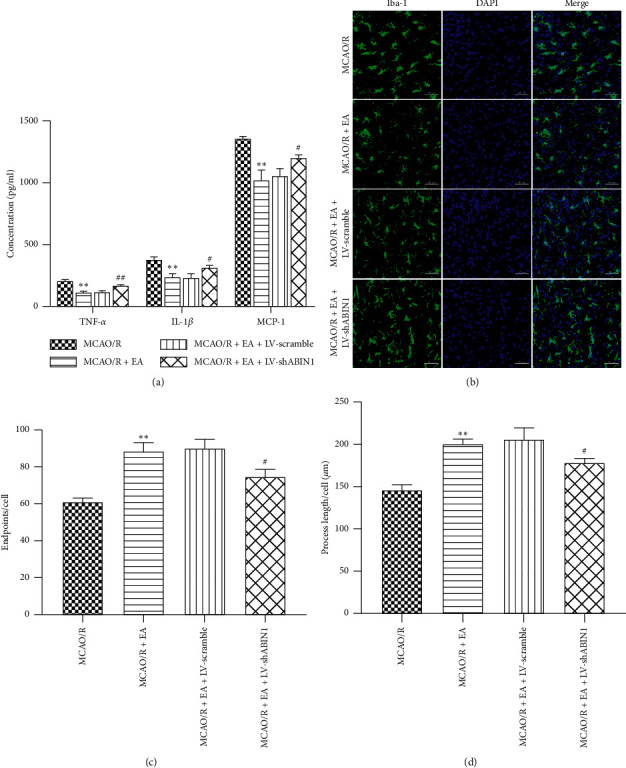
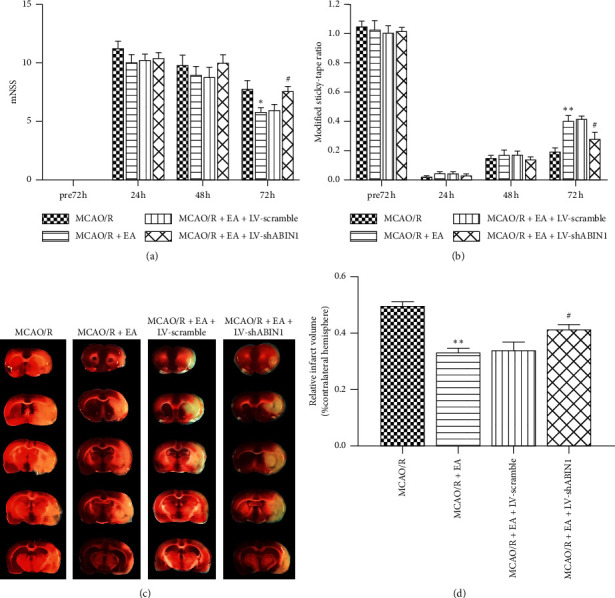
A20-binding inhibitor of NF-B 1 (ABIN1) is an inhibitor of NF-B and exerts anti-inflammatory effect. Electroacupuncture (EA) is considered as a neuroprotective strategy by inhibiting neuroinflammatory damage after cerebral ischemia. This study was performed to explore the role of ABIN1 and investigate whether the ABIN1 is involved in the mechanism of EA in cerebral ischemia/reperfusion (I/R) rats. Male Sprague-Dawley (SD) rats were subjected to middle cerebral artery occlusion/reperfusion (MCAO/R) and received EA after reperfusion once a day. Lentivirus-mediated ABIN1 gene knockdown was used to detect the role of ABIN1 in neuroinflammation after I/R. ABIN1 expression, proinflammatory cytokine levels, microglial activation, neurological function, infarct volumes, and NF-B activation were assessed. ABIN1 expression was elevated in the peri-infarct cortex and was further upregulated by EA. ABIN1 knockdown increased the levels of proinflammatory cytokines and activation of microglia, worsened neurological deficits, and enlarged the infarct volume. Moreover, ABIN1 was blocked to partially reverse the neuroprotective effect of EA, and this treatment weakened the ability of EA to suppress NF-B activity. Based on these findings, ABIN1 is a potential suppressor of neuroinflammation and ABIN1 mediates the antineuroinflammatory effect of EA in cerebral I/R rats.
核因子-κB 1的A20结合抑制剂(ABIN1)是一种核因子-κB抑制剂,具有抗炎作用。电针(EA)被认为是一种通过抑制脑缺血后的神经炎症损伤来发挥神经保护作用的策略。本研究旨在探讨ABIN1的作用,并研究ABIN1是否参与电针对脑缺血/再灌注(I/R)大鼠的作用机制。雄性Sprague-Dawley(SD)大鼠接受大脑中动脉闭塞/再灌注(MCAO/R)手术,再灌注后每天接受一次电针治疗。采用慢病毒介导的ABIN1基因敲低技术检测ABIN1在I/R后神经炎症中的作用。评估ABIN1表达、促炎细胞因子水平、小胶质细胞活化、神经功能、梗死体积和核因子-κB激活情况。ABIN1表达在梗死灶周围皮质升高,并被电针进一步上调。ABIN1基因敲低增加了促炎细胞因子水平和小胶质细胞活化,加重了神经功能缺损,并扩大了梗死体积。此外,阻断ABIN1可部分逆转电针的神经保护作用,且这种处理削弱了电针抑制核因子-κB活性的能力。基于这些发现,ABIN1是神经炎症的潜在抑制因子,且ABIN1介导了电针在脑I/R大鼠中的抗神经炎症作用。