Ahmed Waseem N, Arun Chankramath S, Koshy Thanuvelil G, Nair Abilash, Sankar Prasanth, Rasheed Sabeer A, Ann Reeja
Department of Family and Internal Medicine, CRAFT Hospital and Research Centre, Kodungallur, Thrissur, Kerala, India.
Department of Endocrinology, Amrita Institute of Medical Sciences, Kochi, Kerala, India.
J Family Med Prim Care. 2020 Aug 4;9(8):3797-3806. doi: 10.4103/jfmpc.jfmpc_845_20. eCollection 2020 Aug.
Fasting is observed as a religious custom in various forms across the globe. Among them, the Ramadan fasting is very common and widely practiced. People with diabetes observe fasting with or without obtaining medical advice. Uncontrolled diabetes appears to be a risk factor for COVID-19 infection and its poorer outcomes. Fasting during Ramadan is challenging in people with diabetes. This year, the background of COVID-19 made it difficult for both the patients and health care workers to effectively manage diabetes and its complications during Ramadan. Because of a lack of sufficient evidence, clinicians were perplexed in handling this difficult situation.
We accessed PubMed, Google Scholar, various guidelines and other evidence-based articles to review the available current literature which deals with diabetes, Ramadan, and COVID-19.
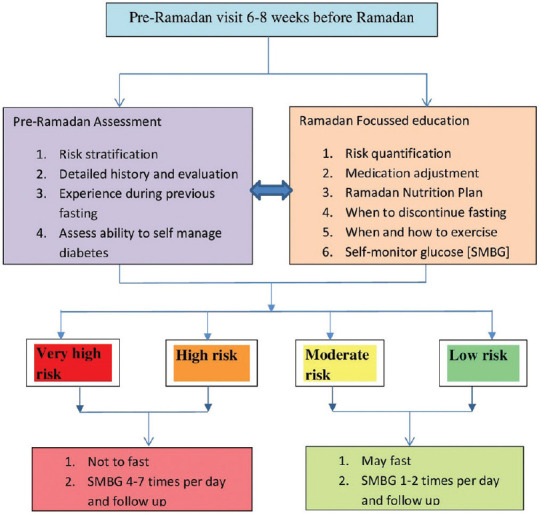
The importance of pre-Ramadan assessment, adequate nutrition, and hydration, choosing the right therapy has been emphasized. This review tries to address the common practical challenges and relevant possible solutions for the same. Due consideration has been given to various socio-cultural practices that can influence the management of diabetes patients in the setting of Ramadan and COVID-19 pandemic.
Diabetes is associated with increased severity and susceptibility to COVID-19. People with diabetes should go through systemic and structure-based management during fasting. Family physicians who deliver personalized care play a vital role in managing diabetes during this crisis period. Telemedicine is emerging as an effective mode of managing various needs of individuals.
禁食在全球以各种形式被视为一种宗教习俗。其中,斋月禁食非常普遍且广泛实行。糖尿病患者在有无医嘱的情况下进行禁食。未得到控制的糖尿病似乎是感染新冠病毒及其不良后果的一个风险因素。斋月期间禁食对糖尿病患者来说具有挑战性。今年,新冠疫情的背景使得患者和医护人员在斋月期间有效管理糖尿病及其并发症变得困难。由于缺乏足够的证据,临床医生在处理这种困难情况时感到困惑。
我们检索了PubMed、谷歌学术、各种指南及其他循证文章,以回顾当前有关糖尿病、斋月和新冠病毒的文献。
强调了斋月前评估、充足营养和水分补充以及选择正确治疗方法的重要性。本综述试图解决常见的实际挑战及相关的可能解决方案。充分考虑了在斋月和新冠疫情背景下可能影响糖尿病患者管理的各种社会文化习俗。
糖尿病与新冠病毒感染的严重程度增加和易感性相关。糖尿病患者在禁食期间应接受系统的、基于结构的管理。提供个性化护理的家庭医生在这一危机时期管理糖尿病方面发挥着至关重要的作用。远程医疗正成为满足个人各种需求的一种有效方式。