Laboratory of Bio-Economics and Biotechnology, Department of Bio-Economics and Food Security, School of Economics and Management, Far Eastern Federal University, 690950 Vladivostok, Russia.
Department of Biotechnology, Chonnam National University, Yeosu Campus, Yeosu 59626, Korea.
Genes (Basel). 2020 Oct 25;11(11):1255. doi: 10.3390/genes11111255.
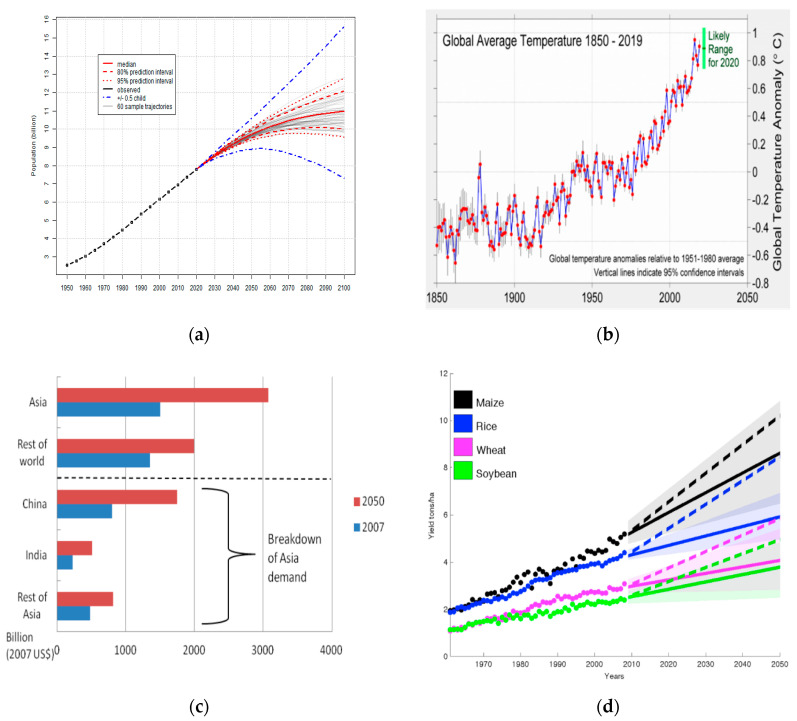
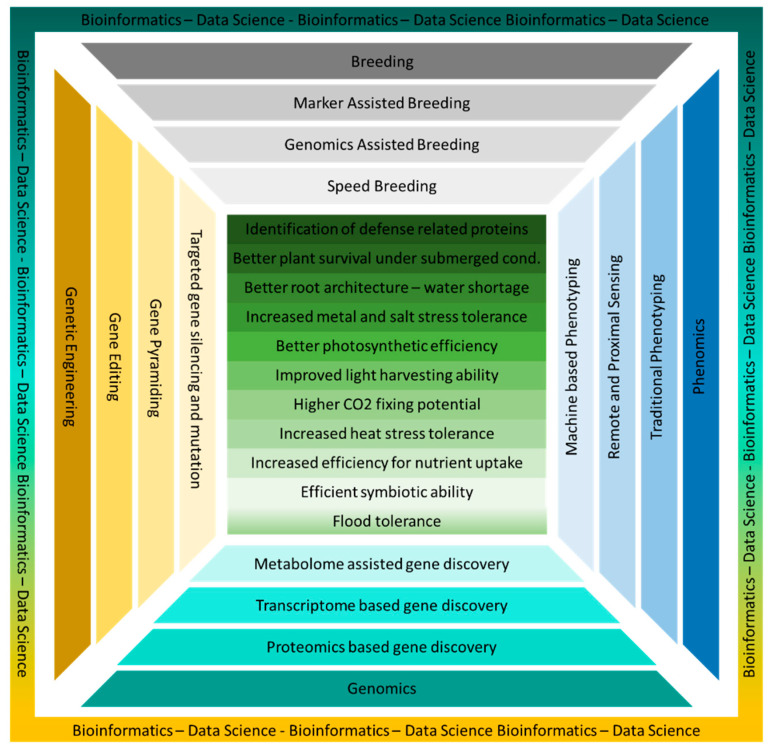
The anticipated population growth by 2050 will be coupled with increased food demand. To achieve higher and sustainable food supplies in order to feed the global population by 2050, a 2.4% rise in the yield of major crops is required. The key to yield improvement is a better understanding of the genetic variation and identification of molecular markers, quantitative trait loci, genes, and pathways related to higher yields and increased tolerance to biotic and abiotic stresses. Advances in genetic technologies are enabling plant breeders and geneticists to breed crop plants with improved agronomic traits. This Special Issue is an effort to report the genetic improvements by adapting genomic techniques and genomic selection.
预计到 2050 年的人口增长将伴随着食物需求的增加。为了在 2050 年前实现更高和可持续的粮食供应,以养活全球人口,需要提高主要作物的 2.4%的产量。提高产量的关键是更好地了解遗传变异,识别与更高产量和提高生物及非生物胁迫耐受性相关的分子标记、数量性状位点、基因和途径。遗传技术的进步使植物育种家和遗传学家能够培育出具有改良农艺性状的作物。本特刊旨在通过应用基因组技术和基因组选择来报告遗传改良。