Department of Food Technology, Mendel University in Brno, Zemedelska 1, 61300 Brno, Czech Republic.
Department of Animal Morphology, Physiology and Genetics, Mendel University in Brno, Zemedelska 1, 61300 Brno, Czech Republic.
Int J Mol Sci. 2020 Oct 24;21(21):7911. doi: 10.3390/ijms21217911.
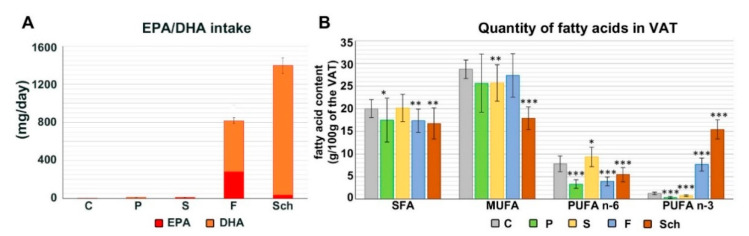
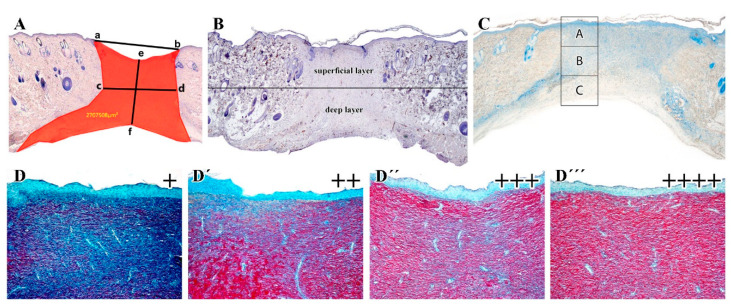
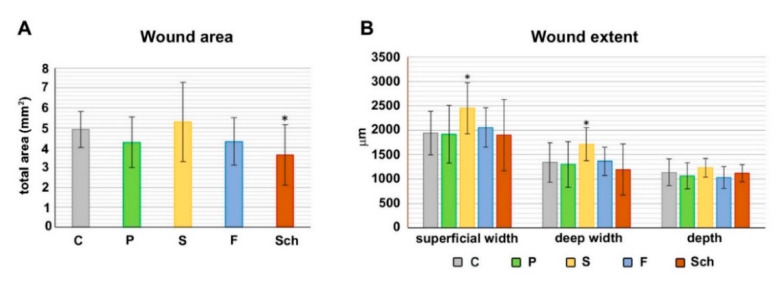
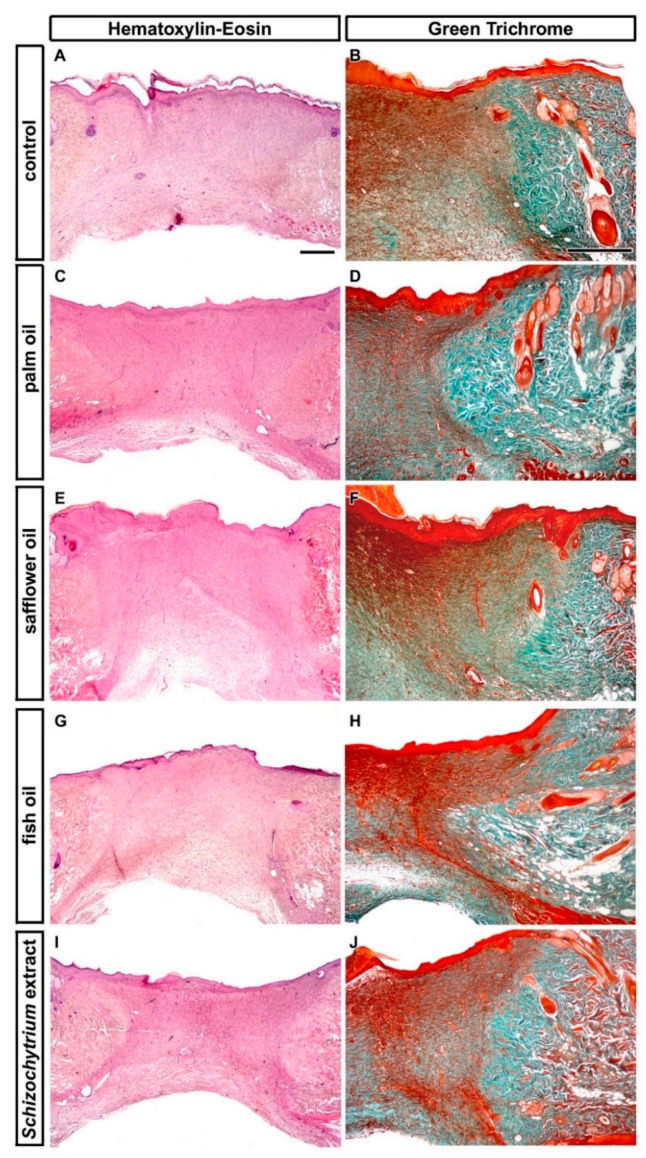
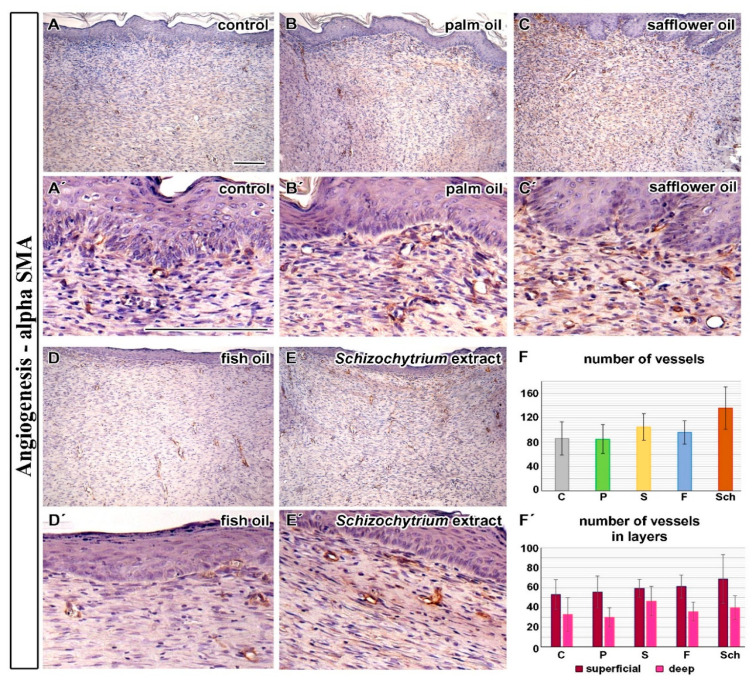
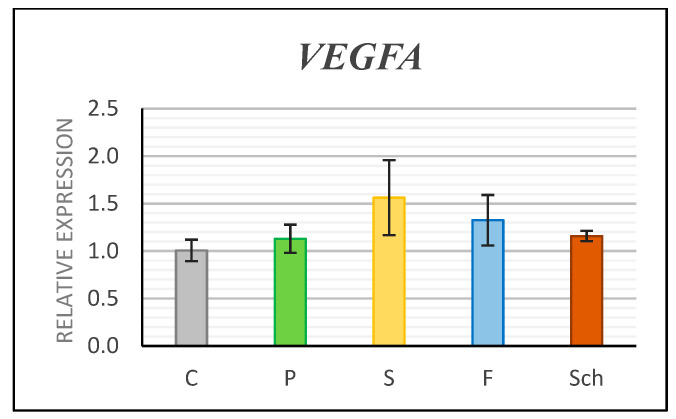
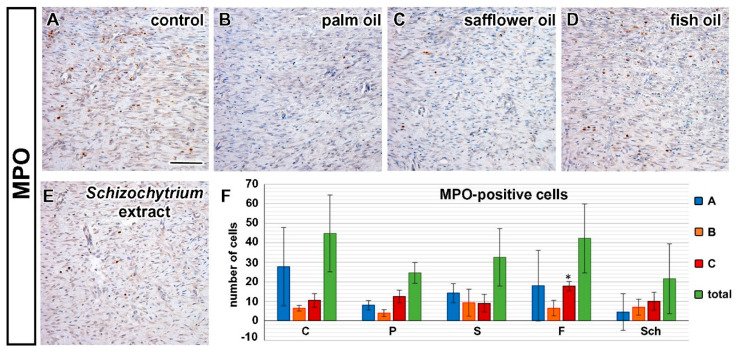
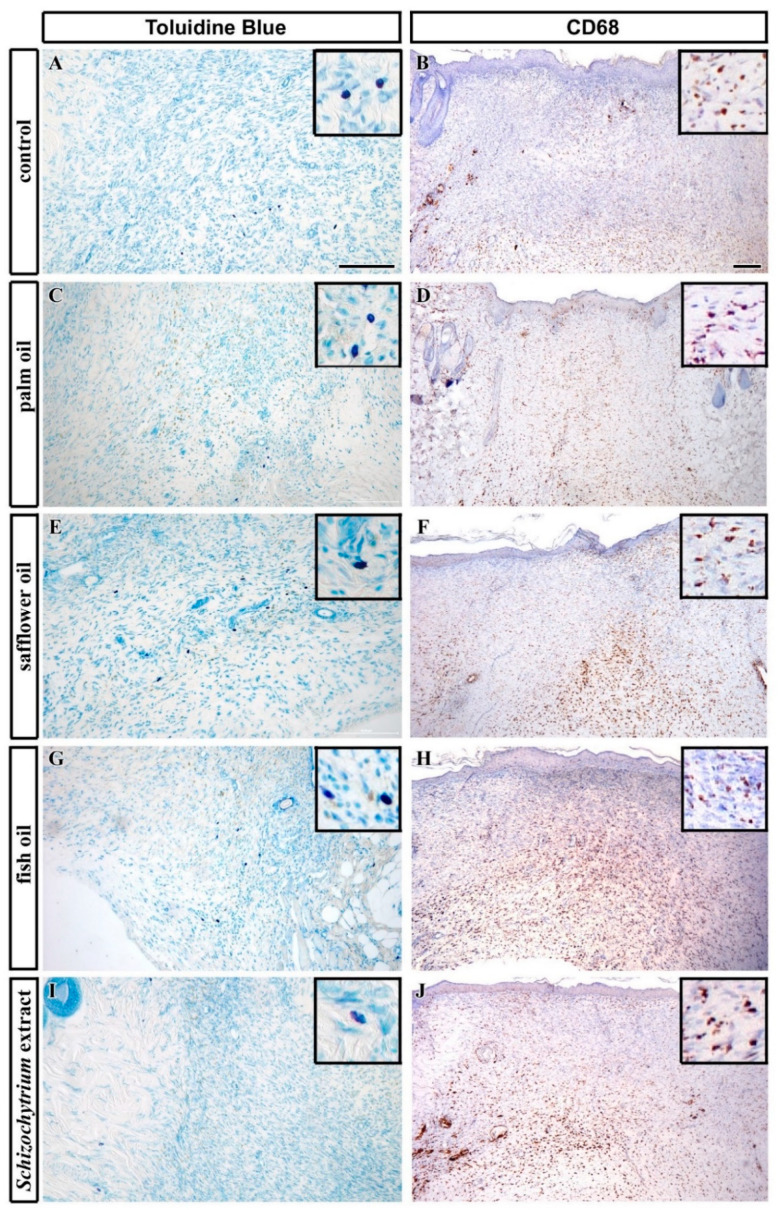
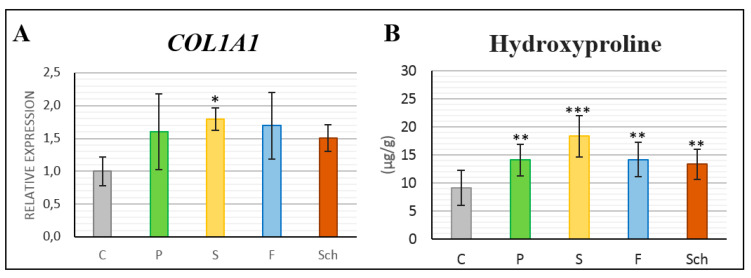
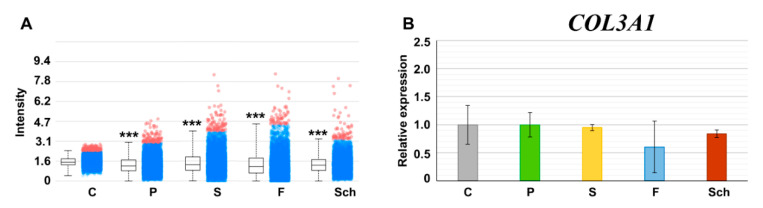
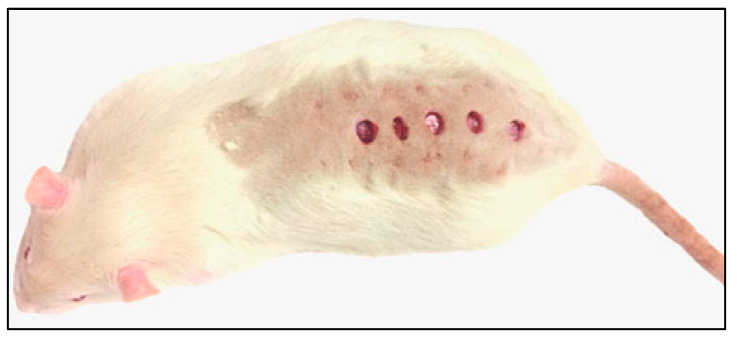
Dietary supplementation with polyunsaturated fatty acids (PUFA) n-3 can affect cutaneous wound healing; however, recent findings demonstrate the variable extent of their influence on the quality of healing. Here, we compare the effect of several dietary oils, containing different levels of PUFA n-3 and PUFA n-6, on wound healing in the rat model. Rats were fed the feed mixture with 8% palm oil (P), safflower oil (S), fish oil (F) or microalga extract (Sch) and compared to the animals fed by control feed mixture (C). Dorsal full-thickness cutaneous excisions were performed after 52 days of feeding and skin was left to heal for an additional 12 days. Histopathological analysis of skin wounds was performed, including immune cells immunolabeling and the determination of hydroxyproline amount as well as gene expression analyses of molecules contributing to different steps of the healing. Matrix-assisted-laser-desorption-ionization mass-spectrometry-imaging (MALDI-MSI) was used to determine the amount of collagen α-1(III) chain fragment in healing samples. Treatment by extract resulted in decrease in the total wound area, in contrast to the safflower oil group where the size of the wound was larger when comparing to control animals. Diet with extract and safflower oils displayed a tendency to increase the number of new vessels. The number of MPO-positive cells was diminished following any of oil treatment in comparison to the control, but their highest amount was found in animals with a fish oil diet. On the other hand, the number of CD68-positive macrophages was increased, with the most significant enhancement in the fish oil and safflower oil group. Hydroxyproline concentration was the highest in the safflower oil group but it was also enhanced in all other analyzed treatments in comparison to the control. MALDI-MSI signal intensity of a collagen III fragment decreased in the sequence C > S > Sch > P > F treatment. In conclusion, we observed differences in tissue response during healing between dietary oils, with the activation of inflammation observed following the treatment with oil containing high eicosapentaenoic acid (EPA) level (fish oil) and enhanced healing features were induced by the diet with high content of docosahexaenoic acid (DHA, extract).
膳食补充多不饱和脂肪酸(PUFA)n-3 可以影响皮肤伤口愈合;然而,最近的研究结果表明,它们对愈合质量的影响程度存在差异。在这里,我们比较了几种含有不同水平的 PUFA n-3 和 PUFA n-6 的膳食油对大鼠模型中伤口愈合的影响。在喂食 52 天后,给大鼠喂食含有 8%棕榈油(P)、红花油(S)、鱼油(F)或微藻提取物(Sch)的饲料混合物,并与喂食对照饲料混合物(C)的动物进行比较。皮肤伤口进行了全厚度背部皮肤切除,然后再进行 12 天的愈合。对皮肤伤口进行了组织病理学分析,包括免疫细胞免疫标记以及羟脯氨酸含量的测定,以及对参与愈合不同阶段的分子的基因表达分析。基质辅助激光解吸电离质谱成像(MALDI-MSI)用于测定愈合样本中胶原α-1(III)链片段的含量。与红花油组相比,提取物处理导致总伤口面积减小,而红花油组的伤口面积与对照动物相比更大。含 提取物和红花油的饮食有增加新血管数量的趋势。与对照组相比,任何油处理后 MPO 阳性细胞的数量都减少了,但在鱼油饮食的动物中发现其数量最多。另一方面,CD68 阳性巨噬细胞的数量增加,其中在鱼油和红花油组中增加最明显。羟脯氨酸浓度在红花油组中最高,但在与对照组相比,所有其他分析处理中均有增强。MALDI-MSI 胶原 III 片段信号强度的顺序为 C > S > Sch > P > F 处理。总之,我们观察到在愈合过程中不同膳食油对组织反应的差异,在用含有高二十碳五烯酸(EPA)水平的油(鱼油)处理后观察到炎症的激活,而在用含有高二十二碳六烯酸(DHA)的饮食( 提取物)则增强了愈合特征。