Jiangsu Key Laboratory of Oral Diseases, Nanjing Medical University, No. 136, Hanzhong Road, Nanjing, 210029, Jiangsu Province, China.
Department of Oral and Maxillofacial Surgery, The Affiliated Stomatological Hospital of Nanjing Medical University, Nanjing, 210029, Jiangsu Province, China.
Sci Rep. 2020 Oct 28;10(1):18437. doi: 10.1038/s41598-020-75563-y.
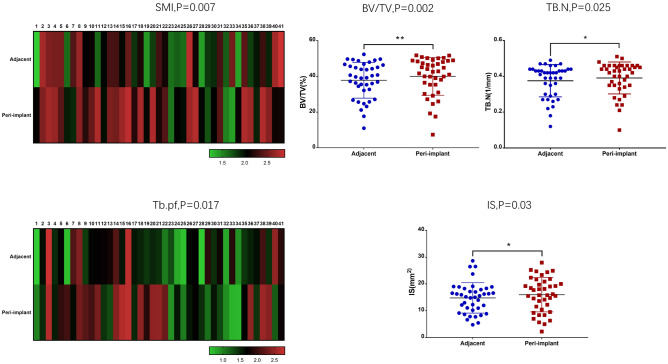
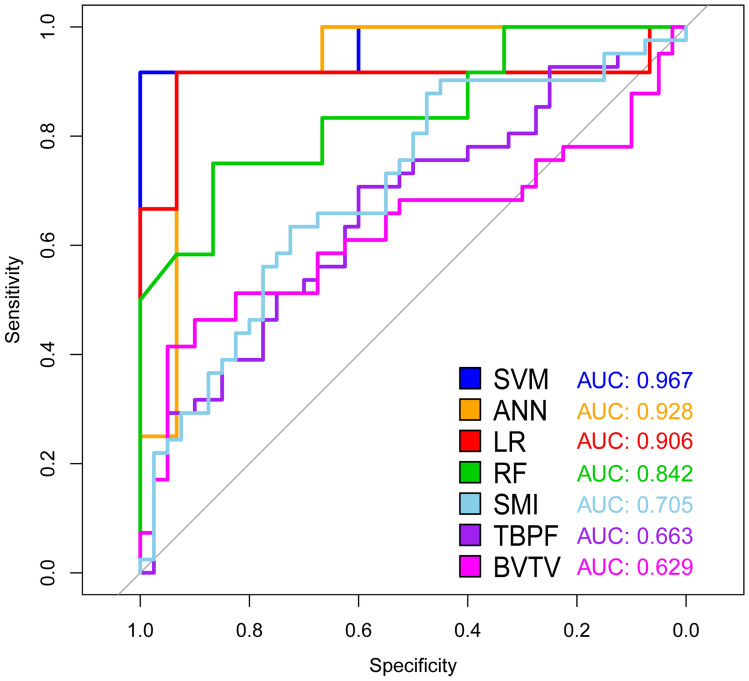
Marginal bone loss (MBL) is one of the leading causes of dental implant failure. This study aimed to investigate the feasibility of machine learning (ML) algorithms based on trabeculae microstructure parameters to predict the occurrence of severe MBL. Eighty-one patients (41 severe MBL cases and 40 normal controls) were involved in the current study. Four ML models, including support vector machine (SVM), artificial neural network (ANN), logistic regression (LR), and random forest (RF), were employed to predict severe MBL. The area under the receiver operating characteristic (ROC) curve (AUC), sensitivity, and specificity were used to evaluate the performance of these models. At the early stage of functional loading, severe MBL cases showed a significant increase of structure model index and trabecular pattern factor in peri-implant alveolar bone. The SVM model exhibited the best outcome in predicting MBL (AUC = 0.967, sensitivity = 91.67%, specificity = 100.00%), followed by ANN (AUC = 0.928, sensitivity = 91.67%, specificity = 93.33%), LR (AUC = 0.906, sensitivity = 91.67%, specificity = 93.33%), RF (AUC = 0.842, sensitivity = 75.00%, specificity = 86.67%). Together, ML algorithms based on the morphological variation of trabecular bone can be used to predict severe MBL.
边缘骨丧失(MBL)是导致种植牙失败的主要原因之一。本研究旨在探讨基于小梁微结构参数的机器学习(ML)算法预测严重 MBL 发生的可行性。当前研究共纳入 81 名患者(41 例严重 MBL 病例和 40 例正常对照)。采用支持向量机(SVM)、人工神经网络(ANN)、逻辑回归(LR)和随机森林(RF)四种 ML 模型来预测严重 MBL。使用接收者操作特征(ROC)曲线下面积(AUC)、敏感性和特异性来评估这些模型的性能。在功能加载的早期阶段,严重 MBL 病例在种植体周围牙槽骨中表现出结构模型指数和小梁模式因子的显著增加。SVM 模型在预测 MBL 方面表现出最佳结果(AUC=0.967,敏感性=91.67%,特异性=100.00%),其次是 ANN(AUC=0.928,敏感性=91.67%,特异性=93.33%)、LR(AUC=0.906,敏感性=91.67%,特异性=93.33%)、RF(AUC=0.842,敏感性=75.00%,特异性=86.67%)。综上所述,基于小梁骨形态变化的 ML 算法可用于预测严重 MBL。