Berdahl John, Bala Chandra, Dhariwal Mukesh, Lemp-Hull Jessie, Thakker Divyesh, Jawla Shantanu
Vance Thompson Vision, Sioux Falls, SD, USA.
Faculty of Medicine and Health Sciences, Macquarie University, Sydney, New South Wales, Australia.
Clin Ophthalmol. 2020 Oct 22;14:3439-3450. doi: 10.2147/OPTH.S269597. eCollection 2020.
The objective of this systematic literature review (SLR) was to collate, report, and critique published evidence related to epidemiology and patient and economic burden of presbyopia.
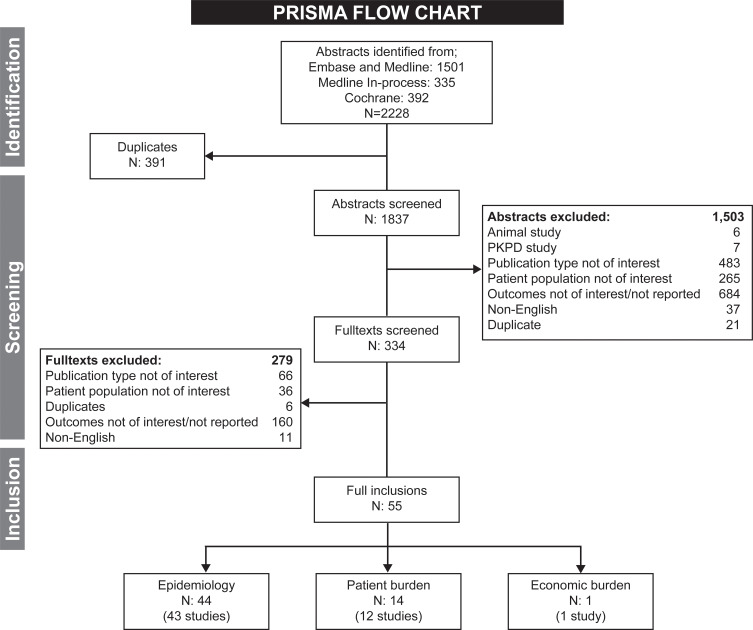
A systematic literature search was conducted in MEDLINE, Embase, and Cochrane Library databases from the time of inception through October 2018 using Cochrane methodology. Studies published in English language reporting on epidemiology and patient and economic burden of presbyopia were included.
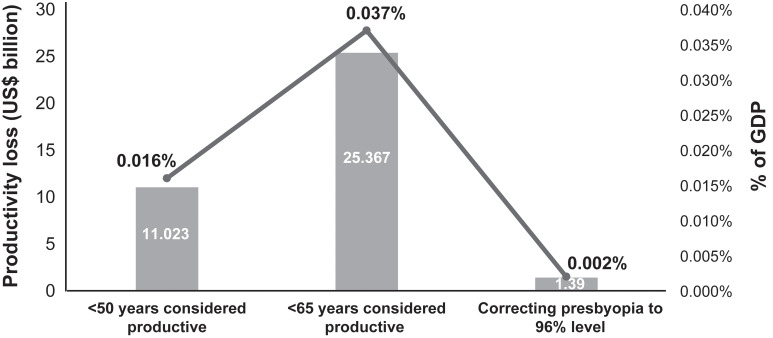
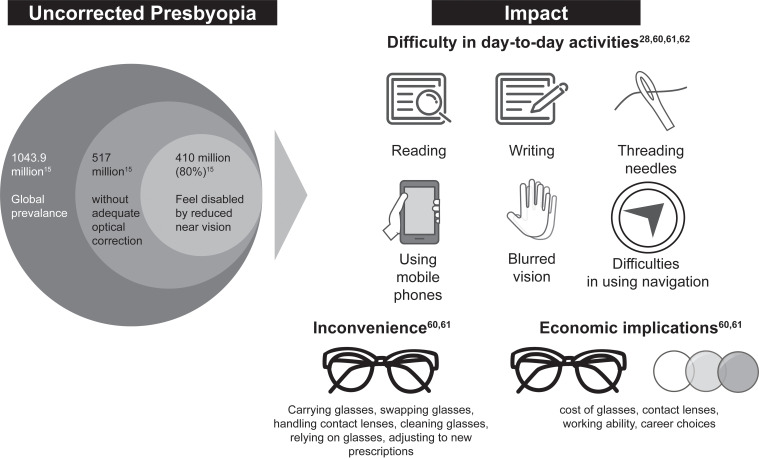
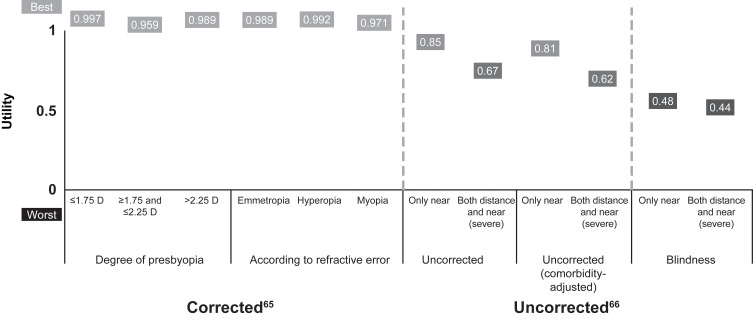
Initial systematic literature search yielded 2,228 citations, of which 55 met the inclusion criteria (epidemiology, 44; patient burden, 14; economic burden, 1) and were included in this review. Globally, 1.09 billion people are estimated to be affected by presbyopia. The reported presbyopia prevalence varied across regions and by age groups, with the highest prevalence of 90% reported in the Latin America region in adults ≥35 years. Presbyopic patients report up to 22% decrease in quality-of-life (QoL) score, and up to 80% patients with uncorrected presbyopia report difficulty in performing near-vision related tasks. About 12% of presbyopes required help in performing routine activities, and these visual limitations reportedly induce distress and low self-esteem in presbyopia patients. Uncorrected presbyopia led to a 2-fold increased difficulty in near-vision-related tasks and a >8-fold increased difficulty in very demanding near-vision-related tasks. Further, uncorrected presbyopia leads to a decrement in patients' QoL, evident by the low utility values reported in the literature. Annual global productivity losses due to uncorrected and under-corrected presbyopia in working-age population (<50 years) were estimated at US$ 11 billion (0.016% of the global domestic product (GDP) in 2011, which increased to US$ 25.4 billion if all people aged <65 years were assumed to be productive.
Uncorrected presbyopia affects patients' vision-related quality of life due to difficulty in performing near-vision-related tasks. In addition, un-/under-corrected presbyopia could lead to productivity losses in working-age adults.
本系统文献综述(SLR)的目的是整理、报告和评论与老花眼的流行病学、患者负担和经济负担相关的已发表证据。
采用Cochrane方法,从MEDLINE、Embase和Cochrane图书馆数据库建库起至2018年10月进行系统文献检索。纳入以英文发表的关于老花眼流行病学、患者负担和经济负担的研究。
初步系统文献检索得到2228条引文,其中55条符合纳入标准(流行病学,44条;患者负担,14条;经济负担,1条)并纳入本综述。全球估计有10.9亿人受老花眼影响。报告的老花眼患病率因地区和年龄组而异,在拉丁美洲地区≥35岁的成年人中报告的患病率最高,为90%。老花眼患者报告生活质量(QoL)评分下降高达22%,未矫正老花眼的患者中高达80%报告在进行近视力相关任务时有困难。约12%的老花眼患者在进行日常活动时需要帮助,据报道这些视力限制会给老花眼患者带来困扰和自卑。未矫正的老花眼导致近视力相关任务的难度增加2倍,在要求很高的近视力相关任务中难度增加超过8倍。此外,未矫正的老花眼会导致患者生活质量下降,文献中报告的效用值较低就证明了这一点。据估计,工作年龄人口(<50岁)因未矫正和矫正不足的老花眼导致的全球年度生产力损失为110亿美元(占2011年全球国内生产总值(GDP)的0.016%,如果假设所有<65岁的人都有生产力,则增加到254亿美元)。
未矫正的老花眼因进行近视力相关任务困难而影响患者与视力相关的生活质量。此外,未矫正/矫正不足的老花眼可能导致工作年龄成年人的生产力损失。