Sanchez Polo Vicente, Garcia-Trabanino Ramon, Rodriguez Guillermo, Madero Magdalena
Instituto Guatemalteco de Seguridad Social, Guatemala, Guatemala.
Centro de Hemodiálisis, San Salvador, El Salvador.
Int J Nephrol Renovasc Dis. 2020 Oct 22;13:261-272. doi: 10.2147/IJNRD.S270709. eCollection 2020.
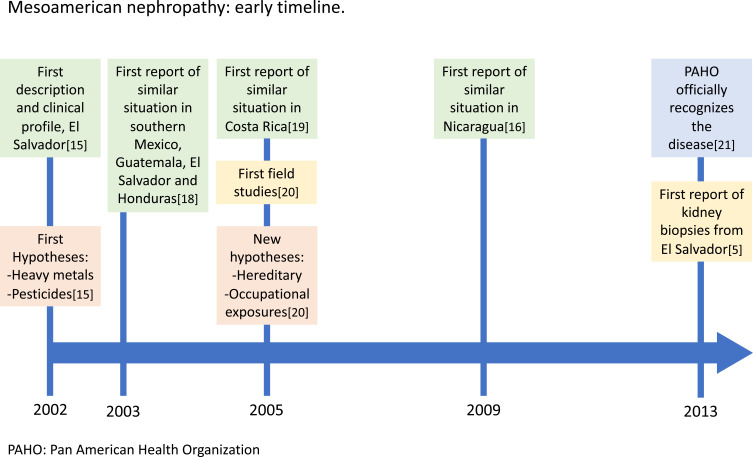
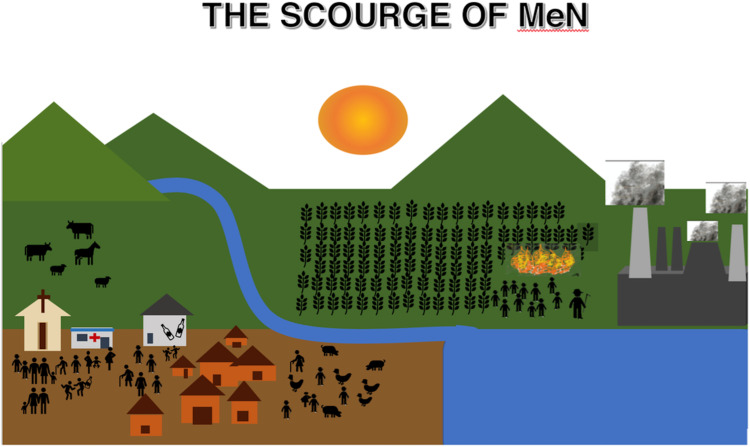
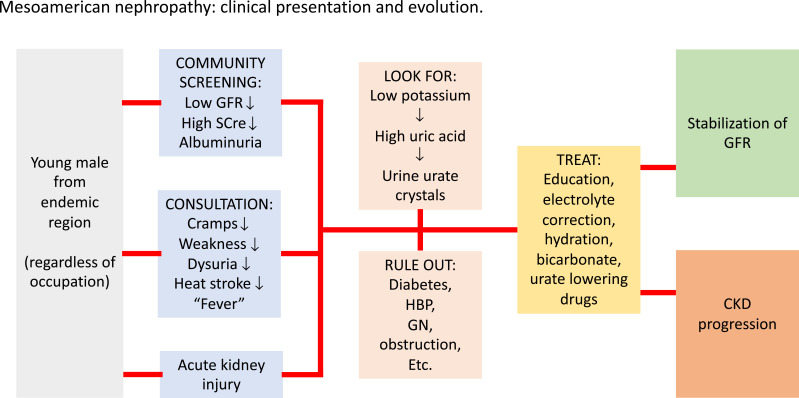
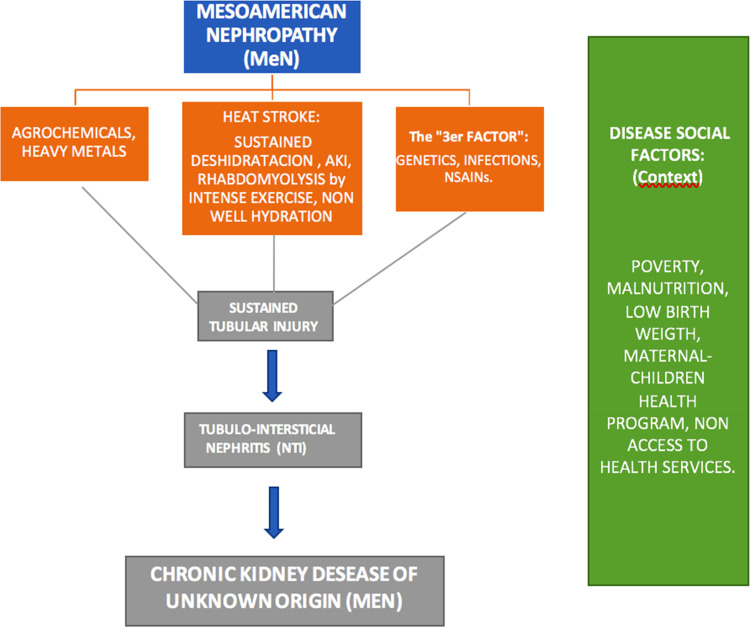
In 2002, a report from El Salvador described a high incidence of chronic kidney disease (CKD) of unknown cause, mostly in young males from specific coastal areas. Similar situations were observed along the Pacific Ocean coastline of other Central American countries and southern Mexico (Mesoamerica). This new form of CKD has been denominated Mesoamerican endemic nephropathy (MeN). The typical presentation of MeN is a young male from an endemic area with a family history of CKD, low eGFR, high serum creatinine, low level of albuminuria, hypokalemia, hyperuricemia, and urine urate crystals. Kidney biopsy demonstrating tubulointerstitial nephritis remains the gold standard for diagnosis but is available only for a minority. Commonly proposed causes include thermal stress/dehydration and/or exposure to environmental pollutants. However, likely, a third factor, which could be genetic or epigenetic, could contribute to the cause and development of the disease, along with social determinants. Currently, preventive measures focus on minimizing workers exposure to thermal stress/dehydration. There are many research opportunities and priorities should include clinical trials to evaluate the efficacy and safety of the current treatment protocols, along with etiological and genetic studies, and the development of kidney disease data systems. Although there is scant and controversial literature with regard to the etiology, diagnosis and management of the disease, our aim is to provide the reader a vision of the disease based on our experience.
2002年,一份来自萨尔瓦多的报告描述了不明原因的慢性肾脏病(CKD)的高发病率,主要发生在特定沿海地区的年轻男性中。在中美洲其他国家和墨西哥南部(中美洲)的太平洋沿岸也观察到了类似情况。这种新形式的CKD被命名为中美洲地方性肾病(MeN)。MeN的典型表现是来自流行地区的年轻男性,有CKD家族史,估算肾小球滤过率(eGFR)低,血清肌酐高,蛋白尿水平低,低钾血症,高尿酸血症,以及尿酸盐结晶尿。肾活检显示肾小管间质性肾炎仍然是诊断的金标准,但仅适用于少数人。常见的病因包括热应激/脱水和/或接触环境污染物。然而,可能还有第三个因素,可能是遗传或表观遗传因素,与社会决定因素一起,可能导致该疾病的发生和发展。目前,预防措施侧重于尽量减少工人接触热应激/脱水。有许多研究机会,优先事项应包括评估当前治疗方案的疗效和安全性的临床试验,以及病因学和遗传学研究,以及肾病数据系统的开发。尽管关于该疾病的病因、诊断和管理的文献很少且存在争议,但我们的目的是根据我们的经验为读者提供对该疾病的认识。