Zhang Zhe, Wang Hongbai, Wang Yuefu, Luo Qipeng, Yuan Su, Yan Fuxia
Department of Anesthesiology, Fuwai Hospital, Chinese Academy of Medical Sciences and Peking Union Medical College, Beijing, People's Republic of China.
J Pain Res. 2020 Oct 13;13:2553-2560. doi: 10.2147/JPR.S272667. eCollection 2020.
Studies have reported that preoperative poor sleep quality could decrease the pain threshold in patients undergoing noncardiac surgery. However, the risk of postoperative hyperalgesia (HA) in cardiac surgery patients with preoperative poor sleep quality remains unclear.
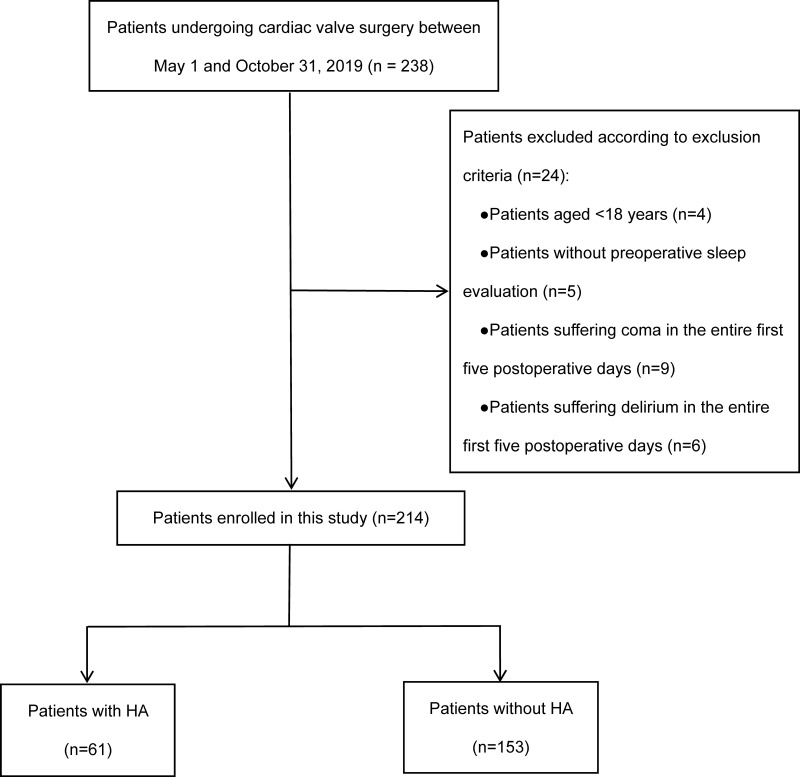
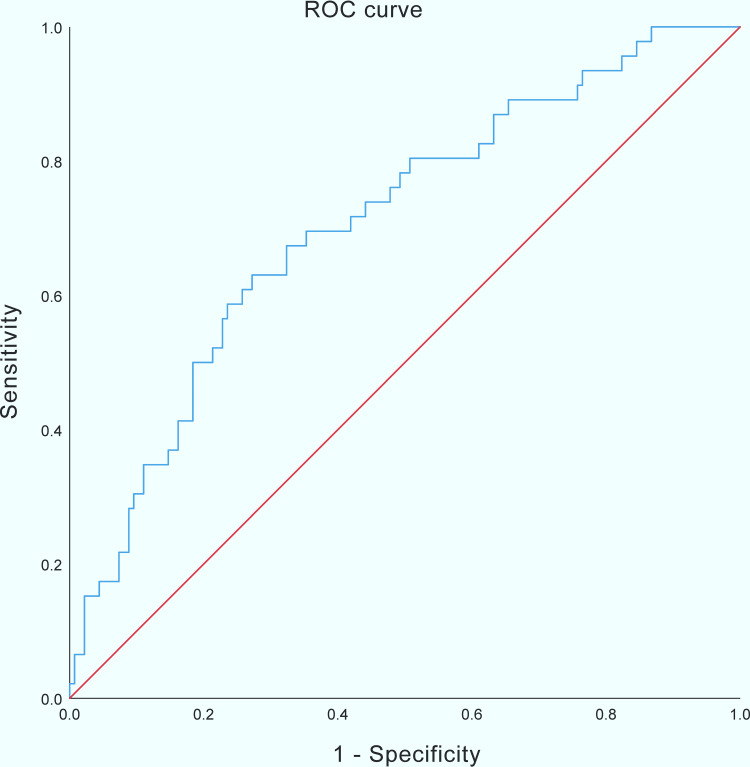
We retrospectively collected clinical data from patients undergoing open-heart valve surgery between May 1 and October 31, 2019, in Fuwai Hospital (Beijing). We assessed preoperative sleep quality and postoperative pain severity using the Pittsburgh sleep quality index (PSQI) and numerical pain rating scale (NPRS), respectively. A PSQI of six or greater was considered to indicate poor sleep quality, and a NPRS of four or greater was considered to indicate HA. Multivariable logistic regression analysis was used to study the risk of postoperative HA in patients with preoperative poor sleep quality.
We divided 214 eligible patients into two groups based on postoperative HA; HA group: n=61 (28.5%) and nonHA group: n=153 (71.5%). Compared with nonHA patients, patients with postoperative HA showed a higher percentage of history of smoking, 17 (11.1%) vs 15 (24.6%) and alcohol abuse, 5 (3.3%) vs 6 (9.8%), higher intraoperative dose of sufentanil (median, 1.02 vs 1.12 μg/kg/h), and longer duration of ventilation with tracheal catheter (median, 760 vs 934 min). Preoperative poor sleep quality was associated independently with an increased risk of postoperative HA (adjusted odds ratio [AOR]: 2.66; 95%CI: 1.31-5.39, =0.007). Stratification by history of smoking revealed a stronger risk of postoperative HA in nonsmoking patients with preoperative poor sleep quality (AOR: 3.40; 95%CI: 1.51-7.66, =0.003). No risk was found in patients who had history of smoking (AOR: 0.83; 95%CI: 0.14-4.75, =0.832).
Preoperative poor sleep quality is an independent risk factor for postoperative HA in adult patients undergoing open-heart valve surgery who had no history of smoking.
研究报告称,术前睡眠质量差会降低非心脏手术患者的疼痛阈值。然而,术前睡眠质量差的心脏手术患者术后发生痛觉过敏(HA)的风险仍不明确。
我们回顾性收集了2019年5月1日至10月31日在北京阜外医院接受心脏瓣膜直视手术患者的临床资料。我们分别使用匹兹堡睡眠质量指数(PSQI)和数字疼痛评分量表(NPRS)评估术前睡眠质量和术后疼痛严重程度。PSQI得分为6分或更高被认为表明睡眠质量差,NPRS得分为4分或更高被认为表明存在HA。采用多变量逻辑回归分析研究术前睡眠质量差的患者术后发生HA的风险。
我们根据术后HA将214例符合条件的患者分为两组;HA组:n = 61(28.5%),非HA组:n = 153(71.5%)。与非HA患者相比,术后发生HA的患者吸烟史比例更高,分别为17例(11.1%)对15例(24.6%),酗酒史比例更高,分别为5例(3.3%)对6例(9.8%),术中舒芬太尼剂量更高(中位数,1.02对1.12μg/kg/h),气管导管通气时间更长(中位数,760对934分钟)。术前睡眠质量差与术后HA风险增加独立相关(调整后的优势比[AOR]:2.66;95%置信区间:1.31 - 5.39,P = 0.007)。按吸烟史分层显示,术前睡眠质量差的非吸烟患者术后发生HA的风险更高(AOR:3.40;95%置信区间:1.51 - 7.66,P = 0.003)。有吸烟史的患者未发现风险(AOR:0.83;95%置信区间:0.14 - 4.75,P = 0.832)。
术前睡眠质量差是无吸烟史的接受心脏瓣膜直视手术的成年患者术后发生HA的独立危险因素。